
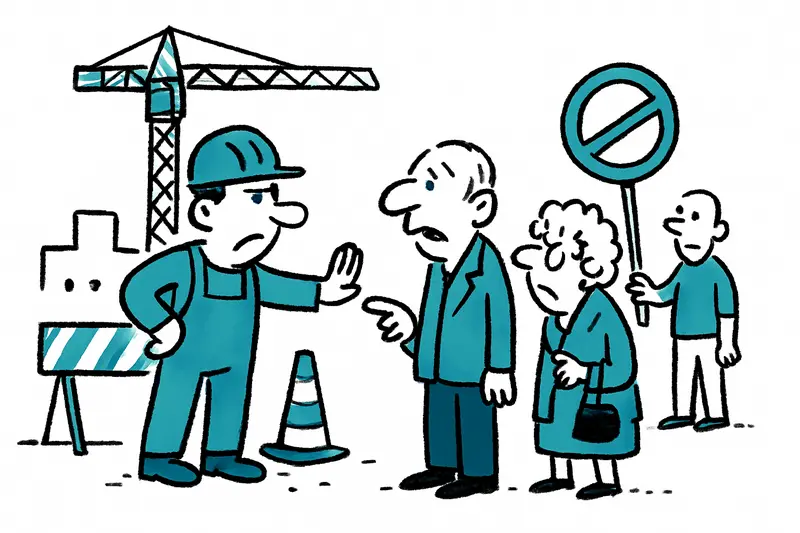
Plaça Mercat in Palma will become a major construction site for about 20 months. Beyond new sewers and lighting, questions remain about maintenance, kiosk culture and logistics. Will the renovation deliver more value than it costs?
A central question: Will the renovation deliver more value than it costs?
In the early morning at Plaça Mercat the scents of strong coffee, freshly peeled oranges and the rattling of newspapers mingle — for now. Soon this morning scene could disappear behind construction fences and barriers: around 20 months of construction, a budget of about 4.4 million euros and work on roughly 11,600 square meters (Plaça Mercat, Calle Unió, Plaza Weyler, a section of Calle Riera). The city administration has approved the renovation, Emaya is carrying out the sewer works. But the key question remains: will the neighbourhood ultimately gain more value than what is being invested?
Technology well planned — but who will take care of everyday life afterwards?
On paper many measures make sense: separate stormwater and sewage pipes, tactile elements, ramps for accessibility and more modern lighting. Yet one often overlooked point becomes immediately apparent when talking in the evening with a café owner on Calle Unió: who will pay for regular maintenance? Who is liable for damage from later interventions? A modern sewer system, attractive lamps and new paving are of little use if after two years they are clogged, outdated or damaged. Without binding maintenance contracts and budget allocations for the coming years, the investment risks becoming a short-lived cosmetic upgrade.
Kiosks as social infrastructure — more than just retail space
The small icon of the square, the kiosk 'Alaska', is to be preserved — a good sign. Other stalls, however, stand empty: the newspaper kiosk is closed, the operator insolvent. This is not just about square metres but about meeting points, information hubs and neighbourhood culture. An empty display case is a small cultural loss. One little-discussed option would be to temporarily allocate spaces for pop-up kiosks or non-profit initiatives: local producers, cultural projects or neighbourhood initiatives could take over the site's function during the construction period and prevent the area from ending up dominated solely by tourist-oriented offers.
Logistics, deliveries and everyday life: who is allowed when?
The central lane will be closed to through traffic, residents should retain access. That sounds good, but in practice it becomes more complicated: delivery traffic for cafés, waste collection, patient transports or people with reduced mobility all require precise time windows. Without coordinated logistics there is a risk of congestion, missed deliveries and revenue losses for small businesses. A pragmatic proposal is a digital reservation system for delivery times, coupled with clearly marked temporary loading zones, and a dedicated contact person in the site management who communicates daily with those affected — this can defuse many conflicts early on.
Design, participation and the Comissió del Centre Històric
The new street lighting still needs approval from the Comissió del Centre Històric. An earlier lighting proposal will not be implemented — this raises questions among residents and shop owners: by which criteria will the final fixtures be chosen, what are the operating costs, and how do different lighting atmospheres affect the historic buildings? More transparency and genuine participation would help. A public workshop with evening lighting trials, material samples and a clear cost–benefit presentation would be a small but meaningful step to build trust.
Opportunities that must be seized now
Twenty months of construction are a burden — anyone who passes through here each morning knows that. At the same time the period offers a chance to make the square climate-resilient: infiltration areas, permeable surfaces, rainwater retention and trees to mitigate heat. It is important that these measures are not only planned but also sustainably financed and maintained. Binding maintenance contracts, temporary uses for traders, a coordinator for delivery and resident concerns, and a transparent online platform with daily updates on construction phases and detours would be concrete steps.
A pragmatic conclusion
Yesterday a café owner on Calle Unió said with typical Mallorcan pragmatism: "We can manage, as long as the kiosk stays and people can keep meeting." That should be the guiding principle: not just new stones and lamps, but a Plaça that remains a neighbourhood meeting place tomorrow — not just a pretty postcard for visitors. If the administration and citizens now agree on binding rules, maintenance plans and practical solutions, this long construction period can become a real improvement. Will Palma seize this opportunity? That is the question that must be answered in the coming weeks.
Similar News
Sleeping in a Stolen Car Outside the Station: Why the Playa de Palma Incident Is More Than a Curious One-Off
An 18-year-old was found asleep at Playa de Palma in a car reported stolen, right in front of a police station. A screwd...
Sleeping in a Stolen Car Outside the Police Station: What Does the Playa de Palma Case Say About Prevention?
An 18-year-old was found in a car reported stolen in front of a police station in Playa de Palma. A screwdriver, glove, ...

Gynecologist Shortage in Manacor: Emergency Births at Night Rerouted to Palma
Due to a shortage of gynecologists, acute births that arrive at Manacor's emergency department at night are temporarily ...

Alcúdia acquires Gatamoix colony: nature, culture and education for Puig de Sant Martí
The municipality of Alcúdia has purchased the historic agricultural colony Gatamoix (Es Poble Nou) and is making the sit...

Island council tightens rules against the blue crab — is it enough?
From 2026 the Consell de Mallorca allows catching the invasive blue crab in almost all waters (except protected areas) a...
More to explore
Discover more interesting content

Experience Mallorca's Best Beaches and Coves with SUP and Snorkeling

Spanish Cooking Workshop in Mallorca
