
Pollença, Mallorca
In the Map Room of Pollença: A Personal Account
A private tour of the historic map collection in Pollença's town hall, told by someone who was there. Afterwards, a relaxed lunch at Can Costa.
Share:
MM
Mallorca Magic
Guides
December 28, 2025
5 min reading time
0 views
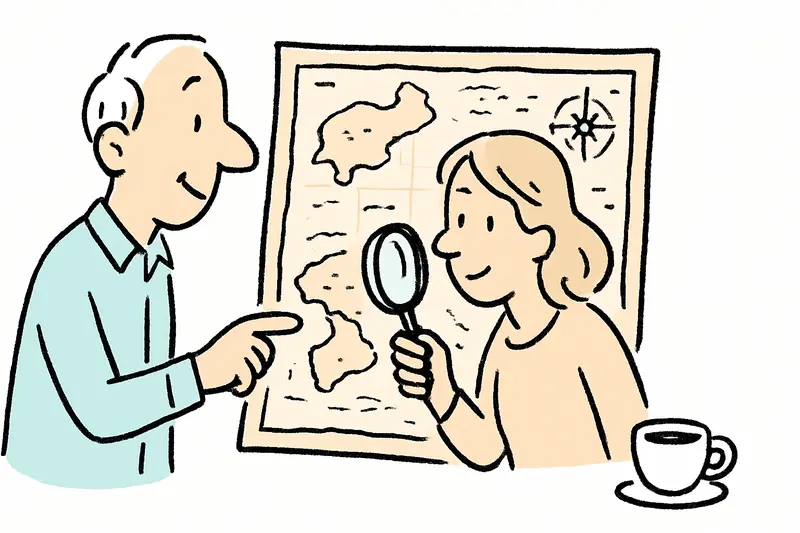
A few days ago I had the pleasure of attending an unusual, very Mallorcan event: a private tour of a small but fine map collection in the old town hall of Pollença. If you think maps are just history on paper, you're mistaken. Between handwritten notes, yellowed coastlines and delicate colorings, these sheets tell stories of trade, storms and the people who lived here centuries ago. The atmosphere was relaxed — a morning of eager curiosity, very local explanations and enough coffee afterwards to keep discussing tiny islands for a long time. The tour was arranged by the person who assembled and donated the collection to the municipality; they explained origins, binding marks and why certain sea routes are so prominent on old charts. After the visit we shared lunch at Can Costa, where typical island dishes were served and the conversations continued. If you are interested in such private events: request well in advance, groups are small, tours can often be scheduled in the mornings, and the best season is late spring when it is not yet too hot. One tip: bring a magnifying glass — it makes a surprising difference.
The collection in Pollença's old town hall
The room in the town hall where the maps are kept has a modest feel: stone floor, tall windows and furniture that looks more like an office than a museum. That very atmosphere adds to the charm. The collection includes maps from the 15th to the 18th century — nautical plans, island views and hand-colored sheets showing Mallorca from different perspectives. Particularly striking are the sea charts with marked routes that show how captains once navigated around the Balearics: small marginal notes reveal wind directions and shoals, handwritten remarks tell of landings and provisions stops. Many sheets come from private holdings; most were gathered over decades and eventually donated to the municipality so they would not be lost to the public. During the tour you notice the details: the scraping sound of the ink, tears in the paper at frequently folded spots, and restored areas that show later conservation. The person who assembled the collection spoke of surprising discoveries — a map with an unusual cartouche, a bay misplaced that only stood out after comparison with other sheets — and of the feeling of preserving such a fragile piece of history. The group was deliberately small (around 25–30 people) so every explanation had time to linger; you could ask questions, bring maps close and work with a magnifying glass. Photos are mostly allowed but on many sheets only without flash. Access is best by prior arrangement with the town hall, as the collection is not on permanent display. For collectors or the simply curious, this is one of those rare opportunities to touch genuine handwriting from centuries past — without museum fuss, very personal and, yes, surprisingly intimate.
The tour: voices, details, small anecdotes
The room in the town hall where the maps are kept has a modest feel: stone floor, tall windows and furniture that looks more like an office than a museum. That very atmosphere adds to the charm. The collection includes maps from the 15th to the 18th century — nautical plans, island views and hand-colored sheets showing Mallorca from different perspectives. Particularly striking are the sea charts with marked routes that show how captains once navigated around the Balearics: small marginal notes reveal wind directions and shoals, handwritten remarks tell of landings and provisions stops. Many sheets come from private holdings; most were gathered over decades and eventually donated to the municipality so they would not be lost to the public. During the tour you notice the details: the scraping sound of the ink, tears in the paper at frequently folded spots, and restored areas that show later conservation. The person who assembled the collection spoke of surprising discoveries — a map with an unusual cartouche, a bay misplaced that only stood out after comparison with other sheets — and of the feeling of preserving such a fragile piece of history. The group was deliberately small (around 25–30 people) so every explanation had time to linger; you could ask questions, bring maps close and work with a magnifying glass. Photos are mostly allowed but on many sheets only without flash. Access is best by prior arrangement with the town hall, as the collection is not on permanent display. For collectors or the simply curious, this is one of those rare opportunities to touch genuine handwriting from centuries past — without museum fuss, very personal and, yes, surprisingly intimate.
Lunch at Can Costa after the tour
After the visit the group met at the nearby Can Costa — a place known for its simple, seasonal cuisine. The table featured typical island dishes: mixed tapas to start, a delicate fish casserole seasoned with Mallorcan herbs and, to finish, an almond cream. The atmosphere was relaxed; people exchanged impressions, discussed favorite maps and enjoyed local wine. For larger groups it's advisable to agree on a set menu in advance. Oh, and the portions are just right so that after an informative morning you are neither hungry nor overly full. And if the mayor drops by — as happened that day — it's more a sign of community than ceremony.
Practical information: How to plan your visit
Plan ahead: requests are usually handled through Pollença's town hall. Groups are intentionally small, so reserve in good time. Spring and autumn work best because the weather is mild and the streets are not yet crowded. Bring a magnifying glass and comfortable shoes — the map room has seating but you often stand while viewing. Photography is usually allowed without flash; please respect handling instructions. If you want to stay longer in Pollença, you'll find small cafés in the old town, viewpoints in the hills and weekly markets with local products. If you arrive by car: parking nearby exists but is busy in the morning; an early start saves searching for a spot.
Categories
Activities
MM
About Mallorca Magic
Expert guide to Mallorca's most beautiful places, experiences and hidden gems.
Book a rental car
Book your flight
Share
Quick info
Location:Pollença, Mallorca
reading time:5 minutes
views:0
Published:December 28, 2025
More to explore
Discover more interesting content

Activity
Same category
Boat Tour with BBQ along Es Trenc Beach
50% relevance

Activity
Same category
Private transfer from Mallorca Airport (PMI) to Pollensa
50% relevance

Activity
Same category
FUN Quad Mallorca
50% relevance
Activity
Same category
Mallorca Grand Tour by Land & Sea: Valldemossa, Sóller & Calobra
50% relevance
Activity
Same category
Catamaran cruise in Mallorca with stunning views and BBQ
50% relevance
Activity
Same category
Canyoning in Mallorca
50% relevance