
Record Fine Against Airbnb in Mallorca: Who Should Pay the Bill?
Record Fine Against Airbnb in Mallorca: Who Should Pay the Bill?
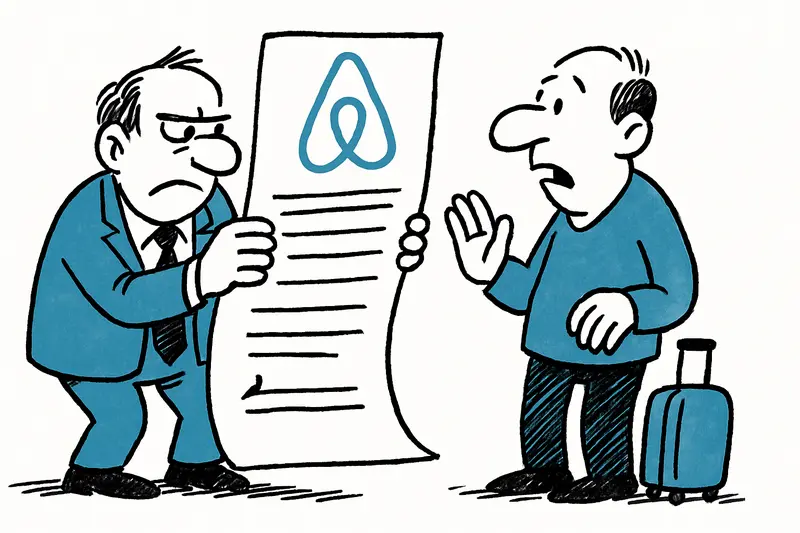
The Balearic Islands have imposed a €64 million fine on Airbnb. The platform points to hosts — but the penalty raises broader questions: enforcement, responsibility, and everyday life on the island.
Record Fine Against Airbnb in Mallorca: Who Should Pay the Bill?
Key question: Will a large fine actually reduce illegal holiday rentals — or is it just a game of responsibilities?
In the morning, when the bakeries in Santa Catalina open and the smell of freshly baked ensaimada drifts through the streets, residents and small shop owners discuss the same issue: apartments left empty that are booked in summer via online platforms, while neighbours complain about noise and rents rise. The recent decision by the Balearic government — a €64 million fine against the world's largest booking platform — hits right into this everyday reality and raises questions about responsibility and effectiveness. Coverage of platform responses can be seen in Airbnb Puts the Balearic Islands Under Pressure: Deleting Illegal Listings — What It Means for Mallorca.
The facts are clear: platforms have been obliged to delete illegal listings, and legal responsibility has been confirmed by the courts, as discussed in Madrid draws the line: Stricter rules for holiday rentals — and what Mallorca must do now. Airbnb denies primary blame and is now focusing on information offerings for hosts that are meant to guide them step by step to legality. From the perspective of many authorities this is sensible — but it is not enough.
Critical analysis: A fine of this magnitude signals determination. Nevertheless, the problem remains complex. A one-off sanction does not explain how illegal listings were able to remain untouched for years. Platforms thrive on volume and speed: listings are uploaded, content is automatically indexed, and as soon as one listing is removed, another often appears. The technology can be used for control, but for a long time it was not obliged to do so.
What is missing from the public debate is a view of the complexity of the provider landscape. It is not only professional intermediaries who use these channels; private landlords, housing complex administrations and short-term lessors without experience also appear. For an island resident this does not feel abstract: a caretaker in the Portixol neighbourhood who used to rent to long-term tenants now reports that owners prefer to rent out for "a few weeks" via platforms — for cost reasons, convenience, and because control is difficult.
An everyday scenario: It is 6 p.m. on the Plaça Major. Families sit on benches, two travellers with rolling suitcases drag guests to an apartment in the old town block, an elderly neighbour rings the building manager because keys are repeatedly handed over in the middle of the night. These are not isolated cases; this is what is noticeable on many streets.
So what is missing in the approach? First: systematic prevention. Fines have an effect when accompanied by permanent controls. Second: data matching and transparency. If platforms were obliged to directly cross-check registration numbers with municipal registers, illegal listings could not be published online in the first place. Third: differentiated sanctions. Small private landlords who act out of ignorance need advice and clear paths to legalization; professional providers must face substantial liability.
Concrete solutions for Mallorca, thought through pragmatically: 1) Mandatory interfaces (APIs) between platforms and the regional tourism registry so that only registered properties are listed. 2) Faster, digitally supported verification procedures in town halls so suspected cases can be checked within days. 3) Graduated sanctions: information and a deadline to legalize for first offences, tougher penalties and account bans for repeat offenders. 4) Support programmes for owners who put apartments back on the long-term rental market — small tax incentives or administrative simplifications could achieve more than fines alone. 5) Local inspections and cooperation with neighbourhood associations that can report problems without bureaucratic obstacles.
Hosts can also take practical steps: check with the Ajuntament or the responsible Consell before renting, verify whether the one-month limit applies and which zone the property is in; always display the registration number; take invoicing and tax obligations seriously. Platforms like Airbnb now offer help pages, as noted in Airbnb Cleans Up: What the October Removal Means for Mallorca, but it must be accompanied by binding verification processes.
Many on the island experience the situation as a battle between the economy and everyday quality of life. A large fine is a clear signal — but on its own it will not change the market mechanics that turn apartments into holiday units. Coordinated interventions are needed on several levels: legal, technical and social.
Conclusion: The €64 million fine is a loud wake-up call. It shifts the question of responsibility toward platforms, but it does not provide a universal solution. Those who really want to change things must prevent illegal offers from appearing in the first place — through data matching, faster administrative actions and incentives to use apartments long-term. Otherwise, in the end only one thing remains certain in Mallorca: the bill is paid by the community — in the form of higher rents, less neighbourhood peace and an island image that invites transit more than living.
Frequently asked questions
Why has Airbnb been fined in Mallorca?
Will a fine like this stop illegal holiday rentals in Mallorca?
What should Mallorca property owners check before renting out short-term?
Why are illegal holiday rentals such a problem in Mallorca?
What happens if a holiday rental listing in Mallorca does not have a registration number?
Are there stricter rules for holiday rentals in Mallorca now?
What can Mallorca town halls do about illegal rentals?
What is the situation like in neighbourhoods such as Santa Catalina or Portixol?
Similar News
Palma, Palma de Mallorca, Palma‑Mallorca: What is it really about?
The debate over the city's name is more than grammar: it concerns identity, law and branding policy. A sober reality che...
Warning to Bathers: Nipping Fish in Cala Major and Other Coves — a Reality Check
In Cala Major and several beaches around Mallorca, bathers report painful “nips”. Who are the animals, why are they gett...
Rental Car Theft in El Arenal: What This Incident Reveals About Our Gaps
A teenager steals a running rental car in El Arenal, flees on foot, climbs over walls and is caught by the Guardia Civil...
Red Rope in Palma's Library: What Helps Against Selfie Tourism — and What's Missing
Palma's city library cordoned off an area with a red rope to keep selfie tourism away from reading and working activitie...
Fort San Carlos: Museum, Harbor Dispute — and a Conflict That Demands Answers
The military museum at Fort San Carlos sits right on Palma's harbor, with unexpectedly quiet rooms filled with cannons a...
More to explore
Discover more interesting content

Can Cap de Bou

Townhouse Lleo 72
