
Illegal Holiday Listings in Mallorca: Why Enforcement Fails and How It Could Work Better
Despite promises, illegal holiday accommodations remain bookable in Mallorca — from converted delivery vans to tents between olive trees. Why are controls too slow, who benefits, and which practical steps would really help? A look at causes, blind spots and concrete solutions.
Illegal holiday listings in Mallorca: an everyday sight that raises questions
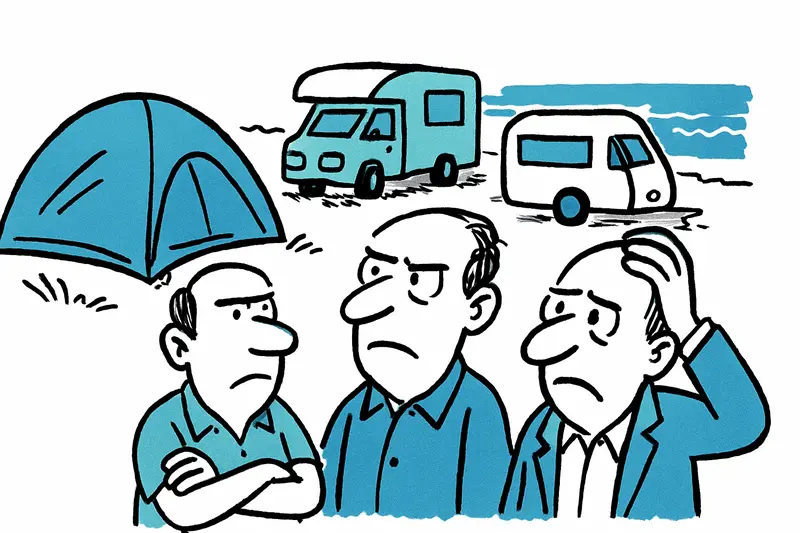
Along the MA-12, the sun is beating down, cicadas are buzzing and three ads appear on my phone by the roadside: a converted delivery van with "sea view", a caravan "near the beach" and a tent between olive trees. No registration number, only a phone number. Up to €300 per night for sleeping places that, at first sight, feel more like adventure camping than safe holiday accommodation. The central question that remains: Why are such listings still being offered even though clear rules exist?
Where enforcement gets stuck
In the Balearic Islands there are regulations, registration numbers (Balearic tourism register) and safety requirements. Yet many offers remain online, as described in Anuncios vacacionales ilegales en Mallorca: por qué falla la supervisión y cómo podría funcionar mejor.
One reason is the lack of personnel and technical resources at the municipal level: town halls in smaller places like Sa Pobla or Llucmajor often do not have the capacity to systematically check every listing. Added to that is the sheer volume of listings – every platform operates with thousands of entries.
Another, less visible aspect is the incentives of the platforms themselves. As long as bookings are coming in, the platform earns commission fees. An automatic cross-check with local registers is often missing, or the matching algorithms are slow. In practice this leads to delays between reporting and removal – enough time for several bookings to be made. This is one reason initiatives such as Faster action against illegal holiday rentals – is the island council's new tool enough? are being discussed.
What is often missing from the public debate
The problem is usually discussed as an "irregular listing" – but conversations rarely address the chain reaction that follows. Illegal rentals displace legal providers, reduce municipal revenues and create safety risks. Neighbors suffer from sudden traffic, parked cars on narrow streets and later noise. In rural settlements, precisely where traditional quiet has been preserved, such intrusions are particularly noticeable.
Another underestimated problem is demand. Many guests deliberately seek the unconventional or the seemingly cheap. As long as there is demand, supply will respond – even if it violates local rules.
Concrete levers that would work immediately
1. Technical interfaces between municipalities and platforms: A central, digital matching system that automatically checks listings for registration numbers would close gaps. If the number is missing or invalid, the listing should be blocked immediately, as suggested in Why Mallorca's New Fast-Track Procedure Against Illegal Holiday Rentals Is Only a Beginning.
2. Fast sanction chains: Fines for hosts who fail to register and for platforms that repeatedly do not respond must be binding and enforceable. Point systems for listings could create additional pressure.
3. Local inspections with priority: Mobile inspection teams, together with neighborhood reports, could identify hotspots. Not every municipality needs permanent teams, but quick, coordinated interventions are necessary in problem areas.
4. Informing guests: A simple information field during the booking process asking for the registration number and explaining the risks would reduce demand for illegal offers. Eyes open when booking – this is not just advice, but protection.
5. Transparency obligations for platforms: Public lists of removed or suspended listings build trust and demonstrate that action is being taken. Also: local contact persons and clear reporting channels.
A concrete example from Sa Pobla
A host from a quiet settlement near Sa Pobla told me: "We pay taxes, register guests and invest in safety. If others don’t do that, everything is at stake in the end." This statement hits the core: it’s not just about individual listings but about trust in rules and responsibility to one another – in the village, in the neighborhood, across the island.
Short talks between municipal representatives and hosts often help clarify misunderstandings. But when that is not enough, clear consequences must follow. Otherwise the island will gradually turn into a patchwork of differing standards.
Outlook: realistic steps instead of grand words
It is unrealistic to believe that a single push of a button will solve all problems. But binding interfaces, fast removal processes, greater transparency and better coordinated inspections would improve many things. And quite pragmatically: anyone who wants to book accommodation should ask for the registration number and not be guided solely by pretty pictures.
Until systems take effect, uncertainty remains for guests and annoyance for neighbors. But the island has enough to offer to preserve it with sensible rules — you just have to want it and act. Otherwise it will ultimately not be the platforms but all of us who lose trust.
Frequently asked questions
How can I tell if a holiday rental in Mallorca is legal?
Why do illegal holiday listings still appear in Mallorca?
What risks do illegal holiday rentals create for guests and neighbours in Mallorca?
Can illegal holiday rentals in Mallorca affect local businesses and town councils?
What could help Mallorca stop illegal holiday listings more effectively?
Should I ask for a registration number before booking a holiday rental in Mallorca?
Are unusual stays like vans, caravans or tents allowed as holiday accommodation in Mallorca?
Which Mallorca areas are mentioned as having limited capacity to inspect holiday listings?
Similar News
When Housing Becomes a Matter of Survival: Mallorca Between Rental Frenzy and Everyday Life
The case of 87-year-old Maricarmen showed that on Mallorca many people's lives are poised between affordable and uninhab...
Autumn in Mallorca: When Melancholy Gets a Window
Why autumn quietly tightens here — and how to make use of the mood: walks, culture, candles and the light from Palma to ...
Near-miss on Lanzarote: Landing Ryanair Jet and Iberia Takeoff — what really went wrong
On Lanzarote there was a dangerous incident: A Ryanair flight (FR5910) from Dublin landed on runway 03 while an Iberia E...

Eurowings introduces new Premium Business seats on Mallorca routes
From December 1, selected Eurowings flights to Palma and other destinations will feature eight particularly generous sea...
Car on MA-13 near Inca in flames – a safety check for the island
A vehicle caught fire on the MA-13 towards Alcúdia on Tuesday afternoon. The driver was uninjured, the car was destroyed...
More to explore
Discover more interesting content

Can Cap de Bou

Townhouse Lleo 72
