
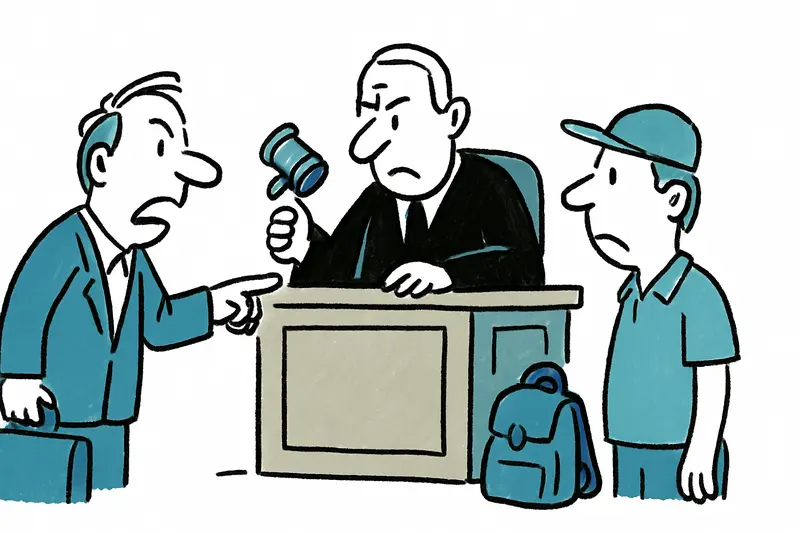
Dispute over Mini Hand Luggage: Consumer Protection Group Takes Eurowings to Court
Dispute over Mini Hand Luggage: Consumer Protection Group Takes Eurowings to Court
Who ultimately pays when only a tiny backpack is allowed in the Basic fare? A lawsuit by the consumer protection agency targets Eurowings — and we take a closer look.
Dispute over Mini Hand Luggage: Consumer Protection Group Takes Eurowings to Court
How small can cabin baggage be before customers are misled?
Guiding question: Does the so-called Basic fare disadvantage passengers who want to travel with a normal piece of hand luggage, and is the airlines' price advertising misleading in this context?
The facts are brief and inconspicuous: In the Basic fare of a German airline widely used here in Mallorca, only a very small piece of luggage is permitted — a backpack or bag that must fit under the seat. The maximum allowed dimensions are 40x30x25 centimeters. At first this sounds like a technical requirement. For many travelers, however, it means: the classic hand luggage trolley stays on the ground.
The consumer protection agency had to react, as detailed in coverage of the dispute over mini hand luggage. At the end of November it brought two proceedings before the Düsseldorf Regional Court. One proceeding aims to prohibit the Basic fare in its current form. The other targets the advertising: the lawsuit seeks to prevent advertising with a final price when that price only includes the mini piece. In short: it is about transparency and fairness in product representation.
According to a statement, the airline said it had not yet received the complaint and maintains its view: the regulations on hand luggage and the pricing comply with the applicable requirements. The offer is customer-friendly and transparent.
Critical analysis: At first glance, it's a fight between consumer advocates and an airline. But behind it are two practical problems. First: many passengers judge by their expectations. Travelers often associate "hand luggage" with a cabin trolley — not a mini bag. Those who only notice this at the gate have little time and often poor alternatives. Second: advertising with a final price suggests that this price covers all usual needs. If the fine print then says otherwise, the line to misleading advertising is quickly crossed.
What is often missing in the public discourse: the perspective of people with baggage needs who do not fit the mold. Families with small children, people with mobility aids, business travelers with laptops — they all have different requirements. Also underestimated is the view of airport practice: on the luggage carousel you see trolleys, at the coffee counter in the departure hall people discuss, on the Passeig Mallorca you hear returnees tell how they had to repack at the gate. These everyday moments show that the dispute is not abstract; see a report on a Eurowings hand luggage conflict involving a reality TV couple for an example.
Everyday scene from Palma: In the morning before departure, holidaymakers sit with half-open suitcases on the benches at Palma airport, taxi drivers push carts by, and in the café on the Passeig Mallorca arrivals order a cortado. Someone measures their luggage with a ruler from their handbag. Such scenes are typical: annoyance about missing information mixes with the low hum of the air conditioning and the rolling of trolleys.
Concrete solutions that would help immediately: First, mandatory, clearly visible notices in all price offers — not just in footnotes — that clearly indicate which pieces of luggage are included in the base price. Second, a uniform designation: "mini hand luggage" instead of just "hand luggage" to manage expectations. Third, control and sanctions when advertising is misleading; this can be addressed by consumer protection authorities and market supervision. Fourth, pragmatic measures for airports and airlines: visible measuring boxes at the departure area, staff training and a fair goodwill rule for people who mistakenly had the wrong luggage.
For travelers: look more closely before booking. Note dimensions, take a photo of your luggage, choose the next higher ticket if uncertain or check in the day before departure. For those affected it's important to keep documentation — booking confirmation, screenshots of the advertising, receipts for additional fees — in case a claim is later asserted.
Pointed conclusion: It's not just about centimeters or legalities. It's about trust. When fare names destroy expectations, passengers pay in the end — with time, nerves and sometimes money. The lawsuit by the consumer protection agency is therefore not a gift to travelers, but a wake-up call to the industry: clarity costs little, trust very much.
Frequently asked questions
What counts as hand luggage on Eurowings Basic fares from Mallorca?
Is it misleading if an airline advertises a final price but only includes mini hand luggage?
How can I avoid extra hand luggage fees on a flight to Mallorca?
What should I pack if my Mallorca flight only allows mini hand luggage?
Can I take a normal cabin trolley on Eurowings flights from Palma de Mallorca?
What happens if my bag is too big at Palma airport?
Why are consumer groups taking Eurowings to court over hand luggage?
When is it better to book the next fare instead of Basic on a Mallorca flight?
Similar News
When Housing Becomes a Matter of Survival: Mallorca Between Rental Frenzy and Everyday Life
The case of 87-year-old Maricarmen showed that on Mallorca many people's lives are poised between affordable and uninhab...

Autumn in Mallorca: When Melancholy Gets a Window
Why autumn quietly tightens here — and how to make use of the mood: walks, culture, candles and the light from Palma to ...

Near-miss on Lanzarote: Landing Ryanair Jet and Iberia Takeoff — what really went wrong
On Lanzarote there was a dangerous incident: A Ryanair flight (FR5910) from Dublin landed on runway 03 while an Iberia E...

Eurowings introduces new Premium Business seats on Mallorca routes
From December 1, selected Eurowings flights to Palma and other destinations will feature eight particularly generous sea...

Car on MA-13 near Inca in flames – a safety check for the island
A vehicle caught fire on the MA-13 towards Alcúdia on Tuesday afternoon. The driver was uninjured, the car was destroyed...
More to explore
Discover more interesting content

Can Cap de Bou

Townhouse Lleo 72
