
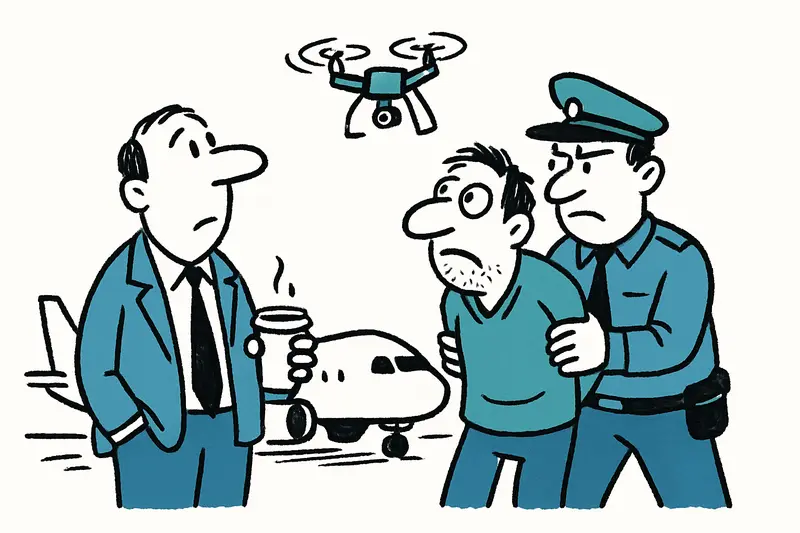
A drone briefly shut down Palma airport. Between confusion in the departure hall and heavy fines lies a broader debate about technology, control and tourism. What is missing are clear measures — and often also responsible parties.
35 Minutes of Standstill: A Small Multicopter, Big Consequences
On Sunday morning, at about 11:20 a.m., the normally busy departure hall of Palma airport turned into a waiting room for around 35 minutes. The public announcements shifted from hurried to cautious, passengers held their coffee cups half raised and looked upwards. Eight aircraft had to divert; some planes circled longer before they could land. I happened to be on site and remember the smell of espresso, the quiet chirring of the air conditioning and the piercing midday sun coming through the roof — and yet for a moment there was something eerie in the air: the sky, suddenly no longer familiar.
What exactly happened — and why is this more than an anecdote?
The cause was a drone that apparently flew into the secured area and over the take-off and landing zone without permission. Such incidents sound almost cinematic, but they're real: landings are delayed, pilots have to reroute, cabin crews calm unsettled passengers. The immediate costs are clearly measurable — delays, fuel consumption, diversions — but the hidden consequences are harder to quantify: extra strain on staff, reputational risks for the airport and an increased safety risk for people on the ground.
Fines and gaps: Between €60 and millions
The legal range is absurdly wide. Depending on whether authorities classify the operator as a hobby pilot or a commercial operator, figures range from around €60 up to €4.5 million. Such numbers make headlines — but they also reveal another reality: penalties exist, but enforcement is not guaranteed. Authorities first have to identify the responsible party. Tracing a drone is technically and legally complex. If there is no clear registration or GPS logging, often the only hope is eyewitnesses or tips from social media.
Aspects that receive too little attention
Looking beyond the obvious reveals several problem areas. First: the spread of rental drones to tourists — often handed out near airports — creates new risks. Many rental companies provide insufficient information about no-fly zones. Second: language barriers. Many visitors do not understand local rules or how to register in Spain. Third: technical detection. Airports cannot look for small, quiet multicopters everywhere at once. Radar, acoustic sensors or specialized antennas cost money and must be integrated. Fourth: environmental aspects. Every diversion increases CO2 emissions; a seemingly harmless drone flight therefore also has climatic consequences.
Concrete opportunities and approaches to solutions
A few pragmatic suggestions from a Mallorca perspective: Enforce geofencing more consistently — not only in theory, but combined with regular software updates for rental devices. Drone rental businesses should be legally required to run an automatic no-fly zone check before handing over equipment and to lock the device accordingly. Airport areas need clear, visible signs in several languages that reach tourists already in the parking lots. Technically useful are mobile detection units that can trigger short-term alerts and allow rapid localization. And: cooperation with local tourist offices and car rental companies so that information leaflets are distributed on arrival — a small flyer can prevent major damage.
What pilots and travelers can practically do
For drone owners: check the map before you start. The Spanish air navigation service ENAIRE offers an interactive map (drones.enaire.es) — download it, look at it, remember it. Registration, training and insurance are not just bureaucratic hurdles; they protect against costly mistakes. Prefer flying in open fields, not over parking lots or densely built coastal strips. And if the weather is changeable — don't fly. For travelers: stay calm and pass on information. Anyone who has seen something should report it. Eyewitness reports are often the key to finding those responsible.
The incident in Palma is still under investigation. It would be short-sighted to dismiss the whole thing as an isolated case. Mallorca is an island with a constant flow of holidaymakers, many international visitors and therefore a special need for clear rules and practical controls. In short: the drone only pulled the trigger. The discussion about how to keep our skies safe must follow now.
I will continue to follow this and report as soon as new findings emerge. Until then: keep your eyes open — at the sky and when booking rental drones.
Similar News

Palma Invests More in El Terreno: What the Renovation Will Actually Deliver
Palma has kicked off the upgrade of El Terreno: new sidewalks, more greenery and utilities moved underground — the city ...

Sóller: Fàbrica Nova to be comprehensively restored – Island Council takes over and invests millions
The decaying textile factory Fàbrica Nova in Sóller gets a new chance: the Island Council has purchased the building and...
Late-night racing on Avinguda Mèxic: residents demand quiet
In the Nou Llevant neighborhood, daily illegal car races on Avinguda Mèxic are causing fear and sleeplessness. Around 50...
Actions for the International Day Against Violence Against Women in Palma
Palma takes to the streets: Two rallies start in the evening, municipalities offer additional activities — and the bus c...
Many conferences pull out: Hotel prices make Mallorca unattractive for business travel
Several larger companies have moved events off the island. Too-high room prices and the lack of availability for short s...
More to explore
Discover more interesting content

Experience Mallorca's Best Beaches and Coves with SUP and Snorkeling

Spanish Cooking Workshop in Mallorca
