
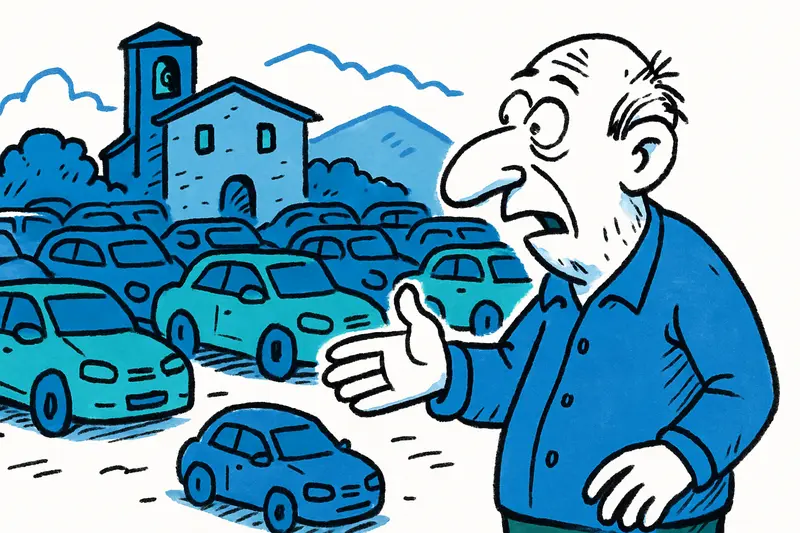
20 Cars per Inhabitant: How a Tramuntana Village Became a Tax Haven for Vehicle Fleets
What Escorca Reveals About Mallorca’s Transport and Tax Policy
Escorca highlights how vehicle tax policy can shape registrations, fairness and transparency across Mallorca.
Answer
Why is the Escorca example important for Mallorca’s transport debate?
More questions on this topic
Related follow-up questions from the same article, collected in one place.
Why does Escorca in Mallorca have so many registered cars for such a small population?
Many cars are registered there for tax reasons rather than because they operate in the village.
Is it legal for companies in Mallorca to register fleet vehicles in a different municipality?
It can be legal, but it often raises questions about tax fairness and loopholes.
How does the vehicle tax work in Mallorca municipalities?
Local councils can set different vehicle tax rates, which affects where fleets are registered.
Why do rental car companies register vehicles in small Mallorca villages like Escorca?
They do it mainly to benefit from lower tax rates.
Does a high number of registered cars mean more traffic in a Mallorca village?
A high registration count does not automatically mean the roads are busier.
What problems can low vehicle tax rates cause for Mallorca municipalities?
Low rates can bring income, but they also create dependency and uneven competition.
What could Mallorca do to stop sham vehicle registrations?
Stronger checks and better data sharing would make fake registrations harder.
Similar notes
Discover more interesting content

Can Cap de Bou

Townhouse Lleo 72
