
Heino and the Pope: A Quiet Moment Full of Music
Heino and the Pope: A Quiet Moment Full of Music
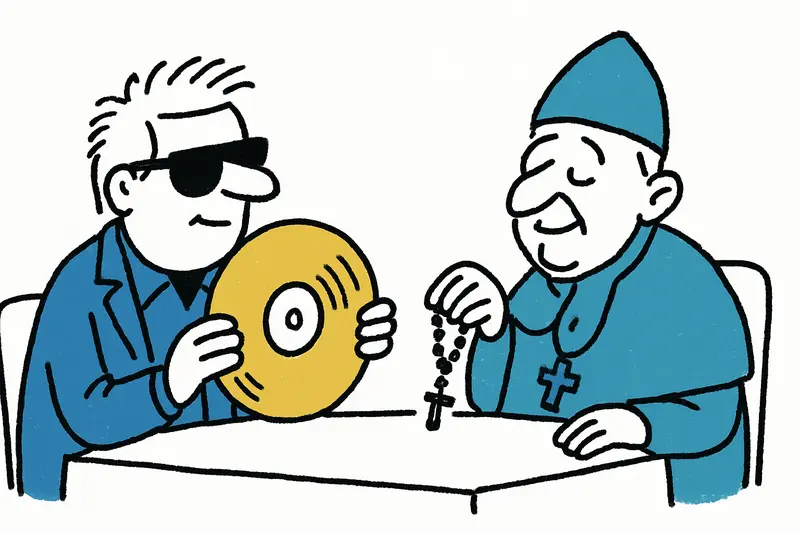
Schlager singer Heino met Pope Leo XIV in a private audience in Rome. A gift, a blessed rosary and a few tears show that music connects worlds — from Playa de Palma to Kitzbühel.
Heino and the Pope: A Quiet Moment Full of Music
Private audience in Rome brings a singer from Kitzbühel together with sacred song
Sometimes it isn’t big headlines but small gestures that linger: an 87-year-old singer from the Alps, a golden record and a blessed rosary in the Vatican. Heino, known for his appearances at the Ballermann, as covered in No Farewell in Sight: Heino, the Bierkönig and the Ballermann Legacy, and as a fixture of many party nights on Playa de Palma, traveled to Rome shortly before Christmas for a private audience with Pope Leo XIV. The meeting lasted only about 15 minutes, says Heino’s manager Helmut Werner, who was present and translated.
During the blessing Heino became emotional and showed tears. That fits the image many Mallorcans have of him: not a loud provocateur, but a man who feels at home in church concerts. His management in Rome recalled Heino’s more than 250 performances in church venues and the family story that his great-grandfather is said to have played the organ in Cologne Cathedral. As a token of appreciation Heino presented the Pope with a golden record he had received for a CD of religious songs in Austria. The Pope responded with a blessed rosary.
Heino shared impressions of the encounter on Instagram, a quiet yet striking document. In Palma, when I have my morning coffee on Passeig Mallorca and the tram hasn’t yet rattled through the hubbub of voices, people talked about it: a singer they know from the Bierkönig met the head of the Catholic Church. Such news brings different worlds together — the loud beach promenade and the quiet chapel, the audience of schlager melodies and the congregation in church pews.
Heino lives in Kitzbühel and will start a tour of 80 cities in February. Yet he remains a constant presence for the island: his contract with the party venue Bierkönig on Playa de Palma reportedly runs until 2038, as reported in Heino returns to the Ballermann: An evening between pathos and karaoke at the Bierkönig. For Mallorca this means continuity: artists who perform here regularly become part of the island’s unique microcosm between tourism, tradition and nightlife.
Why is that good news for the island? Quite pragmatically: names like Heino attract visitors, generate hotel bookings and provide income for restaurants and taxi drivers. At the same time the audience shows that the person behind the brand is multi-layered. That someone who livens up the Bierkönig also sings church songs and values spiritual encounters is not insignificant for Mallorca’s cultural landscape. It is a reminder that the island’s audiences are very diverse — families on the beach, retirees in winter, young partygoers in season — and all are part of island life.
On the streets of Palma I hear such conversations: at the Mercat de l’Olivar voices first laugh at the sensation and then nod thoughtfully. In front of the café on Plaça Major tourists and locals discuss how music connects people. The sun in February is often milder here than at the North Alpine lodge, but the conversations are similarly warm.
A small thought remains: if a musician with so many facets publicly seeks a bridge to the church, that can give event organizers and communities ideas. More concerts in church spaces, collaborations between festivals and church institutions or discussion series on music and faith — these are practical steps the island could take. Concert series in off-season towns like Alcúdia or Deià would spread visitation and enliven cultural venues.
For Heino personally the balance remains interesting. He continues to perform in the party circuit and fills halls with his classics while also moving closer to religious repertoire. The mix piques curiosity: which songs will he sing in churches, which at the Bierkönig, where even premieres have surprised audiences as in Entre el baile y el asombro: el estreno más estrafalario del Bierkönig del año? For Mallorca it means: we may listen with a smile when old schlager meets pipe organs in the sunlight of the playa — a bit contradictory, but somehow typical for this island.
And if you stroll down Avinguda Jaume III in the evening as the lamps come on, you can imagine how diverse Mallorca is: folk music meets beach pop, the Pope receives a record, and people talk about it long after over a glass of Mallorcan wine. It’s not high politics, but a piece of everyday culture that shows how closely entertainment, tradition and tourism are intertwined on the island.
Outlook: The encounter in Rome is more than a photo on social media. It is a reminder that music overcomes boundaries and that Mallorca benefits from personalities who show several sides. For organizers and cultural actors on the island it can be an occasion to be bolder in mixing — church concerts alongside beach parties, discussion evenings alongside open-air shows. And for visitors there remains an invitation: listen when the island sings its stories.
Frequently asked questions
Is Mallorca a good place for music lovers who want both nightlife and quieter concerts?
Why do artists who perform in Mallorca often become so closely associated with the island?
What kind of weather is typical in Mallorca in February?
Can you swim in Mallorca in winter or early spring?
What should I pack for Mallorca if I’m visiting outside the high season?
What is the Bierkönig on Playa de Palma known for?
Is Palma a good city for walking, café stops and everyday sightseeing?
Which Mallorca towns are often suggested for cultural events outside the main season?
Similar News

New trick at Palma Airport: suitcase stolen from the belt — a reality check
On September 28 a 36-year-old allegedly stole a suitcase from the baggage belt of a 51-year-old German passenger at Palm...
Urgent Clearing of Palma's Torrents: Flood Prevention or Symptom of Short-Sighted Planning?
The city of Palma is responding to storm forecasts and has cleared several torrents. We ask: Is the short-term clearing ...

Evaneos and Mexico: A Reality Check for Sustainable Travel
Travel advertising often reads like a promise: local, sustainable, unique. But how deep do these promises really go? A c...

From Megapark to the Altar: Party Singer Now Offers Weddings in Mallorca
A well-known party artist combines partying and marriage: instead of a traditional church there are ceremonies at the Me...

The Maricarmen Case: Why an Eviction Is Forcing Spain's Housing Debate
Images of an 87-year-old woman on a stretcher have sparked a debate in Spain that also runs deep in Mallorca. Who protec...
More to explore
Discover more interesting content

Can Cap de Bou

Townhouse Lleo 72
