
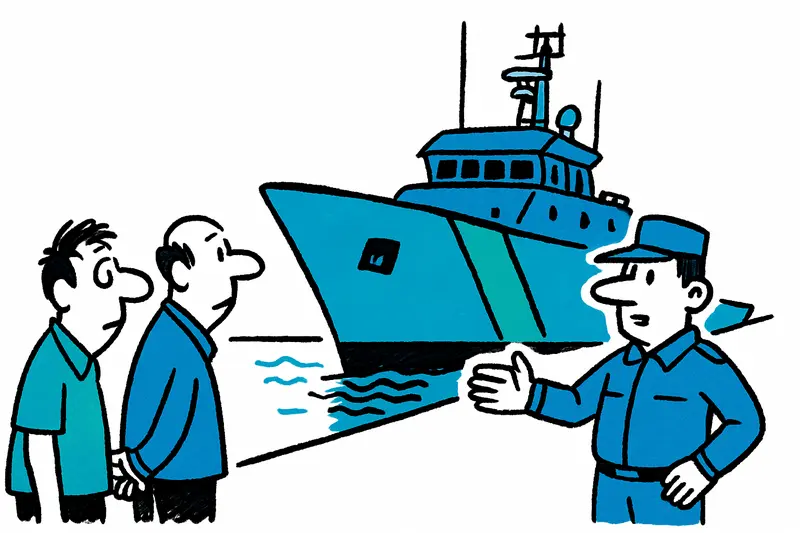
'Duque de Ahumada' in Portopí: New high-tech patrol ship sparks debate
The 82-meter-long patrol ship of the Guardia Civil is moored in Portopí for public visits — between curiosity, security concerns and climate debates.
'Duque de Ahumada' in Portopí: search and rescue, control — or just big hardware?
On Sunday morning at the Paseo Marítimo it is immediately noticeable: a new, significantly larger ship has docked at the Portopí naval base. No flags, no official fanfare — just an 82-meter hull that stands out among sailing yachts and tour boats. If you listen closely you can hear seagulls, the rustle of seaweed, the faint diesel hum and the voices of dock workers. The ship is called 'Duque de Ahumada' and is the Guardia Civil's latest offshore unit, as covered in report on the Guardia Civil patrol ship in Portopí.
Open for public viewing
On Sunday, October 26, the ship will be open to the public from 10:00 to 13:00. Access is via the harbor area; bag checks and brief security instructions should be expected. A local colleague is right: if you want to get in on time, it's better to arrive before ten — by around 10:15 a visible queue often forms. Photos are usually allowed on deck, but certain areas remain closed for security reasons. And yes: after the tour the coffee at the kiosk on the Paseo tastes a little better.
What technology and purpose are behind it?
The technical data are impressive: space for 44 crew members, twelve additional passengers and the capacity to take on up to 100 rescued people. On board there is room for specialized equipment as well as surveying and surveillance technology. Officially, the ship is intended for coastal and offshore operations — aimed at combating illegal migration, drug trafficking and environmental offenses.
That makes sense. Large vessels bring range, accommodation options and better sensors. At the same time they are less maneuverable than smaller units and more expensive to operate. The question is therefore: do such cruisers meaningfully complement the existing fleet — or are they more symbolic politics in a shiny hull? This mirrors debates when a US aircraft carrier visit provoked political discussion.
Reactions on site: hope meets skepticism
Voices overlap at the quay. Some residents and fishermen welcome the increased presence. 'Better one new ship than ten phone calls,' says a fisherman from Portopí with a laugh. Others are skeptical: why so much technology when the causes of migration and drug trafficking lie within Europe and beyond Spanish territorial waters? In addition, people ask whether a partly fossil-fueled large ship is really the right response to growing environmental problems off the coast.
Less discussed is often the perspective of those affected: rescued people, their legal situation, and the question of humane reception places on land. Local ecosystems are also affected — both by increased ship movements and by possible operations for monitoring and searches. These aspects do appear at the quay but rarely become the focus of media debates.
Analytical view: opportunities, limits and proposals
The concrete opportunities are obvious: a stronger presence can disrupt smuggling routes, enable rapid assistance in accidents and document environmental offenses faster. However, three things are needed for this: a transparent deployment strategy, cooperation with ports and coastal communities, and complementary smaller units that can react flexibly and quickly, such as the two new control vessels presented in Andratx.
Less visible but important: technical equipment alone does not solve political problems. A few concrete proposals:
1. Clear deployment priorities and transparency: the public and municipalities should be better informed about when and why operations take place.
2. Combination of large and small units: fast boats for nearshore, drones for surveillance and larger ships for logistics and support together form an effective network.
3. Cooperation with local actors: involve fishermen, port authorities and NGOs — their local knowledge is invaluable and builds trust.
4. Environmental monitoring: use onboard sensors for marine monitoring and make the data publicly available — this would benefit research around Mallorca.
Practical information and a touch of local color
If you come for the visit: parking around Avinguda Gabriel Roca is scarce on weekends. Biking or walking is often more relaxed. At the quay it smells of sea and diesel, seagulls fight over breadcrumbs, and between hull and pier you can feel that mix of technology and everyday life.
Whether the new patrol ship will be perceived as useful in the long run depends not only on its technology but on how it is deployed — and how openly this is discussed. A large ship can reassure. Properly used, it can also help address problems more efficiently and humanely.
Note: times and access may be adjusted on site. Those who want to plan precisely should check for updates shortly before their visit.
Frequently asked questions
What is the new Guardia Civil ship in Portopí used for?
Can you visit the Duque de Ahumada in Portopí?
Is it worth arriving early for the Portopí ship visit?
Are photos allowed on the new patrol ship in Portopí?
How big is the Duque de Ahumada ship in Mallorca?
Why are some people in Mallorca skeptical about the new patrol ship?
What is the best way to get to Portopí for the ship visit?
What can the Duque de Ahumada do that smaller boats cannot?
Similar News

Release after bloody attack in Palma: Why the court's decision raises questions
An 18-year-old who allegedly inflicted a serious neck injury on a man at Plaza Gomila using a wristwatch wrapped around ...
Kidnappings in Inca: Three young men forced into car trunks and abused in the forest – a reality check
In Inca, three 18-year-old men were forced into car trunks by masked assailants at the Plaça des Bestiar, taken to a for...
Spreading Massification: The Brake That Still Has Much Work to Do
Marga Prohens announces limits on volume tourism. The measures sound harsh — but are they enough to save everyday life, ...

Through the Keyhole onto the Party Yacht: How Daniela Katzenberger Is Planning Her 40th on Mallorca
Daniela Katzenberger turns 40 and wants to celebrate it on the island — likely with a boat, cake and her mother. A relax...
By Boat Instead of the Road: Palma's Water Bus — a Reality Check
The 'Bus Nàutic' launches in two stages — but questions remain over interim operations, fares and environmental requirem...
More to explore
Discover more interesting content

Can Cap de Bou

Townhouse Lleo 72
