
Helmet on the handlebar, man dead: What the e-scooter accident in Alcúdia reveals
A 66-year-old dies after an e-scooter fall in Alcúdia — the helmet hung unused on the handlebar. Why do so many riders not wear protection, and what needs to change?
Helmet on the handlebar, man dead: What the e-scooter accident in Alcúdia reveals
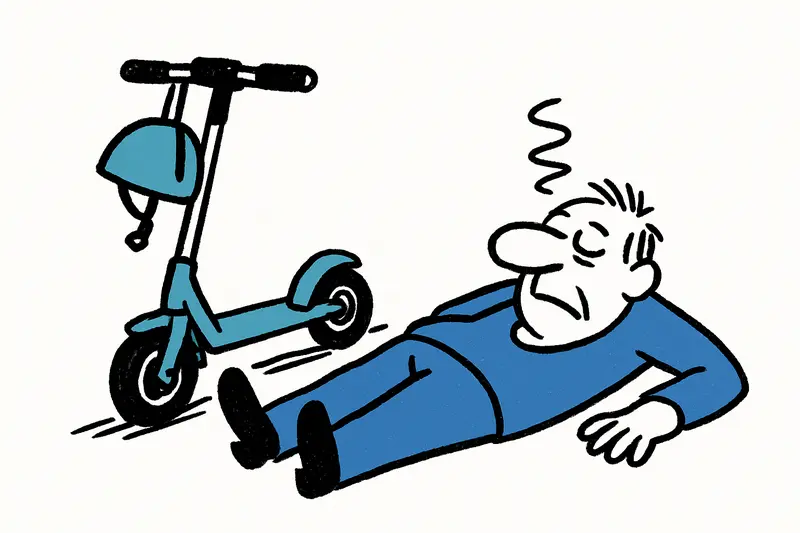
On Sunday evening around 9 p.m. a dull impact tore through the night on a residential road on the way to Artà: according to residents, a man lay next to his e-scooter, his head on the asphalt (see Spanish report: 'Hombre fallece tras accidente con patinete eléctrico en Alcúdia'). Paramedics immediately began resuscitation and used a defibrillator, but they could not save the 66-year-old. A helmet hung unused on the handlebar (as noted in 'Casco en el manillar, hombre muerto: lo que revela el accidente de patinete en Alcúdia').
The scene felt to me like an image seen more often in recent years: lamp light reflecting on painted scooter frames, the quiet rush of the sea in the distance, neighbors standing and whispering. In Alcúdia, where tourists and locals still stroll in the evening, an incident like this immediately carries its own lasting weight.
The key question: Why is a helmet here not just an accessory but often the last chance?
This question hangs in the air: why do people ride with a visible helmet on the handlebar but not on their head? The answers are rarely purely technical. It is about convenience, heat, ruined hairdos — and the culture of riding light vehicles. On Mallorca, the number of e-scooter accidents has increased; serious head injuries are a common consequence.
Largely overlooked in the debate is the responsibility of the providers: rental companies often provide helmets, but the habit of hanging them on the handlebar or not using them at all is widespread. The role of infrastructure is also underestimated: poorly lit side streets, missing or unclear bike lanes and narrow cobblestones increase the risk. And finally, systematic data are lacking — who speeds, who gets injured, how old are the vehicles?
What the investigation does not immediately reveal
The police are now clarifying cause and circumstances: technical defect, alcohol, an evasive maneuver or a medical emergency are possible explanations. But merely determining the cause is not enough. We must also ask how well the rescue chain works: how long did it take for help to arrive on site? Did bystanders perform first aid? Small delays often decide between life and death.
Concrete: measures that would help immediately
A few things could be implemented quickly here and would make a real difference:
1. Mandatory minimum standards for rental companies: Helmets must not only be offered but distributed in a way that they can actually be used (different sizes, short instruction, visible information campaigns at rental stations).
2. Night riding rules and more visible clothing: Mandatory reflectors or lighting checks on scooters, time-limited speed restrictions in residential areas and additional controls during night hours.
3. Infrastructure instead of paving disputes: Better lighting, clearly marked continuous bicycle and scooter lanes and repair of dangerous road sections — especially at junctions and narrow streets like the one near Alcúdia.
4. Data sharing and prevention: Rental companies should share anonymized accident and ride data with authorities so danger spots can be mapped. Schools and tourist centers need easy-to-understand safety courses.
What neighbors and bystanders can do now
The people of Alcúdia are still affected by the evening. Some told me they had always found the road risky at night. Get involved in local initiatives: report poorly lit sections, demand inspections, support awareness campaigns. And if you see an accident: call the EU 112 emergency number, provide first aid, protect the injured as best you can. Minutes matter.
It is easy to point the finger at tourists or rental companies. Even easier is to give up. More useful would be a common, pragmatic path: better rules for rental companies, clear traffic guidance, and a culture in which a helmet is not a nuisance but a matter of course. The road near Artà reminds us brutally how fragile an everyday ride can be.
The investigations are ongoing; the grief remains. For Alcúdia this means: an open question about safety, and the opportunity to learn from this tragedy — before another night writes the same picture again.
Frequently asked questions
Is it safe to ride an e-scooter at night in Mallorca?
Do you really need to wear a helmet on an e-scooter in Mallorca?
What should I do if I see an e-scooter accident in Mallorca?
Why do so many e-scooter accidents in Mallorca involve head injuries?
Is Alcúdia a risky place to ride an e-scooter at night?
What can e-scooter rental companies in Mallorca do to improve safety?
What makes e-scooter riding more dangerous on Mallorca roads?
What safety tips should tourists follow when using an e-scooter in Mallorca?
Similar News
After Being Admitted to Hospital Again: Heinz Hoenig and the Questions We Should Ask in Mallorca
Long-time Mallorca resident Heinz Hoenig was admitted to hospital again. A clear “what next?” is missing from the covera...
Yellow Alert: Is Mallorca Prepared for the Next Rain Band?
Aemet has issued a yellow alert for the south, southwest and the island's interior. Thunderstorms and heavy rain are for...
Kegel brothers trial postponed: Why Mallorca must wait for a verdict
The trial of 13 German holidaymakers will not begin until May 2028. The long wait raises questions — for victims, defend...
Chaos on Palma's Runway: Why the Summer at the Airport Was So Disrupted
This summer laid bare where Palma airport is faltering: only just over half of departures were on time and seven percent...
Cocaine Offer on Ham Street: Why the Open Trade Should Ring Alarm Bells
In the middle of Pare Bartomeu Salvà a tourist was offered a packet of cocaine as part of a sunglasses deal. A short int...
More to explore
Discover more interesting content

Can Cap de Bou

Townhouse Lleo 72
