

Fewer Blue Flags in Mallorca: What Does That Say About Our Beaches?
The number of Blue Flags on Mallorca has fallen. A walk along the Paseo, a glance at the sea — and the question: Is it a matter of cleanliness, safety or simply money? A look behind the flags and suggestions on how the island can win back the trust of beachgoers.
Fewer Blue Flags — and the question hardly anyone asks out loud
It is one of those Sunday mornings: the seagulls quietly quarrel over a breadcrumb, mooring lines clink at the bollards, and the Paseo smells of freshly brewed coffee. Shortly after seven I stop, look at the sea — and wonder: Why are fewer of the familiar Blue Flags in Mallorca flying today than before? The answer is not just a list of beaches that still carry the award. It also tells of decisions, money, priorities and what we, as an island, want to show to the public.
Who still has the flag — an overview
Currently the Blue Flags fly at only 21 beach sections in Mallorca: well-known names include Platja de Muro, Formentor (Pollença), Alcúdia, Cala Millor, Cala Mondragó, Cala Sa Nau, Cala Ferrera, Platja s’Arenal (Porto Colom) and several beaches in the Palma metropolitan area such as Ciutat Jardí. Going through the list, it becomes clear: the most important bathing spots are represented, but the number is noticeably smaller than in previous years.
The key question: a signal of deterioration or administrative reshuffling?
The central question is: Does fewer Blue Flags automatically mean worse water quality and less safety? Short answer: no — but it's more complicated. Behind the flag there isn't an office that simply decides "good" or "bad." An environmental education foundation, in cooperation with ADEAC, awards the label based on measurement data provided by the Ministry of Health, as examined in a look at water quality in 2025. But applying for the label is time-consuming and costs money. For a long time the regional government helped with fee payments. Today municipalities often bear the costs themselves — and that has consequences.
What is often missing in the debate
Public discussion frequently focuses on the raw number: fewer flags = problem. That overlooks three things: First, water sampling and lifeguard services can continue independently of a quality label, as local measurements show in water quality 2025 measurements. Second, some municipalities prefer other labels, such as the Quality-Q, which emphasizes different aspects (accessibility, cleanliness, sanitary facilities). Third, the Blue Flag is a "brand" — municipalities weigh whether to invest in visible quality, infrastructure or other communication measures.
Concrete problems on site
Some smaller municipalities simply have less staff available for the complex application process and the annual requirements. Others calculate the fees against more urgent expenses like off-season beach cleaning or additional lifeguard posts. And then there is the perception issue: for holidaymakers the flag is a quick signal. If it's missing, many immediately worry — whether justified or not.
Opportunities and proposals: How Mallorca can win back trust
It's not just about complaining. If we approach the matter strategically, some solutions can be set in motion quickly:
1. Regional fund for quality labels: The Balearic government could again cover part of the fees centrally — invested in visibility and safety rather than bureaucracy. That would relieve smaller municipalities.
2. Joint application platform: A central portal for applications and reporting would make staffing easier and simplify review processes.
3. More transparency for bathers: Up-to-date water values online and on information boards at the beaches — not just the label, but the real figures.
4. Combined quality seals: Municipalities could issue local commitments on infrastructure and accessibility alongside the Blue Flag — that increases trust.
5. Civic engagement: Volunteer clean-up actions, local measurement programs and beach guardians create closeness and explain why a flag is missing — or why it isn't.
Conclusion: The flag is only part of the story
Sitting by the sea and seeing the remaining Blue Flags, one might think everything used to be better. Often, however, it is a mix of austerity, administrative rules and differing priorities. That does not mean we care less for our beaches. But it does mean we must improve communication, set clear priorities and support small municipalities. On the next walk along the Paseo I will again hear the clatter of the lines and look to see which flags dance in the wind. And I hope that soon we will see the familiar blue more often on the island — or at least know why it is missing.
Frequently asked questions
Does having fewer Blue Flags in Mallorca mean the beaches are worse?
What does the Blue Flag actually mean on a Mallorca beach?
Which Mallorca beaches still have a Blue Flag?
Is Mallorca beach water quality still checked if a beach loses the Blue Flag?
Why do some Mallorca municipalities stop applying for the Blue Flag?
Are Blue Flags more common on the popular beaches in Mallorca?
What else can travellers look at besides the Blue Flag in Mallorca?
Why do some Mallorca beaches use other quality labels instead of the Blue Flag?
Similar News
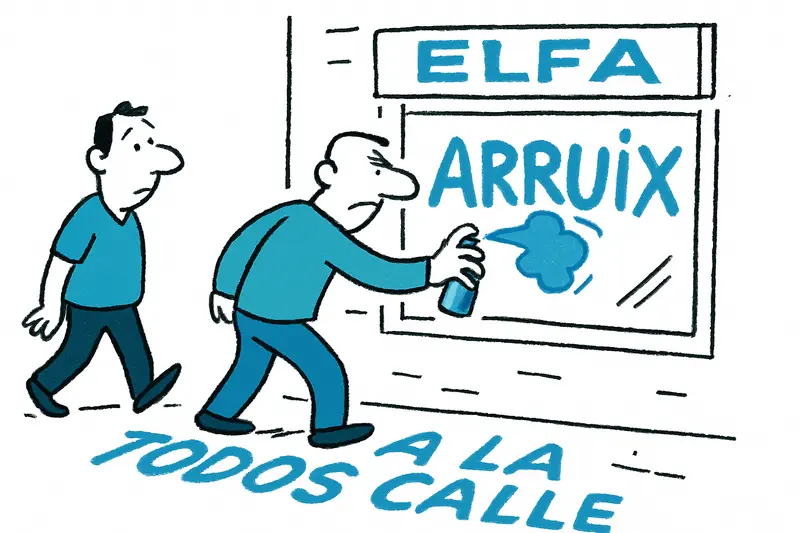
Shortly before major demonstration: Vandalism at a real estate agency in Palma — Do the ends justify the means?
Shortly before the large demonstration against mass tourism, a real estate agency on Carrer Verí in Palma was sprayed wi...
Saharan dust over Mallorca — How risky is the air, and what is missing in the response?
A Saharan dust cloud has hung over the island for days. Authorities report the air quality index as "poor." A reality ch...

What Does the New Anti-Tobacco Law Mean for Mallorca? A Reality Check
The Spanish government has introduced a tightened anti-tobacco law. What specifically changes for Mallorca — and where a...

Four Dead off Portocolom: How Much Do We Know — and What Is Being Concealed?
Four bodies were recovered from the sea off Portocolom. The circumstances are unclear, and a possible connection to a pr...

Really antisocial? Cup thrown hits singer — and why we should take a closer look
At a concert in Pfullendorf a plastic cup was thrown onto the stage and struck a spectator; the singer Isi Glück intends...
More to explore
Discover more interesting content

Boat Tour with BBQ along Es Trenc Beach

Private transfer from Mallorca Airport (PMI) to Pollensa
