
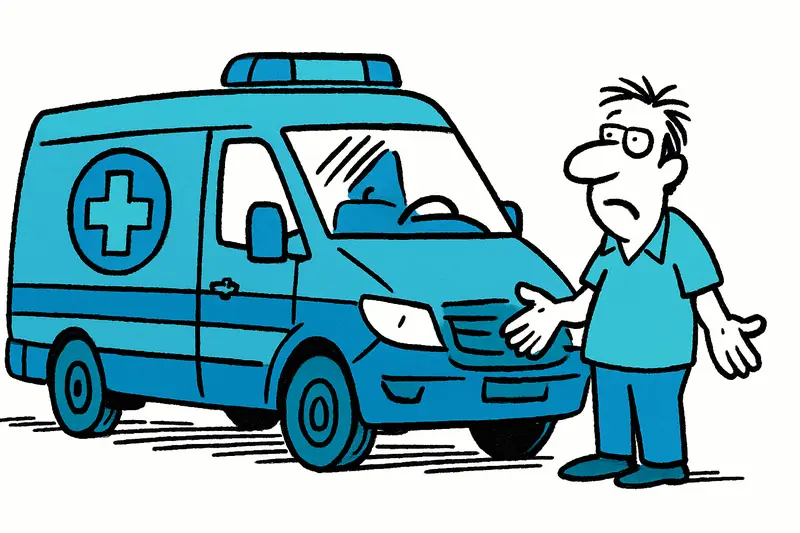
New deployments, old rules: on Mallorca expensive ambulances are parked unused because many technicians only have a car driving licence. An administrative error becomes a stress test for staff and safety — and calls for quick, pragmatic solutions.
Keys Missing, Vehicles Idle: Why Mallorca's New Ambulances Aren't Rolling
In front of the hall on Calle Son Oms they still shine like showroom pieces — fresh paint, new headlights, blue-light covers neatly taped. Inside, however, diagnostic cabinets hang from the onboard electrics, the batteries are charging, but the wheels do not turn. The reason is simple and bitter: many emergency personnel on the island only hold the standard car driving licence. The new vehicles exceed the 3.5-ton limit and therefore cannot be driven by them.
The key question now occupying the shifts
How could such an expensive purchase be made without clarifying the driver issue? This question buzzes through canteens, radio rooms and administrative corridors. For those affected it is not theoretical: when an ambulance is available but legally blocked, it is no longer just about money — it is about minutes, staff workload and trust in the emergency chain.
Technology, regulation, reality
The 3.5-ton limit marks a clear dividing line in Europe between passenger cars and light commercial vehicles. For emergency services this means: different insurance conditions, different liability issues, different driver requirements. On Mallorca, where eight out of ten emergency technicians only have the regular car licence, this leads to the absurd situation that new, fully equipped vehicles sit in halls while the old diesel workhorses continue to run across the island — accompanied by the nightly wail of sirens and the smell of diesel on the ramp.
What often gets overlooked in the public debate
Public attention quickly focuses on acquisition costs. Beneath that lie several less visible problems: liability in the event of deployment raises insurance premiums; certain equipment packages add weight even though they are not strictly necessary for the majority of missions; and last but not least, staff motivation. An emergency technician I met at the gate shook his head: "We keep driving — what else can we do? But it's a waste of time and money."
There is also a seasonal component: during high season the workload grows enormously, additional vehicles would help — but who should operate them if qualified drivers are missing? And when hiring on an island with high rents and seasonal work, finding good staff is not a given.
Concrete risks
Away from the headlines, tangible risks arise: longer response times because detours are necessary; overtime and exhaustion among existing staff; and an image problem: tourists and locals should not have to wonder whether everything will work smoothly in an emergency. Making modern vehicles inactive acts as a warning signal for the entire emergency organization.
Which solutions are on the table — and what are their drawbacks?
The authorities are examining several paths that could complement each other. All options require speed and pragmatism:
1) Rapid, compensated retraining: intensive courses, financial incentives and time-off compensation could qualify more drivers within weeks. Drawback: training ties up personnel who are currently needed for operations — therefore it must be planned smartly and linked with replacement arrangements.
2) Save weight instead of retrofitting: an inventory of equipment can identify unnecessary extras. Some fittings add kilograms without increasing health benefits for most missions. Drawback: conversions cost time and money, and changes can raise approval issues.
3) Transitional solutions with external partners: short-term cooperation with private providers or renting vehicles under 3.5 tons for peak times can maintain operational capability. Drawback: availability, costs and liability issues must be clearly regulated.
4) Rethink personnel policy: targeted incentives for drivers with the appropriate licence class — higher wages, seasonal bonuses, help finding housing — could help in the long term. Drawback: this requires budgetary resources and political will.
5) Introduce a procurement checklist: in future frontline staff should be involved in selection processes, licence classes checked before ordering and prototypes tested. This prevents the next investments from missing practical needs.
Why the issue is essential for Mallorca
Mallorca also depends on trust in public infrastructure. If new ambulances end up as parked objects, it is more than an administrative mistake — it is a test of planning culture, personnel policy and priority setting. In an island society with a large service sector there must be no shortcuts when it comes to saving lives and rapid help.
Looking ahead
The crackle of radios on a night drive, the voices at the incident commander console, the brief beep at the gate — these are the solitary images of an island that improvises and carries on. Admirable, yes. But admiration does not replace a solution. Pragmatic decisions are needed now: retraining with prospects, sensible technical adjustments and a procurement routine that checks not only invoices but also people and realities.
The question of whether the keys will be turned or the vehicles will remain parked is more than a technicality: it says something about the value placed on safety in Mallorca. And anyone driving past Calle Son Oms in the morning should prefer to hear the wail of sirens, not the sight of parked new ambulances.
Similar News

Palma Invests More in El Terreno: What the Renovation Will Actually Deliver
Palma has kicked off the upgrade of El Terreno: new sidewalks, more greenery and utilities moved underground — the city ...

Sóller: Fàbrica Nova to be comprehensively restored – Island Council takes over and invests millions
The decaying textile factory Fàbrica Nova in Sóller gets a new chance: the Island Council has purchased the building and...
Late-night racing on Avinguda Mèxic: residents demand quiet
In the Nou Llevant neighborhood, daily illegal car races on Avinguda Mèxic are causing fear and sleeplessness. Around 50...
Actions for the International Day Against Violence Against Women in Palma
Palma takes to the streets: Two rallies start in the evening, municipalities offer additional activities — and the bus c...

Many conferences pull out: Hotel prices make Mallorca unattractive for business travel
Several larger companies have moved events off the island. Too-high room prices and the lack of availability for short s...
More to explore
Discover more interesting content

Experience Mallorca's Best Beaches and Coves with SUP and Snorkeling

Spanish Cooking Workshop in Mallorca
