
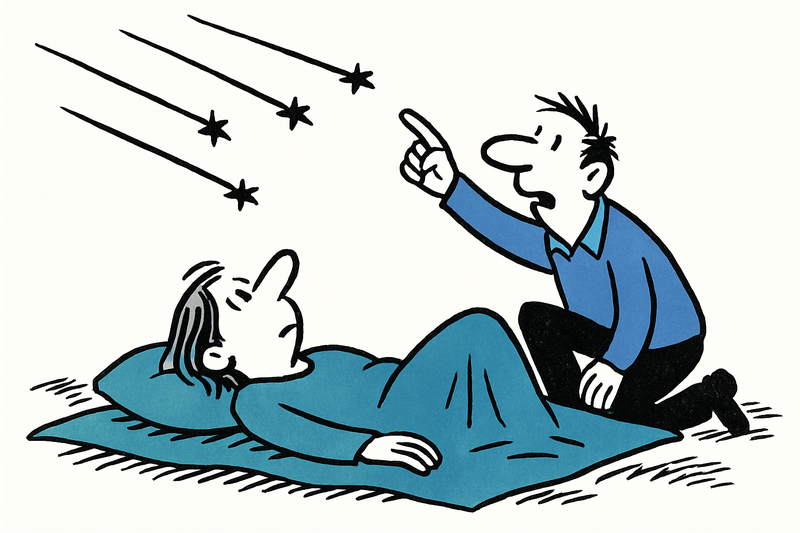
Perseid Glow: How to Experience Mallorca's Shooting Stars
On clear August nights the Perseids sweep over Mallorca like fleeting sparks. Where to find the best viewing spots, why the meteors occur and which gear really helps — a practical guide for wish lists and the night sky.
When Mallorca lights up the sky
There are evenings when a single glance upward makes the island feel larger. On these August nights Perseids in Mallorca — when to see 2025 are on the move again. Not mysticism but nature: tiny dust particles meet the atmosphere and burn up at 80–100 kilometers altitude. To us they appear as fast, bright streaks, sometimes even as strong fireballs.
When you should look up
The night of August 12 to 13 is considered the peak, but activity stretches over several nights. The best time is from after sunset into the early morning hours, with a sweet spot between 23:00 and 04:00. My everyday tip: those who stay past midnight are rewarded. Due to Earth's rotation the night side of Mallorca moves into the dust field and the rate of visible meteors increases.
Why it all looks so wonderful
The origin is simple and beautiful: American Meteor Society's Perseids information explains that remnants of a comet leave tiny grains as they pass by. When Earth hits this field, the grains burn up in an instant and leave trails of light. Some are wispy and hard to see, others explode brightly — and the experience often depends on the weather and the local darkness.
The best spots on the island
City edges and artificial light are the natural enemies of any star show. It's best to get into the shadows of Palma and leave the city's windows behind. A few places I repeatedly recommend:
Cúber and Gorg Blau in the Serra de Tramuntana: high elevation, cool air, often clear seeing. When the cicadas fall silent, the sky is free.
Cap de Formentor: sea to the left, sky everywhere. The wind blows away humid air and light pollution is low.
Cala Mesquida and small coves on the east: sand, the sound of waves and only a few lampposts. Ideal for a blanket and a thermos.
Small roads toward Llevant or remote spots in the south also work well. The main thing: dark and quiet.
What to pack
A blanket and a small pillow are worth their weight in gold; Mallorca cools down at night, even in August. A thermos with tea or something warm is comforting and keeps you awake. Avoid bright light: a headlamp with a red setting protects your eyes. White light destroys dark adaptation immediately.
No binoculars needed. The naked eye covers more of the sky and catches the delicate trails better. Pack insect repellent, especially in the more humid coastal areas. And yes: a stargazing app can help identify constellations — but for the Perseids, spontaneous wonder is enough.
A small reality check
A bright moon can outshine many faint meteors. Clouds will too. And if you stay very centrally in Palma you'll see far fewer. Still: even on the outskirts of Palma a single strong fireball can make your heart leap. Sometimes the brief, unpredictable moments are the ones that linger longest.
Conclusion: A bit of planning, a dark spot and the patience to wait — that's all it takes. The island gives us these small celestial gifts, accompanied by the chirping of crickets, the sound of the sea and the fresh scent of pine. Don't forget your wishes. Will they come true? Well, one more reason to look up again.
Frequently asked questions
When is the best time to see the Perseids in Mallorca?
Where can I see shooting stars in Mallorca without too much light pollution?
Do I need binoculars to watch the Perseids in Mallorca?
What should I bring for a Perseid night in Mallorca?
Can you see the Perseids from Palma, or do you need to leave the city?
Is Cap de Formentor a good place to watch shooting stars in Mallorca?
Are Cúber and Gorg Blau good for stargazing in Mallorca?
Will the moon or clouds affect Perseid viewing in Mallorca?
Similar News
First Day, First Consequences: What Palma's Rent Freeze Really Means
A new decree stops a planned eviction in Palma — but what really changes for tenants and landlords? A reality check with...
When Housing Becomes a Matter of Survival: Mallorca Between Rental Frenzy and Everyday Life
The case of 87-year-old Maricarmen showed that on Mallorca many people's lives are poised between affordable and uninhab...
Autumn in Mallorca: When Melancholy Gets a Window
Why autumn quietly tightens here — and how to make use of the mood: walks, culture, candles and the light from Palma to ...
Near-miss on Lanzarote: Landing Ryanair Jet and Iberia Takeoff — what really went wrong
On Lanzarote there was a dangerous incident: A Ryanair flight (FR5910) from Dublin landed on runway 03 while an Iberia E...
Eurowings introduces new Premium Business seats on Mallorca routes
From December 1, selected Eurowings flights to Palma and other destinations will feature eight particularly generous sea...
More to explore
Discover more interesting content

Can Cap de Bou

Townhouse Lleo 72
