
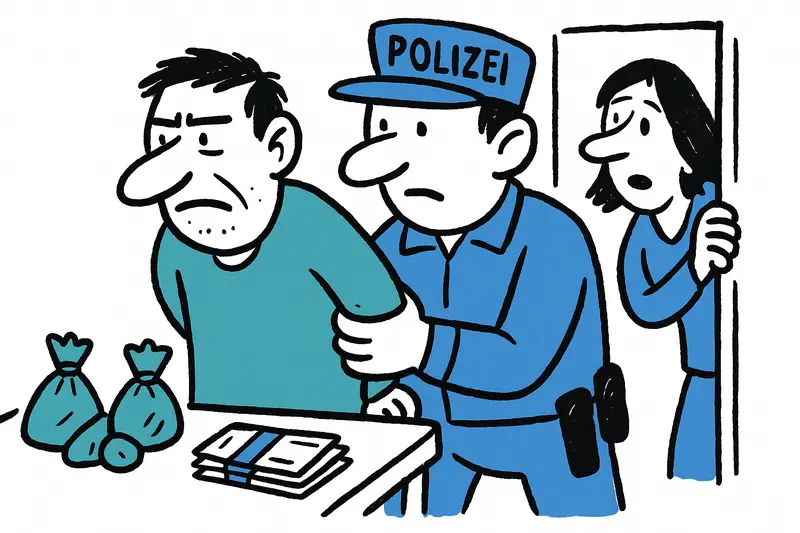
Quiet raid in Palma: Arrest after neighborhood tips — and what's still missing
In Palma the National Police arrested an alleged drug dealer — not a big spectacle, but the result of tips from neighbors. The seizure reveals a pattern: small-scale sales in residential areas. How can this be stopped in the long term?
Arrest without a siren show: Neighbors put police on the trail
It was one of those mornings in Palma when last night's rain still dripped from the cracks in the paving stones and the clatter of espresso cups could be heard from the market cafés. Around 7:30 a.m. the National Police entered an apartment in the city centre. Not a dramatic operation with flashing lights and sirens, but a cautious, routine entry — so describe residents who had noticed unrest for weeks: constant visitors, short stays, occasional quarrels.
Found were several small sachets already portioned, more than a hundred grams of a substance identified as cocaine, about fifty grams of hashish, some pharmaceutical drugs and over €3,000 in cash. Everything was seized and one suspect is in custody. A short-term relief for the street. In the long term the question remains: this small operation echoes other recent police actions such as After nine burglaries in Palma: Arrest brings relief — but questions remain.
Key question: How can Palma sustainably curb drug dealing in residential neighbourhoods?
The course of this arrest reveals a pattern many Mallorcans know: not a big drug boss, but "micro-dealers" who sell portioned goods in apartment buildings or dark side streets. This form of dealing often stays under the radar of the tourist postcard idyll, yet it massively disrupts residents' daily lives. Some of these tactics mirror those described in Raid in Palma: Specialized keys, disguises — and many unanswered questions.
Less attention is paid to why such structures arise. It's not always just the relapses of individual offenders. Rising rents, precarious jobs, a lack of leisure options for young people and an offer that is easily found online — all this creates an environment where small dealers can gain a foothold. Owners who exercise little oversight or turnover of tenants in popular districts also play a role.
Investigators emphasise classic police work: surveillance, tips from neighbours, searches. That is reassuring, but it is resource-intensive and usually reacts only after the problem has become visible, as seen in other pre-dawn operations such as Major Raid in Palma: What the Searches of Law Firms Mean for the Island. Far too rarely is prevention and networking between police, social services and landlords discussed.
What is often missing in the public debate
Two narratives usually dominate: tougher law enforcement or, on the other side, social-media headlines about drug use among tourists. Less space is given to everyday mechanisms — delivery routes through small networks, the role of vacant apartments, the influence of the party scene and price developments on the housing market.
Another problem: neighbours often feel unsafe reporting what they see. The woman who briefly told us from her balcony in the courtyard that she had "seen the visitors and heard whispering" wants to remain anonymous. That's understandable. Without protected channels and reliable feedback, tips dwindle — and with them the chances of early intervention; official guidance such as on the Policía Nacional official site can help clarify reporting options.
Concrete approaches instead of PR actions
There is no silver bullet, but a bundle of small steps could help:
1. Anonymous reporting channels and feedback: A locally visible hotline or app that accepts anonymous reports and informs callers about results builds trust.
2. Cooperation with landlords: An information network between police, municipality and property owners can identify suspicious tenancies earlier, similar to the collaborative approaches called for after incidents like Eight Break-ins in One Week: Arrest in Palma — and What's Still Missing.
3. Prevention work: More offers for young people in affected neighbourhoods, low-threshold counselling centres and easy-access treatment places for dependents.
4. Measures against complacency: Controls in areas where drugs typically arrive — delivery traffic, parcel flows, event venues — combined with targeted investigations against supply chains.
All this requires time, personnel and a certain patience. But anyone who wants to preserve the typically Mallorcan mix of a lively market square, barefoot children in summer and the smell of roasted coffee needs sustainable answers.
The arrest in Palma was a small victory — not a final one. For the neighbourhood that morning there remains the hope that it will get quieter. For the city, the task is to address the causes before the problem returns.
Frequently asked questions
Why do neighbours in Palma report suspected drug activity to the police?
How common is small-scale drug dealing in Palma’s residential neighbourhoods?
What should I do if I suspect drug dealing near my home in Mallorca?
Why are anonymous police reports important in Palma?
What makes police drug investigations in Palma difficult?
Could rising rents and housing pressure in Mallorca affect drug dealing?
What happens when police seize drugs and cash in a Palma apartment?
How can Mallorca reduce drug dealing in neighbourhoods long term?
Similar News
When Housing Becomes a Matter of Survival: Mallorca Between Rental Frenzy and Everyday Life
The case of 87-year-old Maricarmen showed that on Mallorca many people's lives are poised between affordable and uninhab...
Autumn in Mallorca: When Melancholy Gets a Window
Why autumn quietly tightens here — and how to make use of the mood: walks, culture, candles and the light from Palma to ...
Near-miss on Lanzarote: Landing Ryanair Jet and Iberia Takeoff — what really went wrong
On Lanzarote there was a dangerous incident: A Ryanair flight (FR5910) from Dublin landed on runway 03 while an Iberia E...
Eurowings introduces new Premium Business seats on Mallorca routes
From December 1, selected Eurowings flights to Palma and other destinations will feature eight particularly generous sea...
Car on MA-13 near Inca in flames – a safety check for the island
A vehicle caught fire on the MA-13 towards Alcúdia on Tuesday afternoon. The driver was uninjured, the car was destroyed...
More to explore
Discover more interesting content

Can Cap de Bou

Townhouse Lleo 72
