
Packages Full of Counterfeits: Van with Over 700 Fakes Stopped in Palma
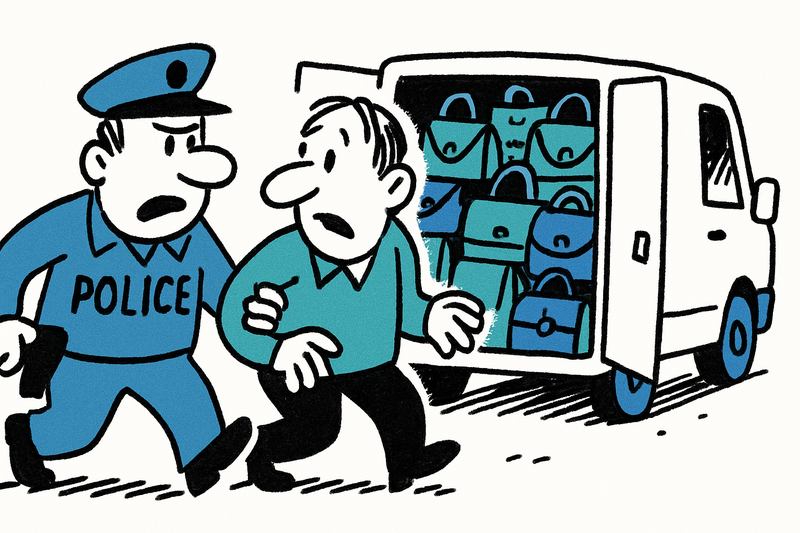
During a check in Palma, police discovered a van full of counterfeit bags, backpacks and wallets. The incident raises broader questions about market crime, enforcement and the protection of legitimate traders on Mallorca.
Check in Palma reveals large quantity of counterfeit goods
It was one of those hot afternoons in Palma: car horns, seagulls calling from the nearby harbor and church bells sinking halfway over the old town roofs. A minor traffic stop – a van for alleged obstruction of traffic – might have ended as routine. Instead, the rear door opened to reveal: over 700 counterfeit bags, backpacks and wallets, neatly stacked in boxes. A sight that made the officers pause; the incident was covered in Palma: Van with 700 Counterfeits Seized — Controls in Focus.
Attempted flight, arrest, initial statements
The driver, witnesses report, initially seemed calm, almost practiced. Only when the check escalated did he try to flee – a short chase, then an arrest. In the first questioning the man admitted he intended to sell the goods at local markets. A similar operation is documented in Raid at Playa de Palma: Nearly 6,000 Counterfeits — What’s Really Behind It. Another offense was revealed: he was driving without a valid license. The police seized the entire shipment; a report was filed.
The key question: an isolated incident or a symptom of a bigger problem?
The scene could be straight out of a movie, but it raises a fundamental question: is this an isolated hub of criminal dealers – or a structural problem that undermines markets and honest trade in Mallorca? On the island, where Sunday markets from Santanyí to Sineu and tourist stalls in Palma attract visitors, authentic craft stands are part of the local identity. Counterfeit luxury items, on the other hand, feed a shadow economy that touches multiple levels: tax losses, unfair competition for genuine producers and, not least, mountains of waste from short-lived cheap goods. The scale of organised operations is examined in Big Blow Against Product Counterfeiting: What Mallorca's Role Really Reveals.
Who suffers most?
The obvious losers are local traders and artisans who create their work with care and often generations of experience. But tourists who believe they are buying a small souvenir from a street stall are also deceived. And not to forget: the island itself – inferior products quickly become waste that the municipality must dispose of. In hot summer weather, when market stalls are set up early in the morning and taken down again in the afternoon heat, litter more frequently remains; plastic and poorly sewn seams create extra work for the cleaning teams.
Why checks alone are not enough
Of course checks are important: random roadside inspections, targeted screenings at the port and airports, and police presence at markets create pressure. But the find in Palma shows: a van full of counterfeits can easily be integrated into regular sales flows. Inspections only catch goods while they are in transit or already offered for sale. What is missing is a broader approach that traces the trail – from the source of the shipment through intermediaries to the points of sale.
Concrete solutions for Mallorca
Some measures could help improve the situation in the long term: better coordination between port and airport controls and the local police; regular training for market supervisors so they can recognize fake goods; a mandatory permit system for stalls with visible registration numbers; and multilingual information campaigns to educate buyers about the risks of counterfeits. Technical options can also help: simple serial numbers or QR codes on authentic products that buyers can scan on the spot, and closer collaboration with manufacturers to identify suspicious supply chains more quickly, supported by resources such as the European Observatory on Infringements of Intellectual Property Rights. Last but not least, penalties and the consistent destruction of confiscated goods must be visible and traceable, otherwise the risk for dealers with criminal intent remains low; authorities such as the Guardia Civil official website publish information on enforcement actions.
Opportunities for honest traders and tourism
Every inspection can also spark a small shift in thinking: markets that emphasize transparency gain trust. A seal of genuine Mallorcan craftsmanship, complemented by information booths in several languages at popular markets, could give honest producers more visibility. Visitors who enjoy the sound of market sellers and the aroma of freshly baked ensaimadas expect authenticity – and respond positively when it is visibly protected.
Conclusion
The van with 700 counterfeits in Palma is more than a police report; it is a wake-up call. Short-term operations reach their limits if the causes – demand, lucrative black markets, loopholes in logistics and weak deterrence – are not addressed. Mallorca has the chance to defend its markets as cultural assets: with clearer rules, better enforcement, education and support for honest traders. The result would not only be less plastic waste on the streets, but also the familiar smiles of sellers proud to offer genuine products.
Frequently asked questions
How common are counterfeit goods at markets in Mallorca?
What should I look for before buying souvenirs in Mallorca?
Why are counterfeit goods a problem for Mallorca?
What do police in Palma do when they find counterfeit goods?
Is it legal to sell counterfeit bags or wallets in Mallorca markets?
Why do tourist markets in Mallorca attract counterfeit sellers?
Are Mallorca markets still a good place to buy authentic local crafts?
What can Mallorca do to reduce fake goods at markets and stalls?
Similar News

Maribel: Five Decades of Service – Housekeeper from Peguera Celebrated with a Special Honor
Over 50 years in the hotel business: María Isabel “Maribel” Molinos was honored in Palma at the Nit del Turisme by Unive...
Orange Alert over Parts of Mallorca: Are We Prepared?
Dark clouds and an announced wet spell have triggered an Orange alert in parts of Mallorca. A reality check: what's miss...

Sundair & Co.: Sale speculation and what it could mean for Mallorca
Rumors about a possible sale of the airlines Sundair and Fly Air 41, which belong to Schauinsland-Reisen — and whether b...
Anne Wünsche in Mallorca: A job offer with a catch — who fits the role of personal assistant?
Influencer Anne Wünsche has left Berlin and is urgently looking for a full-time personal assistant in Mallorca. Why the ...

Daily from New York: Palma Between Boom and Strain
United will increase the Newark–Palma route to daily flights in 2027 using Boeing aircraft (231 seats). What does the in...
More to explore
Discover more interesting content

Can Cap de Bou

Townhouse Lleo 72
