
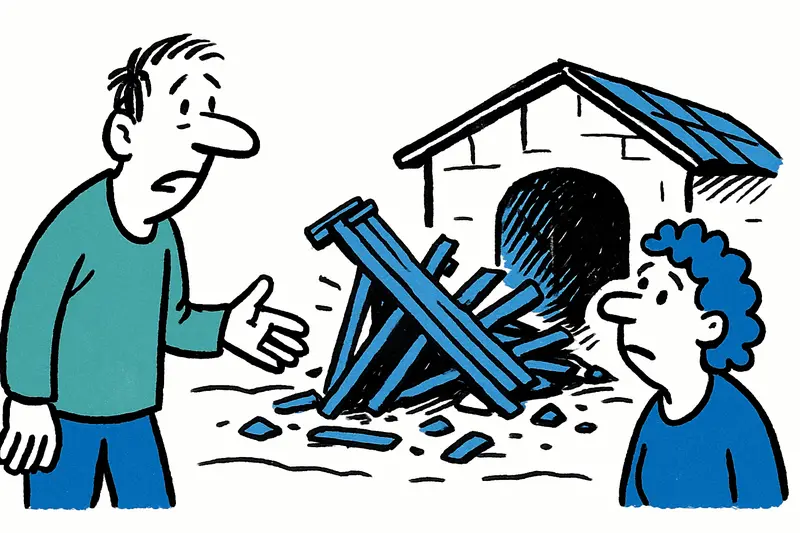
Alarm in Son Bauló: When an escar loses its roof
The roof of a historic escar in Son Bauló partly collapses. Who bears responsibility, and how can this coastal cultural treasure be protected in the long term?
Alarm in Son Bauló: An escar loses its roof — and with it a piece of everyday life
Early in the morning the Calle del Mar smelled of damp wood and the sea: salty air, the cry of a seagull, the soft clatter of rowboats. Brown wood splinters lay on the shingle beach, fishermen stood with trembling nets looking at the water — and at what was left of the roof of one of the traditional boathouses, the huts known here as “escar”. For many in Can Picafort these buildings are more than sheds: workplaces, places of memory and part of the town's rhythm. That one of them simply gives way feels like a small loss of familiarity.
Who is responsible?
The question is easier asked than answered: does responsibility lie with the owners, the municipality, the coastal authorities, the heritage agency — or all of us? The answer emerging locally is unfortunately typical: no one feels solely responsible. City hall points to specialised coastal agencies, the heritage authority to narrow areas of jurisdiction. The result: a vacuum until something breaks — as with the partial collapse of the Baluard de Sant Pere in Palma — or, worse, someone gets hurt. The key question is therefore: Do we want maritime cultural heritage on the coast to be left to chance and budget cuts?
How did it come this far?
It is not a spectacular drama but the sum of many small factors: age, constant salt exposure, cracks in beams and years of neglect. Add the harsh winter storms, sudden autumn downpours and hot summers that take their toll on the wood. Locals talk about rotten beams, holes in the foundations, repairs that were never done properly. A small defect grows over years into a safety risk — and when it collapses, everyone is suddenly surprised.
What is often missing from the public debate
Three points that tend to get lost in hectic press releases: First, many escars are privately owned, yet their value is public — cultural and economic, because they are part of the tourist image. Second, they are often small, informal structures that get lost in lists of responsibilities. Third: prevention would be cheaper than repairs after a collapse, but it is rarely prioritised. In Son Bauló this becomes clear: there is a lack of a systematic municipal monitoring system that detects damage early and sets priorities.
Concrete, pragmatic solutions
A complete plan is not necessary. Three practical steps would help a lot:
1) Immediate programme for safe first measures: Involve local craftspeople familiar with coastal wood and traditional techniques in a paid emergency team. Quickly shore up structures, cordon off areas, provide temporary roof coverings — so no one is injured and further damage is limited.
2) Inventory instead of paper chaos: A compact municipal register of all escars with a simple risk index. Not a bureaucratic monster, but a tool for prioritising funding and for quick intervention after the storm season.
3) Mixed financing and incentives: Preservation costs money. A model of small municipal grants, targeted heritage funds and moderate owner contributions would be realistic. In addition, tax relief for restoration work and subsidies for materials could ease the burden.
More than technique: knowledge and speed
Technical solutions help little if local people are not involved. Training for local craftsmen in saltwater-resistant repair methods, a small handbook for owners and a municipal hotline during storm seasons would be manageable measures with great impact. And one thing is crucial: speed. A temporary shoring within days is often more effective than an application that languishes for weeks in administration.
A bit of realism and an appeal
The immediate danger in Son Bauló is currently contained: the spot is marked and passers-by are warned. But that is not enough. Without coordinated steps more escars will follow — not out of people’s indifference, but because of the honesty of salt, wind and time. Politics and administration must decide whether they want to protect maritime culture or accept its slow disappearance.
Anyone who stands by the water in the morning and hears the scraping of nets, the creaking of wood and the fishermen's conversations knows what is at stake. It's not just about roofs, but about a way of life that can be heard, smelled and deserves protection. I will keep following this and report if coastal or heritage authorities respond — locally it shows: coastal building care is a question of speed, money and will.
Frequently asked questions
Why are the traditional boathouses in Son Bauló important?
What causes a boathouse roof to collapse in Mallorca?
Who is responsible for maintaining escars in Mallorca?
Are the boathouses in Son Bauló dangerous after a collapse?
What can Mallorca do to protect coastal heritage before it collapses?
Where is Son Bauló in Mallorca?
Why does sea air damage wooden buildings on Mallorca’s coast?
What should owners of traditional coastal buildings in Mallorca do after storm damage?
Similar News
Cafetería San Siro: A Meeting Place on Schinken Street Since 1966
In the middle of Schinken Street, Cafetería San Siro has been offering Mallorcan hospitality for more than six decades —...

From Ballermann to Prison: What the Verdict Against the Femina Operator Means for Palma
The Munich Regional Court convicted a German operator for subsidy fraud. What does the verdict mean for the Femina Club,...
Underpass Verge de Lluc: 19-year-old fights her way out of flooded car – a warning sign for Palma
A 19-year-old recently escaped swimming from her car after the Verge de Lluc underpass held up to one and a half meters ...
When the Floodgates Open Again: Why Palma's Floods Aren't a Coincidence
A sudden heavy downpour around 5 p.m. brought Palma to a standstill: flooded streets, full basements, panicked commuters...
Playa de Palma: Life-saving at Balneario 11 – Lifeguards Act Quickly
A German holidaymaker suffered cardiac arrest at Playa de Palma. Lifeguards resuscitated her on the beach; emergency ser...
More to explore
Discover more interesting content

Can Cap de Bou

Townhouse Lleo 72
