
Sa Pobla breathes easier: Calle Comerç redesigned — opportunities and open questions
The redesigned Calle Comerç gives Sa Pobla room to breathe: wider sidewalks, new benches and a small meeting spot replacing the old Guardia Civil grounds. EU funding made it possible, but the central question remains: Are paving stones alone enough to keep the town centre lively and functional in the long run?
Sa Pobla breathes easier — but is that enough for the long term?
On an early morning in Sa Pobla you can still smell the freshly baked ensaimadas, coffee steam mixes with the chirping of cicadas, and anyone walking along Calle Comerç immediately feels: something has changed. The paving has been renewed in key places, sidewalks are wider, new benches invite people to sit — in short: the place feels like a town centre again and less like a thoroughfare. That is the positive side. The guiding question is: Are new stones and benches enough to permanently enliven the town centre and make it function well?
What the redesign has delivered
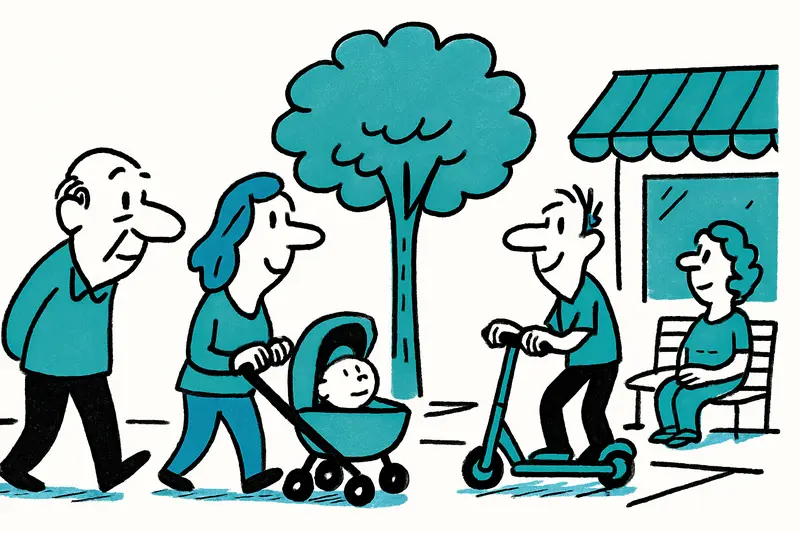
With just over two million euros from EU funds supporting the Calle Comerç remodel, Sa Pobla was able to implement visible improvements. More light, more seating and lower curbs are not just nice details; they provide concrete relief for older people with walkers, young families with prams and wheelchair users. The new LED lamps give the evenings a clearer face; the young Mediterranean trees promise shade in the coming years. Especially the former Guardia Civil site, which has been turned into a small green and recreation area, is a lovely gesture: not a large park, but a cozy meeting place where café conversations, playing children and dog leashes come together.
Looking at the less visible construction sites
But during the construction phase there were complaints about dust, detours and disrupted delivery logistics. Some business owners warn that the lack of marked loading zones and short-term parking spaces makes daily supplies difficult — delivery vans often park temporarily and thereby block the newly gained free space. The municipality has promised improvements, but the question remains: How quickly will practical adjustments be implemented, and who will pay later for the maintenance of trees, benches and lighting?
This is not a mere detail: urban design does not end with the last curb. Without coordinated logistics, new points of friction arise between the quality of the public space and commercial life. And without a small, continuous maintenance budget, good design decays faster than the trees can provide shade. A municipality of this size must therefore plan ahead — not just build.
Concrete opportunities and approaches
There are practical steps Sa Pobla can take now without spending millions again. A few suggestions that can be implemented quickly: marked loading zones with time limits in side streets; fixed delivery times for large shipments coordinated with shop opening hours; a small annual maintenance budget of a few tens of thousands of euros to secure trees, street furniture and lighting; and temporary exemptions for craftsmen and delivery traffic during special market or event days. Low-threshold measures such as more waste bins at meeting points or regular checks of the lighting would also help — things you notice when you sit on one of the new benches in the evening and watch the place.
In the long term, Sa Pobla could also consider modular uses for the former Guardia Civil area: flea markets, weekend mini-markets for local producers or small cultural evenings would keep the meeting place lively — without expensive infrastructure.
A pragmatic conclusion
The EU funding has shown what is possible: not only new paving, but new places to meet. The feeling of having room to breathe again is palpable in Sa Pobla. The challenge now lies in everyday life: how to regulate delivery traffic, how to ensure maintenance and how to keep the balance between the quality of stay and functional accessibility?
If the municipality addresses the small practical shortcomings quickly and establishes a permanent maintenance plan, Calle Comerç can be more than just a pretty showcase — it could become the heart of a lively, accessible town centre. Until then, the new street is a good start with a few open questions. And that's okay: sometimes it's precisely the final steps that make the difference — especially when they are discussed on a bench in the evening sun.
Frequently asked questions
What has changed on Calle Comerç in Sa Pobla after the redesign?
Is Sa Pobla easier to get around now after the Calle Comerç works?
What is Sa Pobla town centre like in the evening after the redesign?
Why are some shops in Sa Pobla concerned about the new street layout?
What plans are there to keep Calle Comerç in Sa Pobla well maintained?
Are there trees and shade on the new Calle Comerç in Sa Pobla?
What was the former Guardia Civil site in Sa Pobla turned into?
Can the redesigned Calle Comerç in Sa Pobla host markets or events?
Similar News

Maribel: Five Decades of Service – Housekeeper from Peguera Celebrated with a Special Honor
Over 50 years in the hotel business: María Isabel “Maribel” Molinos was honored in Palma at the Nit del Turisme by Unive...

Orange Alert over Parts of Mallorca: Are We Prepared?
Dark clouds and an announced wet spell have triggered an Orange alert in parts of Mallorca. A reality check: what's miss...

Sundair & Co.: Sale speculation and what it could mean for Mallorca
Rumors about a possible sale of the airlines Sundair and Fly Air 41, which belong to Schauinsland-Reisen — and whether b...
Anne Wünsche in Mallorca: A job offer with a catch — who fits the role of personal assistant?
Influencer Anne Wünsche has left Berlin and is urgently looking for a full-time personal assistant in Mallorca. Why the ...

Daily from New York: Palma Between Boom and Strain
United will increase the Newark–Palma route to daily flights in 2027 using Boeing aircraft (231 seats). What does the in...
More to explore
Discover more interesting content

Can Cap de Bou

Townhouse Lleo 72
