
Santa Ponsa: Release after knife and assault allegations sparks unrest
A humid July night in Santa Ponsa ends with severe facial injuries, two arrests and no charges: Why the right to identification can protect perpetrators — and what the island should do differently now.
Night in Santa Ponsa: Punches, kicks and a quick release
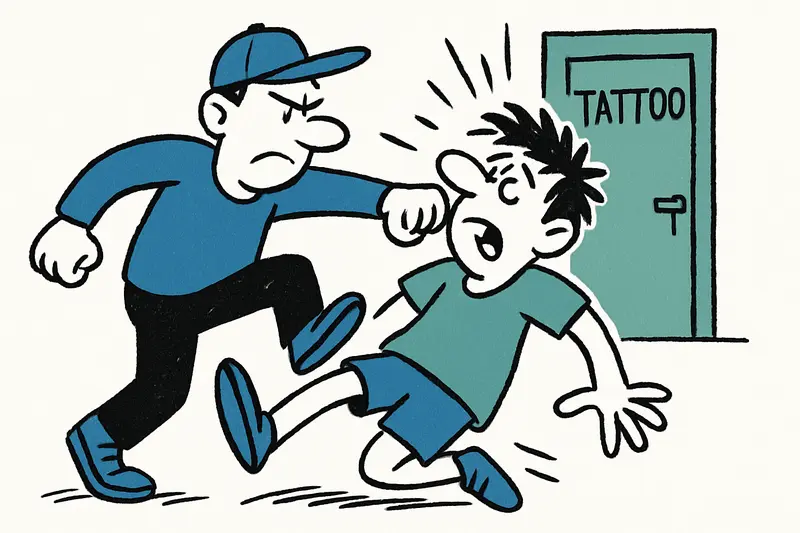
It was one of those humid July nights typical of the southwest coast: at 3:45 a.m., the air still warm, the sea distant, but the smell of fries and beer hanging in the side street. On Carrer de la Mar, near a small tattoo studio, an altercation escalated into what has now become a report on the Santa Ponça incident. Two young tourists were briefly detained on accusations of knife use and beating — and a few hours later they were released.
The violent night in brief — and the quiet end
According to police, a group of young men stormed the tattoo studio and later attacked a 20-year-old man in the street. The man briefly lost consciousness after being reportedly hit and kicked several times. The 71-year-old grandfather of his partner, who tried to intervene, was also knocked down. Paramedics took the injured to Palma with serious facial injuries. Witnesses describe sirens, flashing blue lights and the dull thud of parked cars, behind which two suspects briefly tried to hide.
Officers arrested two young men. But the presiding judge dropped the case — not out of lack of interest, but for a legal reason: the victims could not unequivocally identify the alleged attackers in court. No identification, no trial. The two were released.
Key question: How to protect victims and the innocent at the same time?
That is the central question remaining after this night. On one side are people with severe injuries and families expecting justice. On the other side stands the presumption of innocence, and the legal system requires reliable evidence. In a noisy, troubled neighborhood where guests, bartenders and laughing groups intermingle, clear identification is difficult. Intoxication, shock and poor visibility make for unreliable witnesses.
Analytical view: What is often overlooked
It is easy to hear complaints of "cowardice" or "sloppy investigation." That is too simplistic. Two aspects are frequently underexposed: first, the forensic situation in nighttime incidents. Blood traces, clothing, mobile phone data or CCTV footage can help, but are often missing in Santa Ponsa—thousands of small gaps. Second, the victims' psychological state. Someone who has just been knocked down often remembers only fragments. How trauma changes memory explains why trauma, alcohol or panic cloud memories. Without quickly available translation and psychosocial support, identification fails on practical hurdles.
Structural factors also play a role: party tourism brings crowds, many bars and high turnover. When outsiders cause trouble in residential streets at night, both residents and guests are affected. The response must not be only repression — but not only tolerance either.
Concrete opportunities and solutions
The island needs measures that are practical and legally sound. Some proposals that could work locally:
More and targeted video surveillance: Not as a Big Brother instrument, but to secure clear evidence in violent incidents. Cameras at hotspots, well signposted, also reduce the feeling of insecurity.
Improved night lighting and street design: Bright areas deter offenders and help victims recall events more clearly.
Rapid on-site evidence collection: Mobile units that secure clothing, photos and phone data in the early morning hours. Time is the enemy here.
An early-access victim service: Interpreters, initial psychosocial care and information about legal steps. People who feel taken seriously are more likely to stay involved and recall details.
Cooperation with bars and residents: Training for night staff, clear reporting chains and a local witness reporting system. Small interventions — like a blanket from a bar or water — already helped in this incident.
What remains — and what the neighborhood feels
For residents the release of the young men leaves a sour aftertaste. "You often hear noise, but I did not expect something like this," says a dog walker the morning after the attack. The insecurity remains. For the victims there is also the bitter fact: without evidence there is no conviction. The law therefore protects both the injured and potentially innocent people.
The solution does not lie in simple slogans, but in concrete local improvements: better evidence collection, more visible presence at night and a low-threshold support offering for victims. If you saw something: report it. Often a single eyewitness decides whether a night like this can be brought to court. And on the next mild morning, when the seagulls cry again and bar owners put chairs up, people remember how fragile our safety is — and how necessary smart, small measures are.
Frequently asked questions
Is Santa Ponsa safe at night for visitors?
What should I do if I witness violence while staying in Mallorca?
Why are witness statements sometimes not enough in assault cases in Mallorca?
What makes nightlife incidents in Santa Ponsa harder to investigate?
When is Santa Ponsa busiest with nightlife and evening traffic?
Are there better ways to improve safety in Mallorca nightlife areas?
Where in Santa Ponsa did the reported attack take place?
Why is victim support important after violent incidents in Mallorca?
Similar News

Who will clean up? Illegal rubbish heaps on the highway near Son Gual drive residents onto the streets
For months, construction debris and household waste have piled up along the highway between Palma and Manacor near Son G...

Amundi takes over Bikini Island & Mountain Port in Sóller – many questions remain open
The French asset manager Amundi has acquired the four-star Bikini Island & Mountain Port hotel in Sóller from an Austria...

Silvia was allowed to see the sea once more – a small farewell in Port de Soller
A team from the Balearic health service IB-Salut fulfilled a terminally ill woman's wish: one last trip to the water in ...
Magaluf: Imprisonment for Beach Club Employee after Theft of a Bag — What the Ruling Overlooks
A former dishwasher received a one-year prison sentence for stealing a Louis‑Vuitton bag. The appellate court upheld the...

Road collapse at Port de Valldemossa: Who will pay for the next wave of damage?
A section of the MA-1131 near Port de Valldemossa slipped after heavy rains from cold front "Adam". Residents are strand...
More to explore
Discover more interesting content

Can Cap de Bou

Townhouse Lleo 72
