
Son Gotleu under pressure: Why many rental cars were broken into in recent weeks
Son Gotleu under pressure: Why many rental cars were broken into in recent weeks
Residents in Son Gotleu have experienced a series of break-ins of parked cars in recent weeks. A reality check: what is missing from the discussion, how the city is responding, and what residents, rental companies and authorities can do concretely.
Son Gotleu under pressure: Why many rental cars were broken into in recent weeks
Guiding question: What is going wrong that parked cars in this neighborhood are so frequently targeted?
The headlines of recent weeks are still clearly heard on the island: residents of Son Gotleu report several nights in which cars parked at the curb were pried open. The area most affected is along Carrer Joan Coll (Vell Duc) near the ring motorway and the Rafal Bridge. The property damage — shattered windows, scratched interiors — is visible. Valuables apparently were rarely taken in large quantities. Still: the feeling of insecurity is real.
Critical analysis: multiple levels interact. First, the urban design: narrow streets, poorly lit parking areas and few clear sightlines create niches where quick actions are possible. Second, the social component: parks and green spaces such as Joanot-Colom Park are used as meeting places by different groups, including people without stable housing and individuals with addiction problems. That attracts attention and conflict — especially when playgrounds remain empty and parents avoid the area out of fear.
Third, Why so many police officers in Son Gotleu? A look behind the controls: residents demand more patrols on weekends and at night. Practically this means: if offenders know that there is little control during certain time windows, incidents shift to those times. Fourth: recycling and cleaning issues. Trash and broken glass in parking areas create an impression of neglect and weaken the sense of safety; they also indicate a lack of coordinated municipal services.
What is missing from the public discourse: the debate quickly focuses on individual perpetrators or blanket accusations against groups. Rarely is there talk of long-term measures, of resource distribution between social work, cleaning and police, or of data-driven prevention. Also barely discussed is the role of Arrest in Capdepera: After shots at a checkpoint — what does it reveal about security and rental-car crime? and tourism operators that temporarily leave vehicles in vulnerable zones — and how these firms could better inform their customers.
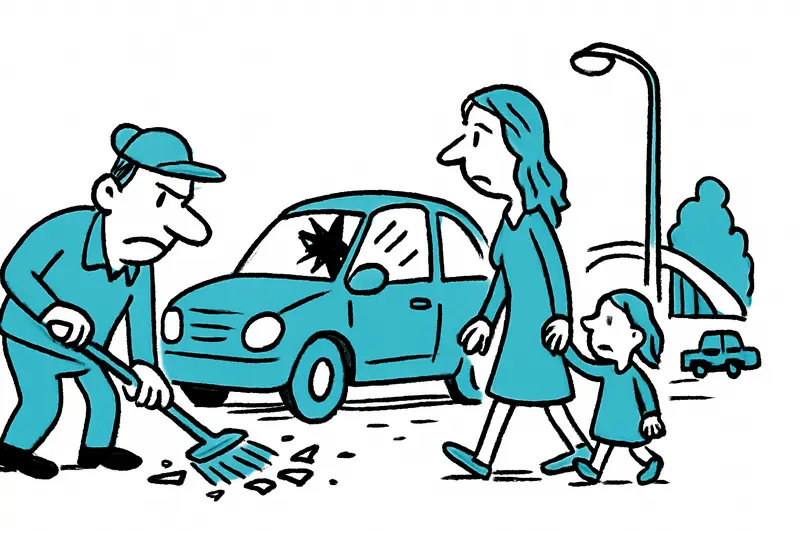
An everyday scene from Palma: a Tuesday morning in Son Gotleu. A street cleaner sweeps glass shards from the street, two mothers steer their children past the playground, a delivery van honks at the Rafal Bridge. The streetlights are still flickering, the city cleaning comes later. These small observations show how tightly everyday life, infrastructure and safety are interwoven.
Concrete approaches that could take effect now and in the medium term:
1) Time-focused presence: more foot and vehicle patrols on the most affected weekend nights and clear information campaigns about contact channels for quick reporting.
2) Cleanliness as a safety measure: faster removal of glass shards and trash, additional bins and regular checks around playgrounds — visible cleanliness raises the barrier to committing crimes.
3) Local social outreach: mobile social teams present during the day and early evenings in the park, offering services for homeless people and those with drug problems. This reduces open scenes in immediate proximity to schools and playgrounds.
4) Parking guidance and signage: signs indicating safe parking zones, notices for rental car customers (e.g. do not leave valuables visible, use guarded parking where possible) and multilingual information leaflets.
5) Technical measures with restraint: temporary cameras at clearly defined hotspots with privacy-sensitive storage, as well as improved street lighting along Carrer Joan Coll and under the Rafal Bridge.
6) Cooperation with rental car companies: mandatory notices to customers, cooperation on identifying hotspots and possibly creating discounted guarded long-term parking options.
7) Involve schools and parents: prevention workshops for parents, visible contacts during school hours and clear channels for reporting dangers.
What can be implemented quickly need not be expensive: more checks on critical weekends, additional cleaning rounds after football matches or festivals, and a leaflet with safety tips for rental car customers. In the medium term, however, a coordinated plan is needed between city hall, the police headquarters, social services and residents' representatives.
Punchy conclusion: Son Gotleu is not a “problem” caused solely by individual offenders or a population group. It is a place where infrastructure gaps, social need and insufficient coordination come together — and that makes it attractive to car thieves. Treating only individual symptoms will not permanently stop the wave. Restoring cleanliness, increasing presence and expanding social services can reclaim the neighborhood step by step. In short: less finger-pointing, more action — and now. For examples of incidents that have heightened concern, see Threat in Son Gotleu: Youth Group Robs Phone and Threatens with Knives.
Frequently asked questions
What is the best time of year to visit Mallorca for pleasant weather?
Can I swim in Mallorca year-round?
What should I pack for a Mallorca trip?
How long should I stay in Palma and what about the rest of Mallorca?
Are Mallorca’s beaches family-friendly?
What are the must-see places for a first-time visitor to Mallorca?
Is public transport in Mallorca easy to use for visiting different towns?
What hiking or walking routes suit visitors to Mallorca?
Similar News

Son Sant Joan Control Center: What Questions Remain When the Island's 'Brain' Relocates
The air traffic control center in Palma manages the airspace over the Balearic Islands. With the planned move to Son Bon...
From Jungle Camp to Hotel Stage: Julian F. M. Stoeckel Delights in Camp de Mar
Berlin entertainer Julian F. M. Stoeckel performed two evenings in the atrium of The Camp de Mar Hotel & Resort and prov...
Man hides under bus in Cales de Mallorca: Why did the rescue take so long?
On Passeig Manacor a man stopped a bus, climbed underneath it and caused a traffic jam and a tense police operation. Wha...

An Evening in Cala d'Or: Atmosphere Is Right, Promotion Dreams Waver
In front of around 700 spectators, FC Germania Mallorca lost 2:4 in Cala d'Or after holding a 2:1 lead at half-time. A s...

Palma's Subway Project: Environmental Review Begins — More Questions Than Answers
The environmental review for Palma's planned subway extension to Son Espases has started, raising concerns and unanswere...
More to explore
Discover more interesting content

Can Cap de Bou

Townhouse Lleo 72
