
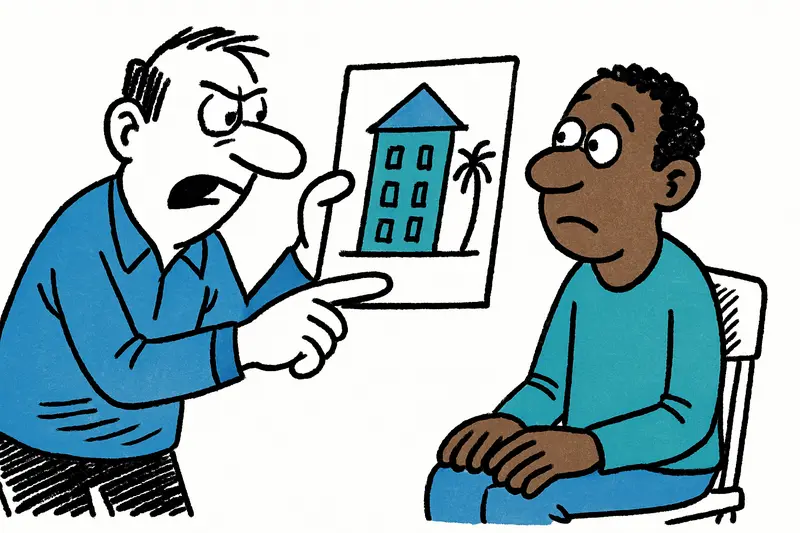
Hotels as an Emergency Measure: Between Humanity and Routine on Mallorca
Madrid plans, in exceptional cases, to temporarily house migrants in hotels on Mallorca. What problems remain open in the port, in the hotels and in coordination — and what could a respectful, practical solution look like?
Can a hotel be more than a provisional bed?
The question sounds simple, but it gnaws at the edges of everyday life on Mallorca: when the regular reception facilities reach their capacity, hotels are to be used as emergency shelters in exceptional cases. Madrid has allocated around €6.7 million for this — money that parts of the island urgently need right now (Madrid declares a temporary migration emergency). At the quay in Palma, where you can hear the light hammer taps and the tangle of cables for the new harbour module, it feels like an attempt to bring two systems together at short notice: tourism on one side, humanitarian first aid on the other.
The guiding question
The central guiding question is: can dignity be preserved if tourist beds serve as a temporary solution — without damaging the tourism infrastructure or the people in need of protection? This is not a theoretical problem: it concerns women, families and particularly vulnerable people who arrive after a dangerous crossing. Authorities stress that hotels will only be used in extreme cases (Mallorca sues Madrid: Who bears responsibility for unaccompanied minors?). But what exactly does "extreme case" mean, and who decides this on site?
What is planned — and what remains mostly unseen
Officially the tasks are divided: a service provider is responsible for cleaning, security, catering and IT, the Spanish Red Cross humanitarian response runs food distribution, translators and transport are planned. Just over five million euros are reserved for individual situations, such as hotel bookings; the rest goes into modifying the port area — air conditioning, partitions, a small medical station and legal advice. On site, between sailors' knots, brick dust and the smell of diesel, a mix of field office and temporary shelter is emerging.
Less visible, however, are questions about transparency, oversight and long-term planning: how long are people allowed to stay in hotels? What standards apply to accommodation, security and medical care? Who monitors compliance with the rules — a central office in Madrid or local authorities? (see European Commission on migration and asylum policies for reception standards)
Risks and blind spots
There are several stumbling blocks: hotels are designed for short stays, not for socio-educational care or the accommodation of traumatized people. Staff are often not trained in psychological first aid. There is also the question of privacy: hotel corridors are not residential units; communal areas, reception and cleaning cycles can undermine the necessary intimacy. In addition, there is a risk of blurred responsibilities between the central government, the island administration and local rescue services — a recipe for delays that could harm those in need of protection.
Concrete opportunities and solutions
If hotels are used as a last resort, this must be strictly regulated and transparent. Some pragmatic proposals that could help quickly on site:
1. Clear deployment criteria: A binding catalogue specifying when hotels may be used (e.g. families, injured women), with a fixed maximum duration and mandatory evaluation steps.
2. Training and support for hotel staff: Short trainings for trauma recognition, de-escalation and referral points; fixed NGO contacts on site.
3. Dedicated hotel corridors: Segregated areas within hotels, with their own supply and care, instead of mixing with regular guests — this can reduce stigmatization and conflicts.
4. Monitoring and independent oversight: External inspections as well as regular transparency reports on duration, costs and complaints.
5. Consider alternatives: Vacant apartments, non-touristic accommodation or modular, expandable reception centres could be more sustainable and socially acceptable in the long term.
What the numbers say — and do not say
By the end of July the Balearic Islands had recorded around 3,416 arrivals — an increase compared with the previous year. Numbers are important, but they obscure the distribution: minors, unaccompanied children and traumatized survivors need special protection mechanisms (see UNHCR Spain on arrivals and reception). On site, between short briefing meetings at the harbour and the clinking of coffee cups in the offices, it becomes clear: the challenge is less the question of "whether" than of "how".
A pragmatic outlook
The hotel option may be necessary in the short term. But it must not become a permanent model that masks structural weaknesses. Those working on Mallorca between the outcry of the headlines and the rhythm of the ferries want one thing above all: clear procedures, transparent decisions and a humane approach that protects the dignity of arriving people. A few metres away, where the seagulls cry and workers are still laying cables, this should not remain merely an administrative task but a shared responsibility of politics, municipalities, hotels and civil society — with clear oversight and practical rules before the exceptional measure becomes routine.
Frequently asked questions
Why are hotels in Mallorca being considered for emergency accommodation?
How long can people stay in a hotel used as emergency shelter in Mallorca?
Who is most likely to be placed in a hotel during a migration emergency in Mallorca?
What support should be available if Mallorca uses hotels as temporary shelters?
Can hotels in Palma work well as emergency accommodation for migrants?
Who decides when a hotel in Mallorca can be used for emergency housing?
What are the main risks of using tourist hotels as shelters in Mallorca?
Are there better alternatives to emergency hotel use in Mallorca?
Similar News
When Housing Becomes a Matter of Survival: Mallorca Between Rental Frenzy and Everyday Life
The case of 87-year-old Maricarmen showed that on Mallorca many people's lives are poised between affordable and uninhab...
Autumn in Mallorca: When Melancholy Gets a Window
Why autumn quietly tightens here — and how to make use of the mood: walks, culture, candles and the light from Palma to ...
Near-miss on Lanzarote: Landing Ryanair Jet and Iberia Takeoff — what really went wrong
On Lanzarote there was a dangerous incident: A Ryanair flight (FR5910) from Dublin landed on runway 03 while an Iberia E...
Eurowings introduces new Premium Business seats on Mallorca routes
From December 1, selected Eurowings flights to Palma and other destinations will feature eight particularly generous sea...
Car on MA-13 near Inca in flames – a safety check for the island
A vehicle caught fire on the MA-13 towards Alcúdia on Tuesday afternoon. The driver was uninjured, the car was destroyed...
More to explore
Discover more interesting content

Can Cap de Bou

Townhouse Lleo 72
