
Deeper Cistern, a Thousand Shards: What the New Finds at Alaró Castle Mean
During restoration work at Alaró Castle, archaeologists uncovered a surprisingly deep cistern and around one thousand ceramic fragments. What does this mean for dating, monument protection and the local community?
Archaeology above the village: More questions than answers — for now
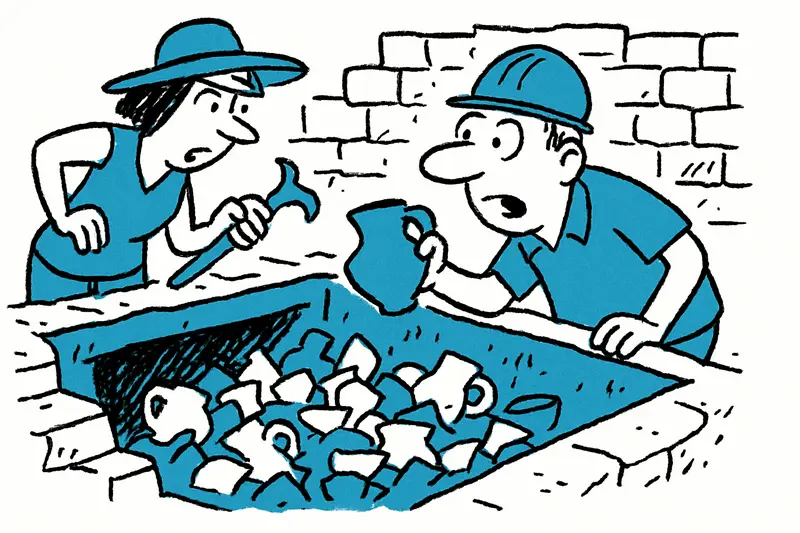
It was one of those cool early-summer mornings, the sun had just begun to warm the old stones of the castle wall, when the excavation team fell silent. Under the rubble not only another wall emerged, but a cistern that lay deeper than expected. The discovery came as part of conservation work with a budget of €138,000 — and raised the simple question: How old is this castle really and how should we handle the new knowledge?
The findings: cisterns, walls, a thousand shards
On the work surface layers lay on top of each other: walls indicating different building phases, and that surprising cistern. Around one thousand pottery fragments were recovered — handle fragments, pot bodies, glazed pieces. None of it is spectacular in the sense of gold or ornate decoration. That is exactly what makes the finds valuable: pottery is everyday life and everyday life tells stories of cooking, storage and trade.
On site archaeologists, local volunteers and students are working; you hear the clinking of trowels, occasional laughter, a helper calling down the narrow alley and in the distance the horn of a delivery van driving down the narrow road to Alaró. An old cart leans at the edge of the site — an image that shows: here people shovel with their hands, not just at the monitor.
The key question: older than thought — or just deeper?
The central question now is: does the depth of the cistern automatically mean an older date of use? Not necessarily. Depth can be the result of natural build-up, later alterations or deliberate deepening. Initial samples, which have just been sent to the laboratory, should provide clarity — thermoluminescence dating for ceramics, perhaps sediment analyses in the cistern to date biological inclusions. It will be crucial to combine several lines of evidence rather than rely on a single peculiarity.
What is missing so far from the public discussion
Most talk about discovery excitement or parking problems. Less discussed, however, is how such finds influence long-term care: are more specialists needed on site? Should the budget be reallocated to allow a longer excavation? And how do we plan to make the finds and the results accessible to the public without damaging the site?
There is also the question of dating methods and transparency: citizens expect results by the end of the year, but such deadlines should not tempt premature conclusions. Several independent analyses would be sensible — and cost money.
Concrete opportunities and practical solutions
The situation also offers opportunities. First: a staged research strategy. Start with targeted datings (thermoluminescence, radiocarbon dating, stratigraphy) and only then proceed to wider excavations. Second: a community science approach — workshops for residents, guided tours and information panels so that the neighborhood not only watches but understands what is being found. Third: transparent budget reporting. The municipality approved €138,000 — it should be made clear how much is spent on documentation, conservation and possible follow-up excavations; a similar municipal heritage purchase is described in Sencelles buys prehistoric cave.
Practically, students and volunteers from Alaró could be involved in the documentation. That lowers costs, creates local ties and prevents the usual conflicts over parking and noise. At the same time a small visitor-management concept would be sensible: short visiting windows, reinforced paths and information boards — this keeps the castle a living place without too much pressure.
What this means for everyday life in Alaró
The news has sparked pride but also a sense of responsibility. Old men on the Plaça tell stories of how the castle 'used to be'; parents bring children by, showing shards like trophies; construction machines are eyed suspiciously. The coexistence of research and daily life requires sensitivity: schools could integrate finds into their history lessons, cafés benefit from curious visitors, and traffic and noise must be managed.
And finally: these finds are a reminder that history is layered — in the literal sense. Under the cobblestones where pensioners drink their morning coffee and children walk to school lies an archive of human ways of life.
Looking ahead
Official results are expected at the end of the year. Until then it would be good if those responsible seize the opportunity: analyze additional samples, inform the community and present a small, clear plan for handling visitor interest and long-term preservation. That way Alaró Castle remains not only a monument, but a jointly preserved chapter of the island’s history.
The excavations continue; rain or new finds can shift the schedule. But one thing is certain: anyone walking past the wall now sees more than stone — they see layers of life.
Frequently asked questions
What do the new archaeological finds at Alaró Castle tell us?
Why does the depth of a cistern at a historic site in Mallorca matter?
What can pottery fragments reveal in an archaeological excavation in Mallorca?
How do archaeologists date finds from Alaró Castle?
Can visitors still go to Alaró Castle while excavation work is ongoing?
How is the Alaró Castle excavation being funded and managed?
What does the Alaró Castle excavation mean for local residents?
When are the results from the Alaró Castle finds expected?
Similar News

Caro Robens: 15 kilograms lighter — and again in the crossfire of online comments
Bodybuilder Caro Robens, who lives in Mallorca, has lost 15 kilograms. Her success on Instagram was met with applause — ...
Meager Industry in Mallorca: How the Island Can Be More Than Just Tourism
The industrial sector in Mallorca is shrinking, productivity is falling and firms remain tiny. The key question: can the...
Pre-Nit de l'Art: Galerie Mensing invites to a special evening with Tom Boston
Before the big art night, Galerie Mensing opens its doors: pop art, champagne, a DJ and a hand-signed print by Tom Bosto...
Sea view and more seats: Cappuccino Grand Café reopens in Port d'Andratx
After a long renovation, the Cappuccino Grand Café on the Port d'Andratx harbor promenade has quietly reopened. Larger t...

Enric Mas wins the Vuelta – a triumph that resonates in Mallorca
Mallorcan Enric Mas has won the 82nd Vuelta — the first Spanish overall victory since 2014. Cyclists and neighbors on Ma...
More to explore
Discover more interesting content

Can Cap de Bou

Townhouse Lleo 72
