
The Secret Towers of Playa de Muro: From War Training to Cultural Heritage
In the shimmering light of Alcúdia Bay stand small obelisks that puzzled observers for decades. Their past as practice targets for underwater weapons makes them unusual monuments — and opportunities for the region's culture of remembrance.
The Secret Towers of Playa de Muro: From War Training to Cultural Heritage
How small obelisks on Mallorca's north coast tell stories from the post‑civil war era
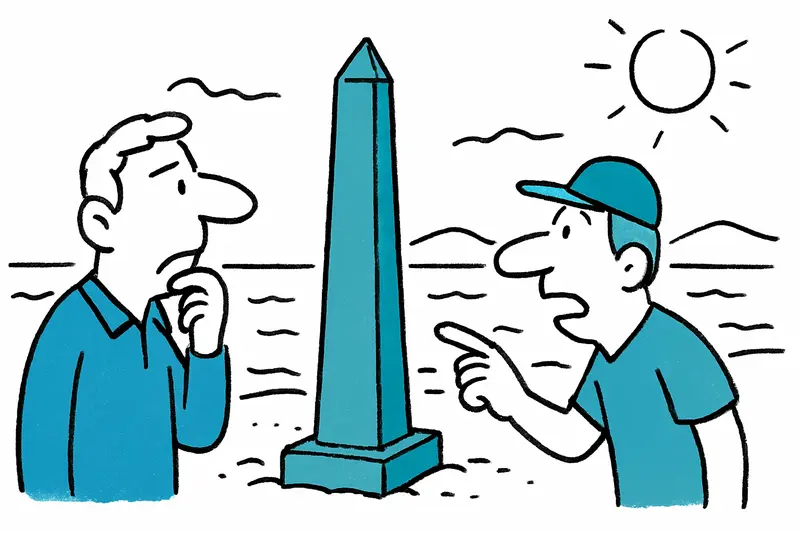
When you walk the Paseo Cervantes in the morning, gulls screeching and a fisherman starting his boat engine, your eye keeps returning to the slender towers on the beach. At first glance they are simple concrete pillars, greyed by the salt wind. On closer inspection it becomes clear: they are more than relics — they are remnants of a very specific practice from the mid‑20th century.
Local historical research has shown that the obelisk‑like structures standing in Alcúdia Bay actually served as target markers for exercises with underwater weapons. Between the 1940s and the 1970s naval units used the calm bay to train with torpedoes and mines. The towers helped define firing directions and control impact zones — visible orientation points on land while the shots came from the water.
The system was surprisingly precise: in total 14 pairs of such towers were erected along the coastline. The pairs were arranged so that about 1,240 meters lay between pairs, while the two pillars within a pair were roughly 200 meters apart. They once bore clear color markings and numbers; today the appearance is weathered, but the layout is still discernible.
Some structures were built by local craftsmen. A master mason from Santa Margalida recalls the hard work with the local marés stone and the delivery of round "bolla" stones from the Alcúdia area, which were well suited for foundations. The heavy stone blocks were then moved with simple carrying frames and muscle power; sometimes a truck from the harbor helped bring materials behind Alcanada. Such details make the towers family and community stories, not just military technical history.
The remains of the exercises are not only found on land. On the seabed of the bay lies an old B-1 class submarine that was sunk during test firings. Experts also consider this wreck part of the area's cultural and archaeological heritage, and it is protected accordingly, a situation comparable to the challenges described in Can Pastilla: The Roman Wreck and the Question of Responsibility and Funding.
The municipality has now included the towers in its local monument register. That formally protects the structures, but it also raises the question of how to deal with such objects in a tourism‑shaped landscape, similar to the tensions explored in Occupied and Crumbling: Illetes Fort Between Monument Conservation and Human Rights.
An idea that already works in some places would be to install information panels along the Paseo — short and concrete texts, with sketches of the layout and references to the shipwreck in the water. Guided beach walks or easy kayak tours with experts could bring the story closer to visitors and locals alike without overburdening the site. Important here is the balance between accessibility and protection of the heritage, a balance that also touches on beach safety as discussed in Playa de Muro: Seconds That Saved a Life — and What We Must Learn.
In the end the image stays in the mind: a boy building a small wall in the sand, unaware of torpedoes, while the towers stand silently above the bay. Such places are shaped by multiple layers of time; they can be preserved and — sensitively integrated — used as a meaningful addition to Mallorca's beach scene. That wartime exercises can become cultural memory today is no trivial consolation, but a way to make local history visible and instructive.
Frequently asked questions
What is the weather like in Mallorca in early spring?
Can you swim in Mallorca in spring?
What should I pack for Mallorca in spring?
Is spring a good time to visit Mallorca?
What is Palma like in spring?
Is Pollença worth visiting in spring?
What is Alcúdia like to visit in spring?
What outdoor activities are best in Mallorca during spring?
Similar News

Who Benefits from the Half‑Hourly Flight on the Edge? Aena, Investments and the Island's Interests
Almost one billion euros is flowing into Son Sant Joan. The figures show the scale of investment and expected beneficiar...

Are the Balearic Islands the Southern Border of Europe? A Reality Check on Immigration
The Balearic Islands are again calling for EU aid after a sharp rise in arrivals by sea. Conflicting priorities between ...

"Expensive chaos" and many open questions: What clients can do when a lawyer suddenly stops responding
Several clients complain that a well-known German lawyer in Mallorca has been unreachable for months. Key question: What...

TV tip: 'The Last Problem' — Mallorca as the setting of a classic crime
A classic whodunit on Mallorca: A new miniseries set in spring 1959 brings storm, an isolated hotel and a dense web of s...
Nipping Sea Creatures: Why Bathers in Cala Major and Elsewhere Should Be Cautious
In Cala Major, bathers have reported being nipped by small fish. What is behind it, how can problems be avoided — and wh...
More to explore
Discover more interesting content

Can Cap de Bou

Townhouse Lleo 72
