
Weapons Depot at the Airport: How Safe Is Mallorca Really?
A semi-underground munitions depot is being built on the Son Sant Joan military site. Technical data sound reassuring — but questions about transparency, environmental risks and tourism remain. What residents and visitors of Mallorca should know and which steps could build trust.
A depot, many questions: How safe are we really?
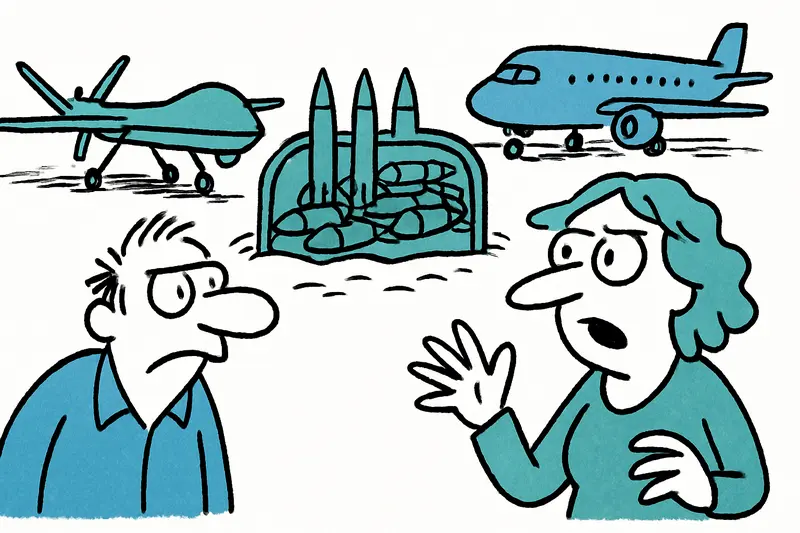
The plane taxis, the air smells of sea, and yet another question pushes into everyday life: How safe are residents and tourists if weapons are to be stored at Palma airport in the future? On the militarily used area of Son Sant Joan, a semi-underground munitions depot has recently been built — and the project raises more than just technical questions.
What is being built: facts, short and precise
The structure is no bunker movie, but neither is it an ordinary storage room: about 27 meters long, nine meters wide, 4.5 meters high, designed for up to 75 tons of material. The roof consists of 40 centimeters of reinforced concrete, with earth and grass on top so the structure "blends into the terrain." Technically, the building is supposed to withstand blast waves of up to seven bar, there are no load-bearing columns planned inside, and cables are to be armored. Cost: around 1.8 million euros. Such numbers sound reassuring, but safety does not begin and end with concrete thickness.
The spicy detail: ammunition for drones
Officially, "strategic materials" are mentioned — a term that can hide a lot. Particularly worrying is the possibility that ammunition for unmanned systems like the MQ-9 could be stored there. These drones are known to many Mallorcans only as quiet shadows over the island; technically they are primarily reconnaissance platforms, but armament is possible. The idea that parts for modern combat or weapon systems could lie in close proximity to hotels, beaches and residential areas amplifies subjective perceptions of risk.
What official statements omit
Transparency is the key word that is often missing. Authorities point to high security standards and say old depots are being modernized. Concrete answers are lacking, however: Which types of ammunition exactly? How large are the minimum distances to civilian infrastructure? Are there published evacuation or emergency plans for Playa de Palma and surrounding communities? Without clear, verifiable information, mistrust grows — in pubs, at bus stops and while strolling along the fence, and is reflected in Prohens' letter demanding clarification about the Son Sant Joan depot.
More than blast protection: underrated dangers
Beyond the acute questions of explosion and fire protection, there are less visible risks: soil and groundwater contamination from old ammunition, the age and storability of certain explosives, long-term contamination hazards. The local response capacity of fire and rescue services is also relevant: Do they have enough equipment and training for an incident of this magnitude? Who is liable in case of damage? Such practical questions are rarely discussed publicly, but they strike at reality on site.
Politics, everyday life and the symbolism of the fence
Politically, narratives clash: some demand greater transparency and warn of a creeping militarization, as argued in Munitions Bunker Near Son Sant Joan: Why Mallorca's Citizens Should Have a Say, others point to national security interests and broader strategic questions explored in analysis of Mallorca's role in the new Mediterranean military strategy. For residents, the experience is often this: talks with authorities are formal and answers are abstract. Symbolically, such a depot is more than concrete: it is a test of trust between state and society — and in a tourism region like Mallorca, the island's image is also at stake.
Concrete, verifiable steps forward
There are practical measures that could help depoliticize the debate: independent safety and environmental assessments, published in full and accessible to the public; regular on-site information events; clearly defined safety distances with comprehensible justifications; publicly available evacuation and emergency plans; monitoring of soil and groundwater quality with live data online. Parliamentary oversight by local representatives would be a useful complement.
Another proposal: the establishment of a civil-military advisory board with representatives from municipalities, the hotel industry, environmental protection, the fire brigade and the military. Regular situation reports, joint exercises and a binding information plan would not remove all fears, but they would build trust — something that in beach bars and on promenades counts for more than technical certificates.
My impression — a walk by the fence
Last week I stood at the edge of the site. The wind carried salt and conversations; in the distance a child giggled on the beach, a service plane bumped toward the runway. Beside me the rusted Spantax frame, tarps, boots in the mud. The construction site looks routine, yet the faces of passersby often show another word: unease. As long as answers are missing, this gap in communication remains larger than any foundation.
Transparency, independent review and genuine participation would be steps to turn the whispering at the fence back into clear information — and strengthen Mallorca's safety not only technically, but socially.
Frequently asked questions
How safe is Mallorca if weapons are stored near Palma airport?
What is being built at Son Sant Joan airport in Mallorca?
Can the Palma airport weapons depot withstand an explosion?
Why are people in Mallorca concerned about ammunition being stored at the airport?
Are there public evacuation plans for Playa de Palma if something goes wrong at the airport depot?
Could the airport depot affect soil or groundwater in Mallorca?
What would Mallorca need to make the airport weapons depot debate more transparent?
Does the weapons depot at Palma airport affect Mallorca’s image as a tourism destination?
Similar News
First Day, First Consequences: What Palma's Rent Freeze Really Means
A new decree stops a planned eviction in Palma — but what really changes for tenants and landlords? A reality check with...
When Housing Becomes a Matter of Survival: Mallorca Between Rental Frenzy and Everyday Life
The case of 87-year-old Maricarmen showed that on Mallorca many people's lives are poised between affordable and uninhab...
Autumn in Mallorca: When Melancholy Gets a Window
Why autumn quietly tightens here — and how to make use of the mood: walks, culture, candles and the light from Palma to ...
Near-miss on Lanzarote: Landing Ryanair Jet and Iberia Takeoff — what really went wrong
On Lanzarote there was a dangerous incident: A Ryanair flight (FR5910) from Dublin landed on runway 03 while an Iberia E...
Eurowings introduces new Premium Business seats on Mallorca routes
From December 1, selected Eurowings flights to Palma and other destinations will feature eight particularly generous sea...
More to explore
Discover more interesting content

Can Cap de Bou

Townhouse Lleo 72
