
Who is stripping Mallorca's coast bare? Why entire slopes are being removed for villas
Who is stripping Mallorca's coast bare? Why entire slopes are being removed for villas
On Mallorca steep slopes are again being removed to make way for luxury construction sites. Who bears the responsibility — the law, the courts or the market? A local check with clear demands.
Who is stripping Mallorca's coast bare? Why entire slopes are being removed for villas
Key question: Why does the system allow coastal slopes to be cut away so that premium building plots can be created on the island — and who ultimately pays the price?
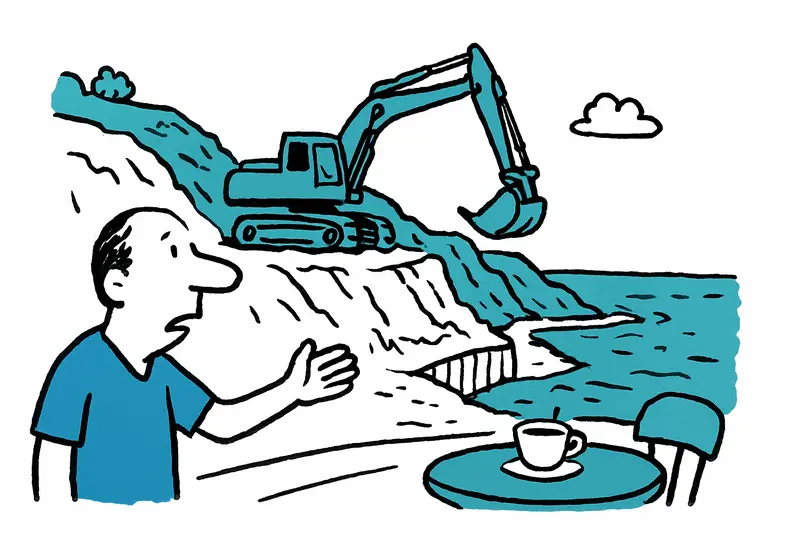
At a viewpoint above Cala en Cranc you can see it immediately: brown flanks, large excavators, exposed edges at whose base concrete foundations stand like teeth. The sounds of chainsaws are missing; instead there is the deep rumble of hydraulics and civilians in the waterfront café of Port d'Andratx staring at the cranes. This is not an isolated case: observations in areas such as Cala Llamp, Camp de Mar, between Peguera and Santa Ponça, in Canyamel and in expensive neighborhoods like Son Vida and Gènova show the same pattern.
The causes cannot be summed up in one sentence. On one hand there are building permits that are partly decades old and reflected different market conditions at the time. On the other hand, in some cases courts have protected developers — a precedent with high compensation claims has instilled caution in policymakers about enforcing stricter land rezoning. In practice this means: plots with steep gradients are now simply being 'hollowed out' to create build-ready, level ground.
Critical analysis
The current regulations do contain a restriction: plots with a slope above 50 percent are subject to special requirements, and it has been demanded that at least half of the remaining undeveloped area be left in its natural state. That is a step, but it is incomplete. Much escapes control because measurement points, calculation methods and reference values are set in ways that allow plots to fall just below the threshold. Practitioners point out that a 50 percent slope practically means: 100 metres horizontal, 50 metres vertical — that is enormous. By comparison: the ramp of a garage is usually only allowed around 20 percent.
Another aspect is the economic logic. Whoever owns a plot on the coast with a view experiences how a market with high willingness to pay sets infrastructure and approval processes in motion. For some landowners it pays financially to cut away heaps, pile up terraces and concrete embankments — even if in the long term damage to the landscape, water balance and biodiversity results.
What is missing in the public discourse
There is a lot of talk about individual cases and court rulings, but hardly about three things: transparency in approvals, financial security against later damages and a clear inventory of the areas already irreversibly altered by interventions. A public catalogue of the plots on which slope removal has taken place or has been applied for, along with technical reports and conditions, is missing. Nor is there an open debate about who bears long-term liability when landslides, erosion or increased runoff events follow.
And then there is the fear of compensation payments. The Muleta example has shown that courts can award substantial sums — that paralyzes political steps to withdraw building rights. But if politics does nothing out of fear, the market continues to decide the shape of the coast and the landscape.
Everyday scene
A Tuesday morning in Andratx: parking spaces full, the old man with a newspaper at the bar orders a cortado, families come back from the beach. Between conversations about fish prices the construction site on the slope is discussed. “It used to be a green wall,” says a woman who has lived there for decades. “Now you look at rock and concrete.” Children climb on the remaining terraces, dogs sniff at the gravel, and down by the water a resident wonders whether the path to the sea will still be safe next winter.
Concrete solutions
1) Immediate obligation for public disclosure: every permit for slope alterations must be published online with technical reports, stability checks and remediation concepts. 2) Reserve requirement: developers and landowners must deposit a financial guarantee that covers potential remediation costs or damages. 3) Reduction limits based on actual topography: slopes must not be measured only at single points; area-based assessments prevent the 'just-below-the-threshold' game. 4) Moratorium on further removals in designated coastal zones until an independent mapping of all affected plots is available. 5) Institute for coastal protection: a public program that buys undeveloped plots or converts them to nature protection, financed from regional funds and EU funding pots. 6) Transparent liability for damage: municipalities, island council and regional government must examine models that mitigate compensation risks through insurance funds and buy-back programs.
Many of these measures are technically feasible. They cost money, but they prevent long-term losses that mean unreplaceable landscapes and increased risks in extreme weather.
Pointed conclusion: If the island allows the market to shape coastal hills with excavators, Mallorca will lose not only viewpoints but protective functions and one of its most visible identity features. Politics, administrations and residents must factor in the bill for future damages and decide now whether the island should continue to exist as a marble building plot or as a living coastal landscape. Silence is not an option.
Frequently asked questions
What is the best time to visit Mallorca for warm weather and swimming?
Is Mallorca suitable for a beach holiday with kids?
What should I pack for a Mallorca trip?
How can I get around Mallorca without a car?
Are there any safety tips for swimming in Mallorca's coastal waters?
What are the best months for outdoor activities like hiking and exploring villages in Mallorca?
How crowded does Mallorca get in peak season, and how can I avoid crowds?
Is it possible to combine beach time with cultural visits in Mallorca?
Similar News

Bomb threat before Jet2 flight in Tenerife: A reality check for security protocols
A passenger reported a bomb in luggage shortly before departure in Tenerife. Evacuation, baggage checks, delays — and ma...

Robber Falls While Fleeing in Sant Agustí: Who Takes Responsibility?
During a purse-snatching in Sant Agustí, a non-commissioned officer chased the suspect; the man jumped from a bridge and...

Bomb threat on board? Why the Tenerife incident concerns us in Mallorca
A passenger on a Jet2 flight from Tenerife to London triggered an evacuation and intensive security checks. The result: ...

More Electric Cars in the Balearic Islands: Sales Rise Sharply
Between January and August, 14,185 vehicles without petrol or diesel propulsion were sold — an increase of more than 40 ...

Autumn in Mallorca: What Truly Remains of Summer
The days grow shorter, the evenings cool — and yet more of summer lingers than you might think: sounds, recipes, people,...
More to explore
Discover more interesting content

Can Cap de Bou

Townhouse Lleo 72
