
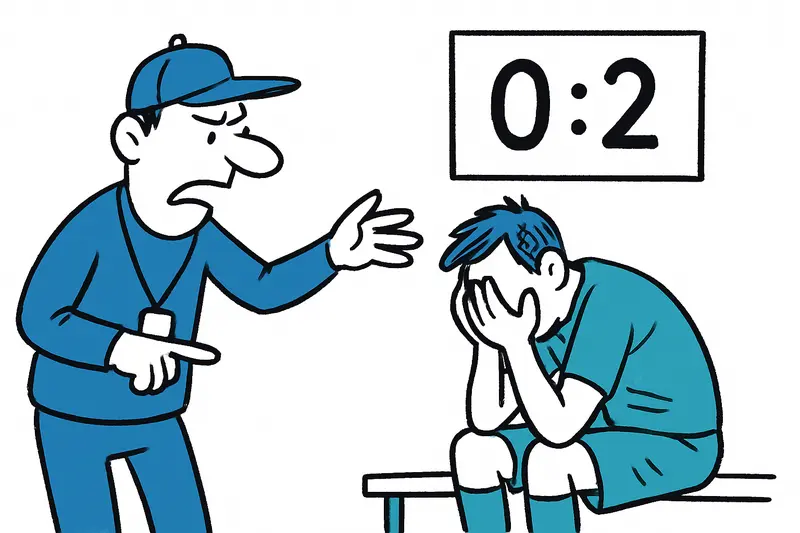
0-2 in Valencia – Why an evening in Levante cost more than just three points
After the 0-2 defeat at Levante, RCD Mallorca sit second-to-last with their backs against the wall. An analysis: mistakes on the pitch, a discipline problem, and what can practically be done now.
0-2 in Valencia – Why an evening in Levante cost more than just three points
Key question: How does a club like RCD Mallorca react when a result like the 0-2 at Levante suddenly makes salvation so much more complicated?
Summary of the evening
In Valencia Mallorca lost 0-2. Carlos Espí put the hosts ahead, and Arriaga made the late decision. Mojica was sent off after an altercation with Levante's Brugué; Brugué also received a red card. Around 500 travelling supporters experienced a tense scene with frustration and discussions on the touchline after the final whistle. After the game Mallorca are second-last – the situation ahead of the final league match against Girona is precarious.
Critical analysis: More than just a result
On the pitch there was a team that could not regain control in decisive phases, a pattern seen in Too late to ignite: RCD Mallorca lose narrowly 1-2 in Bilbao. Mojica's red card is symptomatic: in tight duels attitude and concentration often decide, as with Goalless Draw in Oviedo: Why Mallorca Couldn't Use the Numerical Advantage. A close match tips over when discipline issues are added to the mix. Coach Martín Demichelis faces the task of bringing back calm heads and clear routines, otherwise the home game against Girona will be mere statistics.
What is missing from the public debate
The debate quickly turns to assigning blame in a relegation battle. Two points often remain underexposed: first the structure behind the squad – how stable is the balance between experienced leaders and young players? Second the role of the environment: travel demands, packed schedules, and the psychological burden of a looming relegation fight affect performance, and high-pressure fixtures like Two Minutes Decide: Mallorca Shows Courage at the Bernabéu — and Loses Narrowly intensify that strain. Both are areas that cannot be solved by loud chants from the stands or by Twitter alone.
A everyday scene from Palma
Late in the evening, when the bus from the airport drives along the Passeig Marítim, you meet those 500 fans again, tired, their voices still hoarse from cheering. In the corner bar where the regulars had watched the game, empty glasses now stand and discussions begin: who bears responsibility? The waitress shakes her head, a meter away a young fan nervously taps his phone – an image that can be seen in many of Mallorca's pubs when the season hangs in the balance.
Concrete approaches
1) Short term: Mental stability. Training must simulate pressure situations. A clear plan for the first 20 minutes of the home game against Girona can set the tone. 2) Discipline and communication: The club leadership should communicate internally which behavioral standards apply. Red cards in direct duels must not happen again, and incidents that hand the initiative to opponents—such as the match decided by a spot kick in Narrow defeat in Barcelona: penalty denies Mallorca a point—should be avoided. 3) Tactical adjustments: Against Girona it will be necessary to counter typical vulnerabilities – a more stable midfield, more consistent defensive pressing in transition phases. 4) Support from fans: The club can offer targeted calm communication windows – short fan meetings without show, more conversational formats so tension does not escalate into aggressive encounters. 5) Mid term: Squad planning with an eye on character and depth. Good individual players cannot replace missing collective structures.
What those responsible should pay attention to now
It is not just about the result next weekend. If the sporting management and the coaching staff show they have learned from this evening, the team will regain atmosphere. It is a moment when leaders must become visible – not with phrases, but with concrete measures (training focus, clear directives, disciplinary measures, player dialogues).
Concise conclusion
The 0-2 against Levante is more than three lost points. It is a warning signal about attitude, structure and communication. Now it will be decided whether Mallorca reacts before the season ends in disaster. A final home game against Girona still offers a chance, but it must be used with brains and nerve. On the streets of Palma you can hear the worry, in the pubs there is discussion, and on the Son Moix pitch everything must come together on Saturday.
Frequently asked questions
Why was Mallorca's 0-2 defeat at Levante so damaging?
What went wrong for Mallorca against Levante?
How serious is Mallorca's relegation danger now?
What does Mallorca need to do against Girona to stay calm?
Why are red cards such a problem for Mallorca in a relegation battle?
How did Mallorca fans react to the loss at Levante?
What is Martín Demichelis expected to change at Mallorca?
What can Mallorca learn from the defeat in Valencia?
Similar News
German tourist dies in Sa Calobra – a reality check for emergencies on Mallorca's beaches
A 40-year-old tourist died at the Torrent de Pareis. The emergency call, a doctor who happened to be present, a defibril...
Deadly Tractor Accident in Bunyola: What Needs to Be Done Now
In a work accident on an estate near Bunyola, a roughly 40-year-old man lost his life. His wife and a small child were o...
Head-first dive into the shallow part of Cala Fonoll: An accident and the unresolved question of responsibility
A young tourist dove into Cala Fonoll and was seriously injured. Key question: Why are clear warning signs missing at da...
Mistaken identity with fatal consequences: Brutal assault in S'Aranjassa — what's missing in the follow-up?
At S'Aranjassa a visitor to a finca was tied up, beaten and thrown out of a van. Three men have been arrested, including...
High heel slips, car accelerates: accident on Camí de Son Hugo
A woman lost a high-heeled shoe on the forecourt of the sports facility at Camí de Son Hugo. The car accelerated, mounte...
More to explore
Discover more interesting content

Can Cap de Bou

Townhouse Lleo 72
