
Banyalbufar Watermills to Breathe Again
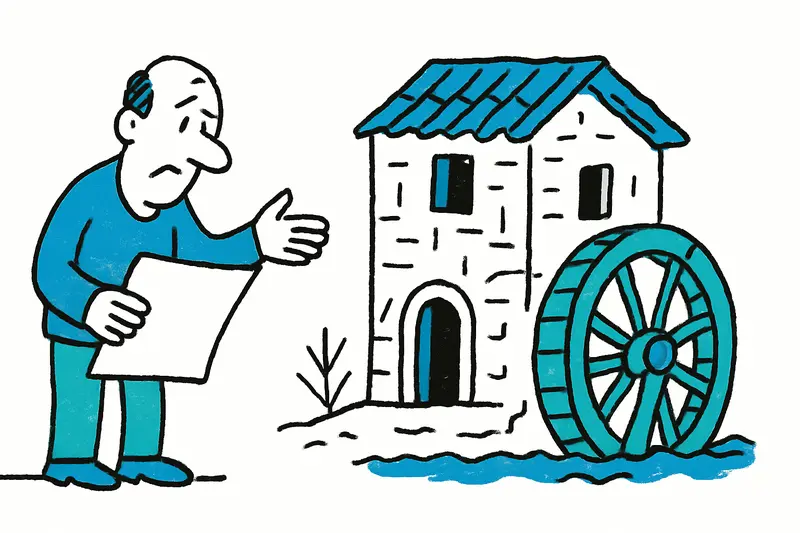
Two centuries-old watermills at Cala Banyalbufar are in urgent need of repair. The municipality has asked the island council for just under €32,000 for the upper section — a piece of Mallorcan everyday craftsmanship is to be preserved.
Banyalbufar Watermills to Breathe Again
A small monument that tells much about life here
The two watermills at Cala Banyalbufar not only stand on steep rock, they also remain in the memories of many villagers. Anyone who today walks down the narrow lane from the village centre to the cala can still hear the distant roar of the surf, smell the scent of wet stone after a summer rain and see the crumbling walls that once ground grain. The mills date from the time of Moorish rule and are already mentioned in records from 1240. Such details make them living witnesses to the island's history.
Since 2007 the sites have been protected as cultural heritage; that is important, because protection alone does not repair. The ravages of time have taken their toll on the wood, masonry and the surrounding terraces. The upper part of the mill is particularly badly damaged; repair costs for this area are around €32,000. The municipality has therefore asked the island council for financial support. For a small village like Banyalbufar this is a large sum, but an investment in identity and gentle tourism.
Why this matters becomes clear in everyday life: older residents remember the sound of stones and millstones, and children still learn at school about the role of water management and terrace construction for agriculture here (When the Tap Becomes a Luxury: Seven Municipalities Tighten Water Rules in Mallorca). The mills are a symbol of a landscape that closely links human labour and nature. Their survival helps explain why the dry stone walls along the fields must be preserved and why springs still play a role here (Water Emergency in Valldemossa: When the Wells Whisper).
The location directly on a steep slope makes restoration technically challenging, but at the same time appealing. Anyone who sits for a few minutes at the cala sees not only the sea but also the gradations of culture and nature: terraces, olive trees, old paths. A careful renovation could secure access and keep the old mechanism visible without disturbing the tranquillity of the place. It would be conceivable to set up a small information point that briefly and factually explains to visitors how the mills worked and what significance water had for the village.
There are already signs of community engagement in Banyalbufar: volunteer groups look after paths, local craftsmen know traditional building materials, and village meetings discuss such projects. Such networks could participate in the restoration — not as a replacement for professional conservators, but as a complement in cleanup work, information activities and care of the surroundings. Workshops on traditional techniques would be one way to pass on knowledge while also sparking interest among young people.
Practically, the matter now comes down to two things: the financial aid and a gentle plan for the work. The €32,000 for the upper section is a concrete figure around which talks can be organised. The municipality will now coordinate with the island council to decide the next steps (Water alarm in Mallorca: Seven municipalities turn off the tap — is saving alone enough?). If the funds are provided, local craftsmen, monument protection specialists and volunteers can begin according to an agreed timetable.
For the island this is more than a small construction project. It is an invitation to turn attention to the everyday: houses and mills that organised work and rhythms of life for centuries. Such places are anchor points in a time when much changes quickly. If Banyalbufar protects its mills, it also protects a piece of Mallorcan everyday culture — and gives coming generations the chance to experience the clack of wood and stone rather than just read about it.
If you stroll through the village in the coming weeks, you can ask at the Plaça, the small bakery or the harbour about the progress of the plans. The restoration is a locally rooted project, one that feels right: technically feasible, able to be accompanied by the community and much more than just a photo opportunity for holidaymakers.
Outlook: If all goes well, the work will not only secure the masonry but also open the door to encounters with traditional crafts. Small information boards, occasional guided tours and community workdays could once again make the mills a place where residents and visitors learn, without disturbing the quiet dignity of the site.
Frequently asked questions
What is the weather usually like in Mallorca in winter?
Can you swim in Mallorca in the winter months?
What should I pack for Mallorca in winter?
Is winter a good time to visit Mallorca?
What is Palma like in winter?
Can you still enjoy outdoor activities in Mallorca during winter?
What is Alcúdia like in winter?
Is it worth visiting Mallorca for a quiet winter getaway?
Similar News

When the Wallet Becomes a Danger: Attack in Peguera and Lessons for Mallorca
In Peguera, two women are said to have stolen the wallet from a 75-year-old German couple. When the victim intervened, t...
Plata stays Plata: Young people take over, Llonguets remain
A small bar on Carrer de l'Argenteria will continue: Tolo Serra hands the place over to young Mallorcans at the end of t...

Unnoticed in the Luggage Compartment: How a Boy Traveled More Than 100 Kilometers in a Team Bus
A minor traveled in the undercarriage of a team bus for more than 100 kilometers until his cries for help were heard. A ...

Cap Vermell Grand: Second Michelin Key – a Gift for the East
The Cap Vermell Grand in Capdepera has been awarded its second Michelin key. For the region this elevates the luxury off...
Eurowings lets four aircraft carry names – a friendly idea that also reaches Mallorca
Eurowings is launching a campaign: four Airbus A320s are to carry the first names of people who help others in everyday ...
More to explore
Discover more interesting content

Can Cap de Bou

Townhouse Lleo 72
