
Parents Arrested in Palma After Child Abuse Allegations
Parents Arrested in Palma After Child Abuse Allegations
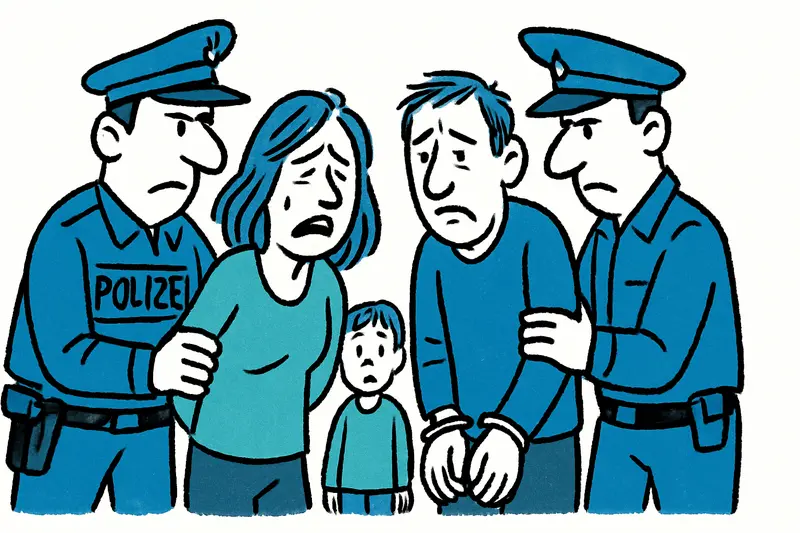
In Palma, parents were arrested after their daughter was brought to hospital with injuries. The National Police report marks consistent with a belt; the children have been placed in the care of child protection services.
Police operation in Palma: Parents arrested after allegations of abuse
Key question: How effective is Mallorca's safety net for children who experience domestic violence?
On Thursday this week the National Police in Palma responded after a girl was examined in hospital with injuries. According to the authorities, there were marks on her body that suggest she had been struck with a belt. The girl reported that her father had hit her, and also described recurring violence against herself and her younger brother. The parents were arrested, and the two children were separated from the family and taken to a child protection facility.
Such cases hit the island like an unexpected downpour: brief, intense and leaving visible traces, as in Mother arrested in Palma – Three children left alone: How could this happen, and what needs to change?. On the Passeig del Born, parents sit with prams on a late afternoon, you can hear cups clinking in a café and the laughter of schoolchildren walking home. These everyday sounds contrast sharply with what can happen behind closed doors. It is precisely this discrepancy that makes it urgent to ask how well institutions and neighbourhoods observe and intervene.
Critical assessment: The arrest is a necessary first step, but it does not automatically resolve the deeper problems, even as the National Police deal with other incidents such as National Police Arrest Suspected Hotel Thief in Palma – A Safety Check for Travelers. A police operation stops violence acutely, but it cannot replace the long-term work of social services, psychologists or specialised foster families. In Mallorca, where family structures are often close-knit and the threshold for involving authorities can vary by background and social environment, clear procedures and sufficient capacity are needed so that protection does not fail due to administrative obstacles.
What is often missing in public debate: first, precise information about the procedures after an arrest. Are the children given immediate medical and psychological care? How long do assessments at the youth welfare office take, and what interim solutions exist when foster placements are lacking? Second, prevention measures are rarely discussed concretely: what role do schools, general practitioners and neighbourhood networks play in early detection? Similar prevention questions were raised after Juveniles arrested: Palma car-theft series raises questions about prevention. Third, there is often a lack of focus on resources: are there enough specialists in trauma-informed education and family support services in the Balearics?
Looking at possible gaps reveals areas for action. Often the reporting threshold is unclear: teachers are obliged to report suspected cases, but training on how to recognise signs of abuse is sometimes lacking. Equally problematic is the coordination between police, youth services and health care: information must be exchanged quickly and legally securely so children do not get stuck in bureaucratic waiting times.
Concrete proposals can be formulated comparatively pragmatically. First: interdisciplinary teams in municipalities that combine police, social work and initial health care under clear protocols so that medical and psychological assistance is available immediately after an arrest. Second: mandatory training for teachers, primary care physicians and municipal staff on early detection and appropriate handling of suspected cases. Third: expansion of short-term protective accommodations and a pooled system of foster caregivers who can provide specially trained emergency reception. Fourth: transparent, anonymised reporting by authorities about procedures and waiting times so that policymakers and civil society can respond effectively.
On the street you can sense the concern. In a small shop in Santa Catalina the owner pauses when children pass by; she knows many families and pays attention to changed behaviour. Such neighbourhood observations are valuable — but they need a reliable culture of reporting and reassurance that notified cases are taken seriously and that help will come.
Prevention is also important: support services for parents under stress, low-threshold counselling at community level, financial assistance in acute crises and easily accessible information in several languages. Language and culture must not be barriers to finding help.
Conclusion: The arrest in Palma is a clear signal that investigations are underway and that children have been removed from a dangerous situation. But the case also highlights how well protection chains need to be coordinated in practice. Police alone are not enough. Mallorca's authorities, schools and neighbourhoods must streamline procedures, build up resources and foster a culture of vigilance — so that similar cases are not only ended but prevented in the first place.
Note: The facts presented here are based on statements by the National Police and the information available at the time of reporting.
Frequently asked questions
What happens in Mallorca when police arrest parents over suspected child abuse?
How are signs of child abuse detected in Mallorca?
What support do children receive after being removed from a violent home in Mallorca?
Why is child abuse prevention a challenge in Mallorca?
Can schools in Mallorca report suspected child abuse?
What role do doctors and hospitals play in child protection in Mallorca?
How can neighbours help protect children at risk in Mallorca?
Where can families in Palma get help if they are under severe stress?
Similar News

When the Wallet Becomes a Danger: Attack in Peguera and Lessons for Mallorca
In Peguera, two women are said to have stolen the wallet from a 75-year-old German couple. When the victim intervened, t...
Plata stays Plata: Young people take over, Llonguets remain
A small bar on Carrer de l'Argenteria will continue: Tolo Serra hands the place over to young Mallorcans at the end of t...

Unnoticed in the Luggage Compartment: How a Boy Traveled More Than 100 Kilometers in a Team Bus
A minor traveled in the undercarriage of a team bus for more than 100 kilometers until his cries for help were heard. A ...

Cap Vermell Grand: Second Michelin Key – a Gift for the East
The Cap Vermell Grand in Capdepera has been awarded its second Michelin key. For the region this elevates the luxury off...
Eurowings lets four aircraft carry names – a friendly idea that also reaches Mallorca
Eurowings is launching a campaign: four Airbus A320s are to carry the first names of people who help others in everyday ...
More to explore
Discover more interesting content

Can Cap de Bou

Townhouse Lleo 72
