
Provisional Measures at Pier 3: Palma Sets Up Emergency Shelters in the Port
Tents and containers are now being installed at Pier 3: After much back and forth, Palma is setting up provisional accommodations for arrivals. Why it took so long, what is planned on site and which questions remain open.
Provisional measures at Pier 3: Palma sets up emergency shelters in the port
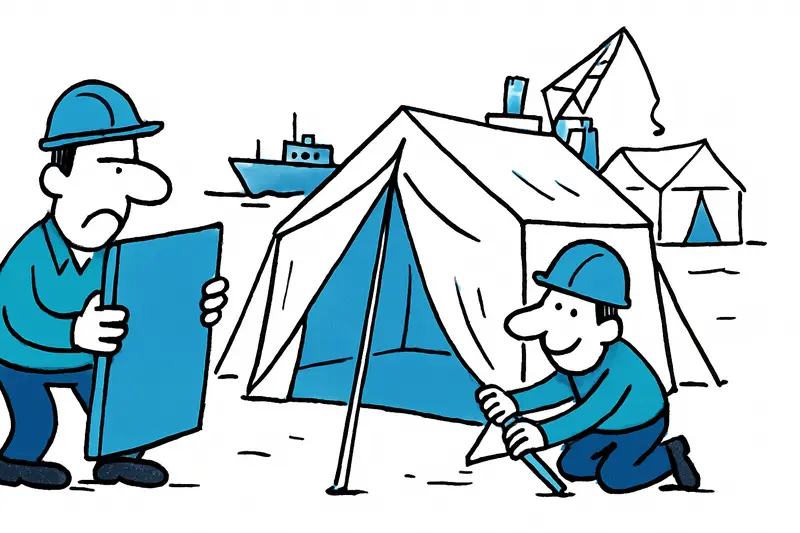
Yesterday morning, light drizzle, crows circling over the berths: there is movement at Pier 3. Workers from the company Tragsa push boxes, lash tarpaulins, erect the first tent frames. It is not a show, not a grand event — rather the pragmatic continuing work of a city that suddenly has to respond to a new wave of arrivals. Alojamientos de emergencia en el puerto de Palma: comienza el montaje. Tents, a few Contenedores en el puerto de Palma: ¿es suficiente como solución?, power boxes and cartons with furniture mark the provisional response.
The central question: Is this enough — and for how long?
Officially the facility should be operational in about two weeks. Two weeks sounds tight; the reality of supply chains and administration makes one skeptical. Air conditioning units, beds, computers for registration are still missing — without them a provisional site remains just an empty framework. That is one side. The other: even if everything arrives on time, the facility is intended as a temporary measure. For how long can Palma house people under provisional conditions before sustainable solutions take effect? This key question hangs in the harbour mist.
Why it took so long
The delays have tangible reasons. The site was previously used as a towing and vehicle storage area — cars had to be removed, ground cleared. An earlier attempt to set up in September failed because of underground pipelines that suddenly got in the way. Such obstacles sound bureaucratic but are real: a port is not an open field; there are cables, old containers and infrastructure here, every step must be coordinated.
This leads to frustration among people on site. Workers in neon vests who pushed a box of sockets by said dryly: “If the weather cooperates, we’ll finish faster.” A sentence that says more about reality than many official statements: craftsmanship, wind and time often dictate the pace.
What the facility is supposed to provide — and what not
The plan is rows of tents for at least 136 people, basic medical care, social counseling and information services in simple form. These are important basics: first aid, a roof over one’s head, legal information. But expecting this to replace dignified accommodation or long-term reception would be misleading. Emergency solutions must be linked to clear follow-up plans.
On site there are also contingency plans in case more boats arrive in the coming days than expected. This preparedness is necessary — no one wants to suddenly be left without options. But preparedness alone is not enough: communication, transparency and a clearly defined duration of stay for these emergency shelters are at least as important.
What is often missing in the public debate
Two aspects are seldom examined enough: firstly the logistical groundwork behind such a setup — permits, ground surveys, coordination with port authorities and rescue services. Secondly the question of the image of humanity: how does the city treat the arrivals? Between a drive for efficiency and care, dignity must not be sacrificed. Emergency shelters must be designed so that medical, psychological and legal first aid are actually accessible. Guidance on reception and shelter is available from UNHCR.
Concrete opportunities and suggestions
From the bustle on the quay practical solutions can also be derived. Some pragmatic approaches Palma should prioritize now:
1. Faster but safe approval procedures: Temporary special arrangements with clear safety and hygiene requirements could speed up future setups.
2. Modular prefabricated units: Prefabricated modules (medical, communal and administrative containers) can be set up faster and made usable in the long term than pure tents. For examples of rapid deployment in emergencies see Habitat for Humanity emergency response.
3. Pre-positioned supplies: Blankets, bedding, mobile office units and IT equipment should be available as reserves — rather than ordering everything only upon arrival.
4. Transparent communication: Residents need reliable information about the timeframe, capacities and follow-up plans. That reduces uncertainty and irritation in the neighborhood.
5. Cooperation with civil society actors: NGOs, social services and church groups can help provide language and counseling services more quickly.
Looking ahead
The setup at Pier 3 is at the moment above all one thing: a pragmatic reaction to a concrete situation. The mood across the city is mixed — concern, some irritation about slow processes, but also relief that something is finally happening. If Palma treats the emergency measure not only as a short-term patch but as part of a considered emergency and integration strategy, the improvised deployment can become a controlled, dignified management.
The sounds on the quay remain: metal, footsteps, distant horns. Those arriving under the tents need above all one thing: a clear perspective. And that cannot be just a tent.
Frequently asked questions
What is happening at Pier 3 in Palma’s port?
How long will the emergency shelters at Palma port take to open?
What services will the temporary shelter in Palma provide?
Why did the setup at Pier 3 in Palma take so long?
Is the emergency shelter at Palma port a long-term solution?
What happens if more boats arrive in Palma while the shelter is still being prepared?
What should people know about emergency shelters in Palma’s port area?
Are there any practical improvements Palma could make for emergency reception sites?
Similar News
When Housing Becomes a Matter of Survival: Mallorca Between Rental Frenzy and Everyday Life
The case of 87-year-old Maricarmen showed that on Mallorca many people's lives are poised between affordable and uninhab...
Autumn in Mallorca: When Melancholy Gets a Window
Why autumn quietly tightens here — and how to make use of the mood: walks, culture, candles and the light from Palma to ...
Near-miss on Lanzarote: Landing Ryanair Jet and Iberia Takeoff — what really went wrong
On Lanzarote there was a dangerous incident: A Ryanair flight (FR5910) from Dublin landed on runway 03 while an Iberia E...
Eurowings introduces new Premium Business seats on Mallorca routes
From December 1, selected Eurowings flights to Palma and other destinations will feature eight particularly generous sea...

Car on MA-13 near Inca in flames – a safety check for the island
A vehicle caught fire on the MA-13 towards Alcúdia on Tuesday afternoon. The driver was uninjured, the car was destroyed...
More to explore
Discover more interesting content

Can Cap de Bou

Townhouse Lleo 72
