
Anti-terror raid in Palma: What we know — and what we don't
Anti-terror raid in Palma: What we know — and what we don't
Early morning, National Police vans on Gabriel Maura Street: at least one arrest, documents seized and simultaneous actions in Tangier. A reality check from Palma.
Anti-terror raid in Palma: What we know — and what we don't
Key question: How well are security and civil liberties balanced in Palma?
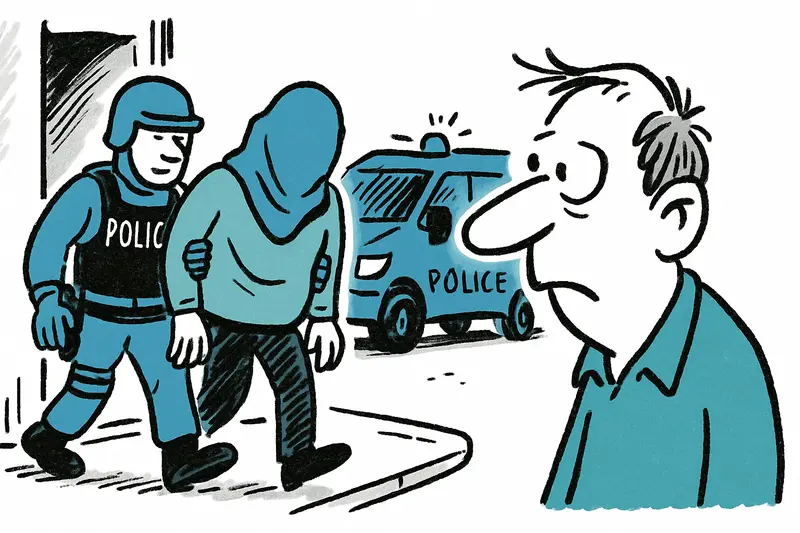
Early on Wednesday morning dozens of police vehicles were parked on Gabriel Maura Street, just a few steps from Ses Estacions park and the Jacint Verdaguer station; residents reported a short, tense appearance similar to the pre-dawn raid in Palma, Inca and Binissalem. Residents reported a short, tense appearance: officers in operational gear stepped out of vans, a resident was led out of the house at number 3 — his face covered. Later, authorities said, further suspects were taken into custody simultaneously in the Moroccan port city of Tangier.
The investigations are being conducted under the cover of a secret procedure by the Audiencia Nacional in Madrid. According to official information, it is an operation against an alleged Islamist group; the person arrested in Palma is said to have been regarded as a leader and to have been in contact with two people in Morocco. Documents were seized, as described in recent reporting on searches of law firms.
Critical analysis: What is true — and where are the answers?
Police operations of this kind have two faces. On one hand there is the necessary response to concrete threats: cross-border investigations, coordination with foreign authorities and rapid action when an attack is feared, comparable to other operations involving searches in Palma, Manacor and Llucmajor. On the other hand, secret procedures and sparse information leave the neighborhood with questions: Why so little transparency? On what basis was the arrest made? What evidence exists against the accused?
The fact that parts of the unit traveled from mainland Spain shows how seriously authorities assess the risk. But the duty of secrecy must not become a complete blackout for legitimate inquiries. Residents of Gabriel Maura, shopkeepers on the corner and commuters at the station deserve reliable information — not just rumors from the street corner.
What is missing from the public discourse
There is a lot of speculation on the streets. In the alleys around Ses Estacions you hear the usual lines: 'What happened?' or 'That was right next to the market.' Yet concrete, verifiable information is lacking. Points that have received little attention so far but would be considerate to the public include: the legal status of those arrested (allegations, detention orders, specific criminal charges), the role of local police authorities in the cooperation, and whether seizures are covered by judicial orders — details similar to those clarified later in a money-laundering raid in Palma where arrest figures were updated.
Everyday scene from Palma
It was still cool when the first vans arrived. An old man fed pigeons at the edge of the park, a bakery was opening its shutters and the smell of freshly baked ensaimadas mixed with the oily scent of the operational vehicles. Young people waited for the tram as it rolled in with a soft bell. From a third floor, a woman with a coffee mug watched the scene, giggling and uneasy at the same time. Moments like these show: for many residents the city is both workplace and living room — security policy here meets the daily rhythm of life directly.
Concrete proposals
1. Better information policy: Authorities should publish clear basic information promptly — without endangering investigations: type of arrest, general allegations, guidance for residents (no names when the procedure requires confidentiality).
2. Local police liaisons: A permanent contact person from the National Police for neighborhoods like the area around Ses Estacions could curb rumors and build trust.
3. Protection for those affected and their relatives: If people with a migration background are affected in neighborhoods, psychosocial support and clear anti-stigmatization measures are needed.
4. Judicial transparency for secret procedures: Judicial orders that place investigations under secrecy should provide anonymized justifications so the balance between security and the rule of law is more understandable.
5. Prevention and deradicalization: In the long term, more investment in local prevention projects, schools and social work helps spot radicalization signals earlier.
Conclusion — short and to the point
The raid on Gabriel Maura Street shows that authorities work across borders and take dangers seriously. At the same time, strict secrecy leaves many people in Palma with a sense of uncertainty. More transparent information, reliable local contacts and measures against stigmatization would help restore trust — without hindering investigations. In a city where the smell of breakfast and police sirens sometimes sit close together, that would be a sensible lesson.
Frequently asked questions
Why were there so many police vehicles on Gabriel Maura Street in Palma?
What is known about the anti-terror investigation in Palma?
Why do police operations in Palma often leave residents with so many unanswered questions?
How do residents in Palma usually react when a large police raid happens in their neighborhood?
Is it common for Palma police investigations to involve other countries?
What should people in Palma do when they see a police operation near their home?
Why is judicial secrecy used in serious cases in Mallorca?
What does the Palma raid say about security and civil liberties in Mallorca?
Similar News
Released with Conditions: The Plus Ultra Suspicion and a Mallorcan Finca as Residence
A Dutch entrepreneur, sought in connection with the Plus Ultra case, was extradited to Spain after his arrest in Germany...

Haute Nuit in Puerto Portals: Fashion, Art and Indulgence by the Water
On October 2 the Lobster Club in Puerto Portals will be transformed into a stage for curated fashion, art and culinary e...
Magaluf: Watchtower Alarm – Lifeguards Pull Unconscious Beachgoer from the Water
After a drama in the late afternoon, two lifeguards at Magaluf beach rescued an unconscious 44-year-old man. He was stab...
Turquoise in the City: How dangerous is the color play of the Sa Riera?
The Sa Riera in Palma suddenly turned turquoise — a pretty motif, but behind the effect lies a discharge of saline waste...

Jeckliner at Sunnesching: Cologne spirit sets sail from Palma
In September 2027 the Mein Schiff 2 briefly becomes a floating carnival stage: four days with Cologne bands, comedy and ...
More to explore
Discover more interesting content

Can Cap de Bou

Townhouse Lleo 72
