
Large-scale Anti-Tourism Graffiti at Cala Mendia: Protest or Vandalism?
On the morning walkers discovered an approximately 50-meter-long slogan against tourism on the wall above Cala Mendia. What does the act say about the island, and how should the municipality respond?
Large-scale Anti-Tourism Graffiti at Cala Mendia: Protest or Vandalism?
On Monday morning walkers and beachgoers at Cala Mendia rubbed their eyes: on a long wall bordering the construction site of a new beach club, an English-language message appears in large black letters: "Save the coast. No+ No+ No+ No+ No+ No+ Stop Tourism. Save the coast". The writing runs for an estimated fifty meters, so clear that you don't need a magnifying glass to read the words; similar incidents have appeared elsewhere, for example New xenophobic graffiti at Playa de Palma – How is the island reacting?.
Key question
What does such an action express, who benefits from it, and how should local politicians, businesses and residents respond without further inflaming the conflict?
Critical analysis
The scribble is at once symbolic and tangible: it marks the conflict between the desire to protect the coast and the economic drive for new tourist infrastructure. As a means it is ambivalent. On one hand, the large-format slogan attracts attention — the message is loud, simple and hard to miss. On the other hand, it remains illegal, destroys public or private property and polarises the situation without naming concrete addressees or demands. This can escalate public unrest, as with Red mark at the pool: Protest in Palmanova causes unrest. That reduces its negotiating power: those who spray a wall out of resignation often gain sympathy, but rarely constructive solutions.
Legally the matter is clear: unauthorized graffiti is property damage, as detailed in Palma Cleans Up — Who Pays, What Remains?. Practically, however, the action addresses a real problem. The wall borders the construction site of a beach club at the bay — and it is precisely there that many locals' fears are concentrated: reduced access, increasing noise, burdens on coastal ecology and pressure on scarce water resources.
What is missing in the public discourse
Debates often revolve around buzzwords like "too many tourists" or "creating jobs." What happens too rarely is a concrete on-site assessment. How does a single promenade terrace change access to the bay? How are noise limits, parking and wastewater regulated? What studies exist, and how were neighbours involved? Missing is a space for factual mediation — a place where those affected can see numbers, ask about timelines and propose alternatives instead of articulating themselves anonymously and illegally; similar public provocation is explored in Posters, Provocation, Polarization: How Mallorca's Streets Become a Campaign Ground.
Everyday scene at Cala Mendia
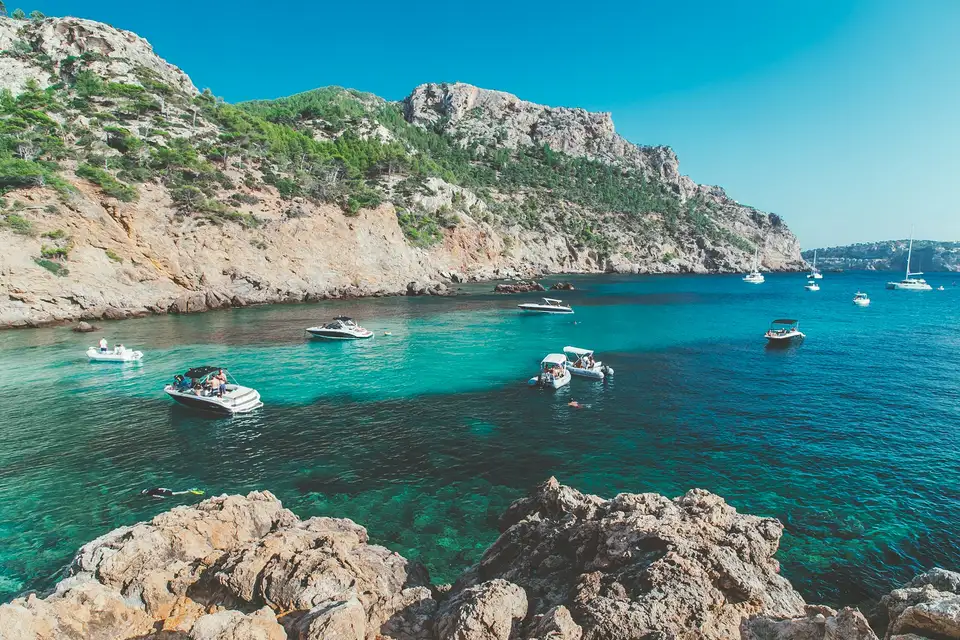
In the morning Cala Mendia is a quiet cove: children build sandcastles at the high-tide line, a washed-up fishing boat lies on the pebbles, and the smell of the sea mixes with diesel from the digger. The narrow coastal path above the bay fills with joggers and pensioners walking their dogs. There, above the car park, the black writing stands out — some tourists stop, some take photos, locals shake their heads. An older fisherman who often checks his net early in the morning says nothing big; he just looks for a long time. Such scenes show: the island lives in small, daily encounters — and solutions must begin exactly there.
Concrete solutions
1. Immediate measure: The municipality can request an independent inventory — quick photos, a damage report, removal of the graffiti at selected spots without suppressing the debate.
2. Create transparency: Building documents, environmental reports and noise measurements for the beach club construction should be publicly accessible and explained in plain language. Those who understand can participate better.
3. Neighbourhood forum: A moderated meeting between residents, operators, municipal representatives, fishermen and environmentalists. Solution-oriented, with clear rules and a fixed timetable.
4. Alternative protest spaces: Towns and municipalities can provide legal areas for murals and protest art — public art can make messages visible without damaging property.
5. Temporary construction halt for open questions: If a project has significant unanswered impacts on coastal access or nature, a time-limited halt should be considered until answers are available.
6. Participation in permits: In future, approval procedures should mandatory include local information events and a simple right to object for those affected.
Conclusion
The large lettering on the wall is a sign: not everyone feels heard. It may serve as a hook for media agitation, but not as a bridge to good policy. Those who take coastal protection seriously must create planning, transparency and genuine participation beyond slogans. That does not mean blocking all construction projects — but they must be planned so that the people who live here can continue to use and respect the coast. Otherwise all that remains in the end is paint on stone and frustration in people's minds.
Frequently asked questions
What does the Cala Mendia graffiti reveal about coastal protection and tourism in Mallorca?
Is graffiti a legitimate way to protest tourism development in Mallorca?
What steps can Cala Mendia take to address concerns without halting development?
How can local communities participate in coastal development decisions in Mallorca?
What are common concerns when new beach clubs or tourist infrastructure are planned in Mallorca?
Are there legal alternatives for protest art in Mallorca?
What timelines and data help evaluate coastal development projects in Mallorca?
What should visitors know when visiting Cala Mendia during beach club construction?
Similar News

Bomb threat before Jet2 flight in Tenerife: A reality check for security protocols
A passenger reported a bomb in luggage shortly before departure in Tenerife. Evacuation, baggage checks, delays — and ma...
Who is stripping Mallorca's coast bare? Why entire slopes are being removed for villas
On Mallorca steep slopes are again being removed to make way for luxury construction sites. Who bears the responsibility...

Robber Falls While Fleeing in Sant Agustí: Who Takes Responsibility?
During a purse-snatching in Sant Agustí, a non-commissioned officer chased the suspect; the man jumped from a bridge and...

Bomb threat on board? Why the Tenerife incident concerns us in Mallorca
A passenger on a Jet2 flight from Tenerife to London triggered an evacuation and intensive security checks. The result: ...

More Electric Cars in the Balearic Islands: Sales Rise Sharply
Between January and August, 14,185 vehicles without petrol or diesel propulsion were sold — an increase of more than 40 ...
More to explore
Discover more interesting content

Can Cap de Bou

Townhouse Lleo 72
