
Nighttime Break-ins in Palma: Arrest Stops the Spree — But How Safe Is the Old Town Really?
After the arrest of a young woman following several nighttime break-ins in Palma, residents breathe a short sigh of relief. The central question remains: Is a single arrest enough to stop the wave — or does the city need structural measures?
Nighttime break-ins in Palma: arrest, but lingering questions remain
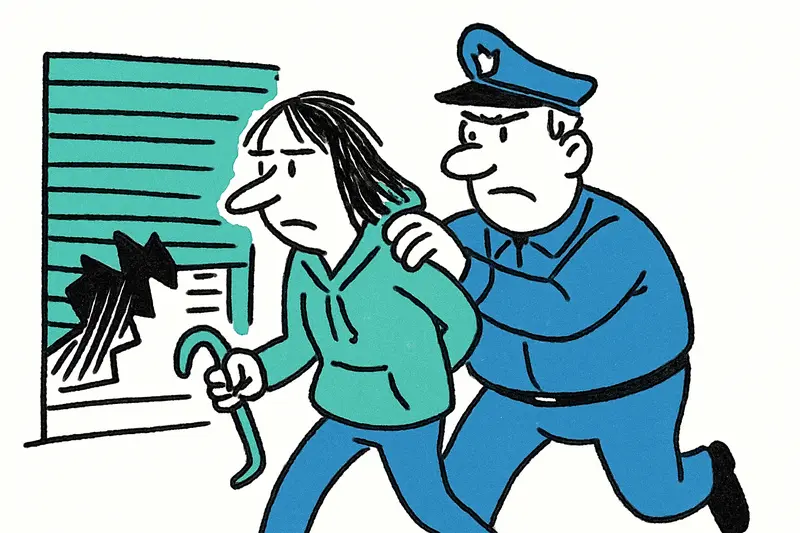
Last week a series of nighttime break-ins in Palma caused unrest: metal shutters forced open, cash registers, laptops and cash stolen. Police took a woman in her mid-20s into custody — but while some shopkeepers are relieved, others ask worrying questions: Is this arrest enough to end the spree, or does the incident reveal fundamental weaknesses in the nighttime security of the old town?
The alleged crimes and their sound
The six reported locations are close to one another: bars around Santa Catalina and the Passeig del Born, a small fruit shop and two tobacconists along the Carrer de Sant Miquel. Residents describe the metallic clatter of forced shutters — a noise that sounds particularly loud in a quiet street at about 03:30. Surveillance footage, footprints and traces at the scenes eventually led to observation and the arrest.
Why the arrest does not solve all problems
The arrest is important. But it does not answer the central question: Why do such break-ins occur in quick succession at all? There are several, often overlooked aspects: the first weak point is the urban infrastructure — dark side streets, outdated lighting and simple metal shutters that can be opened with little effort. Second, police presence at night is limited; routine patrols do not always reach the narrow alleys where perpetrators prefer to operate. Third, such crimes raise questions about social causes: Are these isolated individuals in acute distress — e.g., debt or addiction — or is an organized theft ring behind them?
Who pays the price?
Small business owners are particularly affected: repairing a forced shutter, replacing a laptop or losing a week's takings hits livelihoods hard. Insurances do not always cover everything, and deductibles as well as higher premiums add to the burden. For residents the consequences are: less peace, more mistrust and calls for increased controls. A tobacconist demanded more lighting and new locks — understandable, but often expensive.
Concrete measures that could help now
Investigations must continue. In parallel, Palma needs short-term, practical answers. Proposals that can have an immediate effect include:
Improved street lighting: Targeted upgrades in dark side streets, especially around Carrer de Sant Miquel and the side streets of Santa Catalina.
Targeted night patrols: Problem-oriented police patrols during peak hours (23:00–04:00), supplemented by flexible observations in hotspots.
Subsidy programs for security technology: Grants or low-interest loans for robust shutters, night-vision cameras and alarm systems for small businesses.
Shared surveillance zones: Uniform camera standards and centrally managed image storage so footage can be analyzed more quickly.
Prevention instead of only repression: Social services for recurring offenders — counseling, addiction treatment, job placement — to reduce recidivism.
What authorities should do — and what the neighborhood can contribute
Police and city administration must be transparent about the situation and measures: How many patrols operate at night? Are investigative and sanctioning procedures being accelerated? At the same time, neighborhood engagement is effective: well-organized neighborhood watches, fast reporting chains and coordinated security measures can close gaps. Small retailers can also implement simple changes — reduce cash on hand, use mobile safes, install cameras with cloud backup.
A final look at the young suspect
The detainee is in her mid-20s and was questioned after an observation. Her name has not been published. Whether she acted alone or as part of a network will be the subject of further investigations. It is also important that legal steps are fair and expedited. Public debates should not forget that such cases often involve personal distress — which does not excuse the crimes, but does mean prevention requires social and political responses as well.
For Palma it is clear: an arrest provides short-term security — but in the long term the city needs light, cooperation and a strategy that brings police, city and citizens together. Otherwise the metallic clatter in the early morning hours will sadly remain a recurring sound.
Frequently asked questions
Is Palma’s old town safe at night?
Why are late-night break-ins more common in parts of Palma?
What time do break-ins usually happen in Palma?
What should small businesses in Palma do to reduce the risk of burglary?
Which areas of Palma were affected by the recent break-ins?
Does more lighting help prevent crime in Palma?
Will one arrest stop the burglary problem in Palma?
What can residents in Palma do to feel safer at night?
Similar News

Why the Striped Breams in Cala Pí Should Be a Wake-up Call
Once again bathers in Cala Pí were surrounded while swimming by small, nippy fish — some wounds bled. Time for clear rul...

Daily from New York: How Palma's Air Traffic Is Growing — and What Must Change
United will increase the Newark–Palma service to daily flights in 2027 (Boeing, 231 seats). Strong tourist numbers clash...

When Love Ends in Shards: Destruction in Son Vida and the Questions That Remain
In Son Vida a relationship dispute escalated: a woman destroyed furniture in a luxury villa, later pressed a panic butto...

Who Bears the Burden? Mallorca Between Tenant Protection and Landlord Fears
Madrid's new housing decrees strengthen tenant rights — but on Mallorca concern is growing: will the law drive small lan...
On the Edge: What Mallorca's Airport Loses If a Major Low-Cost Carrier Falters
The company that operates numerous connections from Palma to France and domestically is negotiating with creditors to re...
More to explore
Discover more interesting content

Can Cap de Bou

Townhouse Lleo 72
