
Arrest Warrant, Detention, Release: Questions After an Investment Fraud at Palma Airport
Arrest Warrant, Detention, Release: Questions After an Investment Fraud at Palma Airport
At Palma Airport a 34-year-old Briton was detained over an investment fraud wanted across Europe. Despite alleged losses in the millions, he was later released. What is missing in the handling of cross-border financial crimes?
Arrest Warrant, Detention, Release: Questions After an Investment Fraud at Palma Airport
Key question
Why could a suspect wanted across Europe be detained at Palma Airport and shortly afterwards released, even though investigators speak of losses amounting to millions?
Summary
The Spanish National Police detained a 34-year-old British national at Palma Airport after a court in Antwerp issued a European arrest warrant, as covered in Arrest in Mallorca after European arrest warrants: How safe is the island as a hideout? He is suspected of being involved in an international investment fraud that investigators say caused around €3.05 million in losses. The alleged investment products involved biomass pellets and wood particle boards, reportedly offered through the company Serge Energy Oy. Authorities say investors were promised returns of up to 25 percent while compulsory payments for insurance and maintenance of the land were also required. Nearly €786,000 are said to have been transferred from the detained man to a Belgian account. His mobile phone was seized. He appeared before a judge of the Audiencia Nacional in Madrid via videoconference; afterwards the judge ordered his release.
Critical analysis
The facts paint a familiar pattern: high promised returns, alleged tangible projects spread across several countries, upfront payments and administrative fees. These schemes often run on selling time and reshuffling cash flows until the structure collapses or investigators intervene. Crucially, the alleged damage spans several states: investors, companies and accounts are distributed across different legal systems. That complicates investigations, recoveries and possible seizures, as seen in other cases like Three arrests in Mallorca: What lies behind the alleged international bank fraud.
What is missing from the public discourse
There is little discussion about which checks investors should perform before engaging with cross-border projects. Likewise, how banks can timely report and stop suspicious cross-border transfers usually remains underexposed. Also often left unexplained are the conditions under which a judge orders a suspect's release — grounds for detention, trial risks or safeguarding measures against flight are rarely clarified.
A scene from everyday life
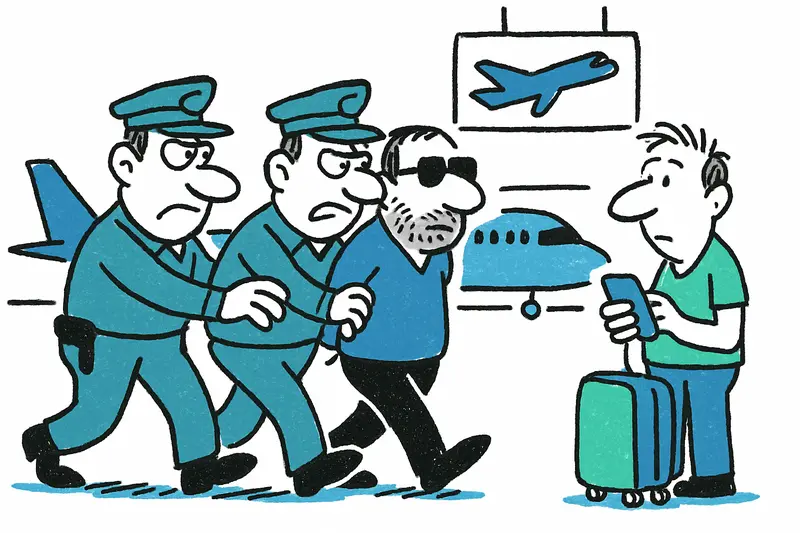
Imagine the arrival hall at Palma Airport: rolling suitcases clatter over the tiles, a boarding call beeps somewhere, the kiosk offers latte and sunscreen. Between travelers and taxi drivers, police officers lead the man away, calm and routine, a tourist pauses briefly, looks at his phone, a reminder of other incidents at the terminal such as Arrests at Palma Airport: Two employees detained after alleged thefts. Such scenes feel local, but they have direct links to global financial flows.
Concrete solutions
For investors: be wary of promised returns above 10 percent, obtain independent legal and tax reviews before making transfers, verify ownership and land documentation in the countries involved, and never pay into private accounts or opaque corporate structures. For authorities: better standardized information channels between destination countries, European templates for provisional account freezes and faster disclosure obligations for banks. At the local level, the Consell could support information campaigns that educate consumers about typical fraud patterns.
Conclusion
The arrest at the airport shows that Mallorca's tourism routine intersects with international financial crime. The release raises questions about the evidence, investigation strategy and cross-border cooperation. Investors at home should look beyond shiny return figures to paperwork, contacts and legal safeguards — and notice the loud rolling suitcases in the arrivals hall that keep clattering on, even though complex money flows move in the background.
Frequently asked questions
Why can someone be detained at Palma Airport and then released by a judge?
What is a European arrest warrant in Mallorca cases?
What should investors check before putting money into a cross-border project?
Are promised returns of 25 percent a warning sign in investment offers?
Why are airport arrests in Mallorca often linked to international cases?
What happens to a suspect's phone after an arrest in Mallorca?
How do international investment frauds usually work?
What should someone do if they transferred money to a suspicious investment company?
Similar News

Fewer Airlines, Fewer Destinations: What Palma's Winter Flight Schedule Means for Mallorca
Analysis shows: Winter at Son Sant Joan Airport will be quieter, with significantly fewer airlines and destinations. Who...

German tourist dies in Sa Calobra – a reality check for emergencies on Mallorca's beaches
A 40-year-old tourist died at the Torrent de Pareis. The emergency call, a doctor who happened to be present, a defibril...

Deadly Tractor Accident in Bunyola: What Needs to Be Done Now
In a work accident on an estate near Bunyola, a roughly 40-year-old man lost his life. His wife and a small child were o...
Head-first dive into the shallow part of Cala Fonoll: An accident and the unresolved question of responsibility
A young tourist dove into Cala Fonoll and was seriously injured. Key question: Why are clear warning signs missing at da...

Mistaken identity with fatal consequences: Brutal assault in S'Aranjassa — what's missing in the follow-up?
At S'Aranjassa a visitor to a finca was tied up, beaten and thrown out of a van. Three men have been arrested, including...
More to explore
Discover more interesting content

Can Cap de Bou

Townhouse Lleo 72
