
Balearic Islands 2026: Prices at the Market — What Will Be Left in the Shopping Cart?
Balearic Islands 2026: Prices at the Market — What Will Be Left in the Shopping Cart?
Experts expect further, if slower, price increases on the Balearic Islands in 2026. What this means for everyday life in Mallorca, supermarkets and weekly markets — and which practical steps can help.
Balearic Islands 2026: Prices at the Market — What Will Be Left in the Shopping Cart?
Main question: Will grocery shopping for households in Mallorca become noticeably more expensive in 2026 — and what can be done locally to counter it?
Brief overview of the situation
The new year begins with a familiar annoyance: experts expect that Why Food Is Noticeably More Expensive in Mallorca — and What We Can Do About It and that food prices on the Balearic Islands could continue to rise in 2026, although not as rapidly as recently. At the same time there are outliers: pork and cold cuts are currently cheaper because exports have stalled and stocks are high. Eggs and poultry are likely to get more expensive — an effect closely linked to avian influenza and tight supply. Besides food, mobile contracts, insurance and electricity prices also threaten to push costs at the checkout, a trend explored in Rising Cost of Living in Mallorca: Who Pays the Price?.
Critical analysis: Why this is more than just statistics
Numbers tell only part of the story. On Mallorca that applies to family kitchens, to the small shops on Calle Sant Miquel in Palma and to the stalls at Mercat de Santa Catalina. When eggs and chicken become more expensive, that means for many households: fewer spontaneous rolls with tortilla, fewer simple Sunday dishes. That pork is getting cheaper sounds good — but there is a problem behind it: when exports stall, more goods end up locally, while suppliers suffer from price fluctuations and contracts that do not suddenly stabilise the region.
What is often missing from the public debate
Explanations for price movements often remain general. Important questions rarely arise: How large are the actual stock levels, and who owns them? What logistics or trade problems are causing the export stop for pork — or the price pressure? How does avian influenza affect small poultry farms in Mallorca that have no large reserves? And above all: which time-limited measures could concretely relieve consumers and producers?
Everyday scene: A Saturday morning in Palma
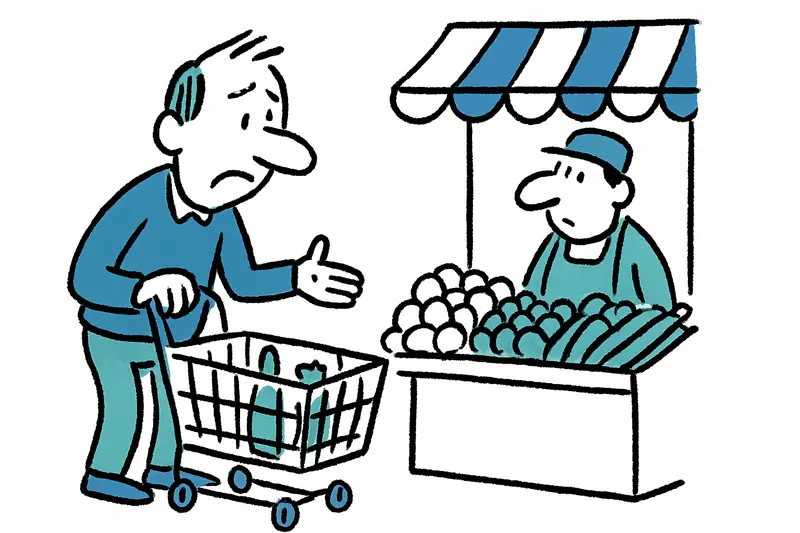
Imagine: it's Saturday, a light Tramuntana blows over the Passeig Marítim, the waves lap softly against the pier. At Mercat de Santa Catalina locals and tourists weave between the stalls. The smell of citrus fruit mixes with the aroma of fresh bread and a hint of sobrasada hanging at a butcher's stall. At the egg box an elderly woman hesitates, counts the coins in her hand and finally puts a pack of smaller eggs back. This scene describes better than any statistic what price changes mean: small decisions that affect daily well‑being.
Concrete solutions — immediate and medium term
For everyday life: 1) Use local weekly markets and smaller traders — seasonal fruit and vegetables are often cheaper than imported goods. 2) Form shopping cooperatives: neighbours can save by buying larger packs and distribute leftovers fairly. 3) Pay attention to seasonality and preservation: canning, freezing and simple stock planning reduce pressure at the checkout.
At the political and structural level: 1) Demand more transparency in the supply chain — who monitors stock movements and export directions? 2) Consider short‑term support for affected animal keepers, for example targeted aid for poultry farmers facing losses due to avian influenza. 3) Strengthen regional marketing: investments in cold chains, shared cooperative storage and direct distribution routes to restaurants and supermarkets reduce dependence on export fluctuations.
What authorities and companies could do
Administrations can monitor the situation better and inform early: regular reports on stock levels and export situations would reduce uncertainty. The energy and insurance sectors cannot be overhauled overnight, but more consumer‑friendly contract models and social tariffs for low‑income households would be fields of action.
A practical example from the neighborhood
In a small neighbourhood of Portixol a group of five households joined together last year to shop in bulk once a month — from olive oil to pulses to canned tomato sauce. The organisation is simple: a WhatsApp group, a fixed meeting point in front of the kiosk, splitting the costs. Such simple everyday solutions provide breathing room when prices fluctuate.
Concise conclusion
Yes, 2026 could further strain household budgets on Mallorca, as recent analysis shows Balearic Islands: Rents to rise by an average of €400 in 2026 — who will pay the bill? — but not all price trends are the same, and behind every cent are people: farmers, butchers at the market, families on the Rambla. Staying informed, strengthening local channels and applying simple shopping strategies can make daily life more stable. At the structural level, more transparency and targeted support for the weakest in the supply chain are needed. Otherwise any price stabilisation will remain only a statistical effect — and will be barely noticeable in the market.
Frequently asked questions
Will grocery prices in Mallorca keep rising in 2026?
Why are eggs and chicken likely to become more expensive in Mallorca?
Why is pork cheaper in Mallorca right now?
How can families in Mallorca save money on food shopping?
Is Mercat de Santa Catalina in Palma still a good place to shop for food?
Can neighbours in Mallorca really save money by shopping together?
What should I buy in Mallorca if I want to avoid price increases?
What can Mallorcan authorities do to help with rising food prices?
Similar News

Palma Gets a Welcoming Park: Tirador Goes Greener — and a Café Is Coming
A new green project in Es Fortí/Camí de Jesús will transform the old Voltadora into a city park with an experience fores...
Why the End of "Los Últimos Mohicanos" Is More Than the Closing of a Bar
With squealing tires and one last glass, an icon on the Palma–Manacor expressway closes. Why the demise of this German b...

Protest camp on Plaza España: Who asks for solutions to the right to housing?
Around 30 activists set up a tent camp on Palma's Plaza España to push for stronger tenant rights. Our analysis asks: Ar...

In the Name of a Gang: Alleged Extortion in El Molinar and What It Reveals About the Protection of Sex Workers
A man is accused of posing as a member of the Hells Angels and extorting two women at accommodation in El Molinar. The s...

When Chile Meets the Mediterranean: A New Flavor at Can Bordoy
At Can Bordoy in Palma's old town, Chilean chef Jhonatan Maldonado combines Patagonian seafood with Mediterranean island...
More to explore
Discover more interesting content

Can Cap de Bou

Townhouse Lleo 72
