
Emergency in the Balearic Islands: Between Rapid Aid and Open Questions
Madrid has declared a migration emergency for the Balearic Islands and provided €6.75 million. In the short term this brings relief at the ports — in the long term structure, personnel and a clear redistribution plan are missing.
Emergency declared — what really changes?
On September 17 Madrid declared a migration emergency for the Balearic Islands. On the pontoons of Palma, between the fishing boats in the morning and the tourists who stroll through La Lonja late at night, the word had an immediate impact. The state is providing around €6.75 million until the end of 2025 to register arrivals more quickly, provide medical care and supply essentials.
Why the urgency?
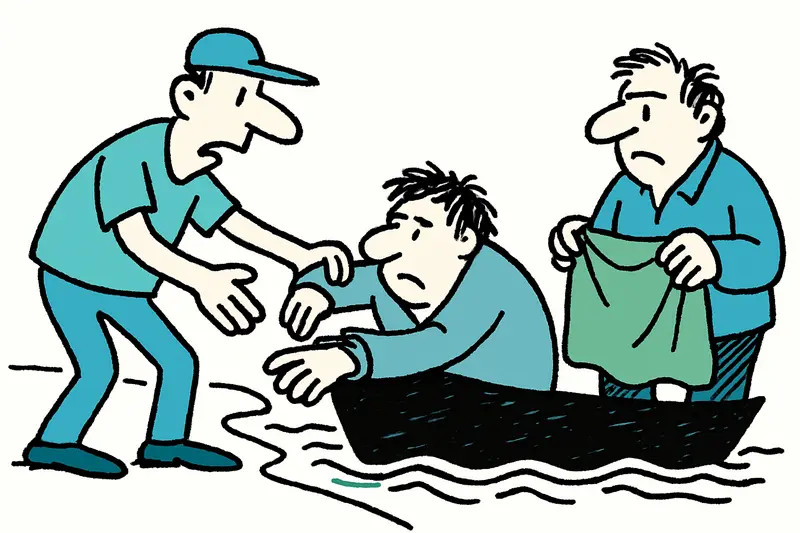
The numbers speak for themselves: this year about 80 percent more people have arrived in small boats than in the previous year. For an island group that relies on tourism in the summer and where many municipalities are already operating at capacity, the pressure is clearly increasing. Volunteers hand out water bottles and blankets, fishermen stand on the quay and watch more quietly than usual — an image you don’t want to see on holiday, but one that has long become part of everyday reality.
The short-term measures
Reception facilities are planned in the ports of Palma, Ibiza and Formentera. The advantage: arrivals can be cared for and registered quickly on site. Bureaucratic hurdles should be reduced so that funds can flow faster. Volunteers welcome this: interpreter hours, medicines or additional blankets could be organised more quickly. But quick aid does not automatically solve structural problems.
The central question
The central question remains: Is money spent in the short term enough to act humanely and efficiently in the long term? Many local helpers answer plainly: money is necessary, but without staff, clear responsibilities and a distribution mechanism, it remains a patch on an open wound.
Aspects that are too often overlooked
The public debate is dominated by figures and short-term logistics. Less visible are issues such as language support, initial psychological care or the legal review of asylum applications. In addition: who ensures follow-up care when the containers are in place but there is no staff for medical aftercare or social work? Small municipalities fear that the burden will be distributed unequally if it is not regulated how people are relocated.
Concrete steps needed
Instead of planning just containers and tents, three things are needed: first, more trained personnel (medical and legal); second, fixed coordination offices between Madrid, island governments and municipalities; third, transparent distribution agreements with the mainland and international organisations. Practically this could mean: mobile medical teams, permanent interpreter pools and a binding distribution plan that is not renegotiated every time the weather changes.
Opportunities emerging now
Because the funds can be accessed quickly, there is an opportunity to build sustainable structures — if the view extends beyond the summer months. Training for volunteers, digital registration processes and regionally networked reception facilities could reduce the burden on decentralised municipalities. That would be not only humanitarian, but also practical: a functioning initial reception eases emergency services and allows more predictable integration.
Between pragmatism and concern
On a morning walk along the harbour you hear the waves, gulls cry and sometimes a quiet conversation between helpers: “We must help humanely, but that is not enough for a Plan B.” This mix of willingness to help and resignation is typical for the islands. The Balearics are small, space is limited — and yet there is a basic attitude here that sees helping as a matter of course.
A local outlook
In the short term the new funds will bring relief: warmth, first aid, faster registration. In the medium term, however, distribution, staff and clear agreements will decide whether this emergency becomes the start of a sustainable response or just a temporary patchwork. The islands should seize the chance to build not only tents, but a lasting network — with more staff, better procedures and real cooperation between Madrid, the island administrations and civil society.
And until then the small gestures remain important: a sandwich at the quay, a warm blanket, a conversation in a foreign language. They show how the islands hold together in hard times — and how much work still lies ahead of us.
Frequently asked questions
What changes when a migration emergency is declared in Mallorca and the Balearic Islands?
Why are more small boats reaching Mallorca and the Balearic Islands this year?
Where are migrants received first when they arrive in Mallorca?
Is the situation at Palma harbour affecting everyday life in Mallorca?
What kind of help do people arriving by boat need first in Mallorca?
Is the new funding enough to solve the migration pressure in Mallorca?
What role do volunteers play in Mallorca during boat arrivals?
What is still missing from Mallorca’s long-term response to migration arrivals?
Similar News
When Housing Becomes a Matter of Survival: Mallorca Between Rental Frenzy and Everyday Life
The case of 87-year-old Maricarmen showed that on Mallorca many people's lives are poised between affordable and uninhab...
Autumn in Mallorca: When Melancholy Gets a Window
Why autumn quietly tightens here — and how to make use of the mood: walks, culture, candles and the light from Palma to ...
Near-miss on Lanzarote: Landing Ryanair Jet and Iberia Takeoff — what really went wrong
On Lanzarote there was a dangerous incident: A Ryanair flight (FR5910) from Dublin landed on runway 03 while an Iberia E...
Eurowings introduces new Premium Business seats on Mallorca routes
From December 1, selected Eurowings flights to Palma and other destinations will feature eight particularly generous sea...
Car on MA-13 near Inca in flames – a safety check for the island
A vehicle caught fire on the MA-13 towards Alcúdia on Tuesday afternoon. The driver was uninjured, the car was destroyed...
More to explore
Discover more interesting content

Can Cap de Bou

Townhouse Lleo 72
