
When Beaches Become Emergency Wards: Balearic Islands Call on the EU for Help in the Migration Crisis
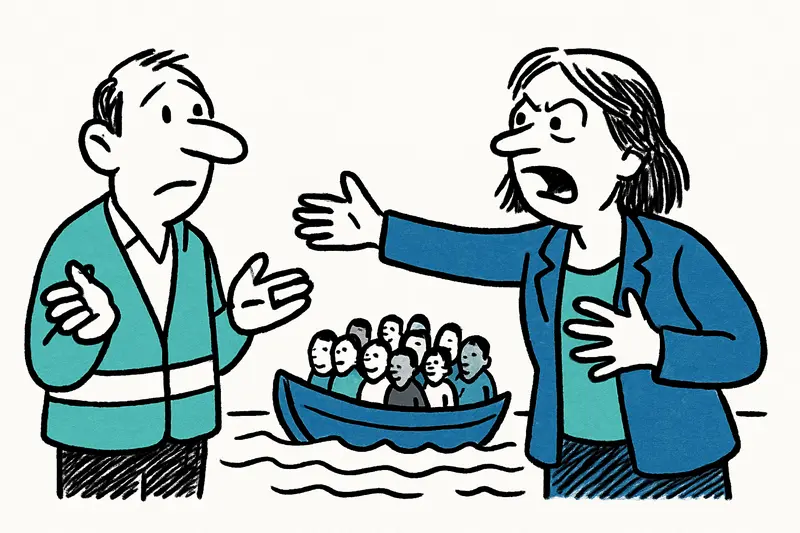
More than 6,000 people in 327 boats have arrived on the Balearic Islands since the beginning of the year — and the islands are sounding the alarm. Palma is asking Brussels not just for words but for concrete help: more staff, transparent data and rapid solutions for unaccompanied minors. A look at problems, blind spots and practical steps on the ground.
When beaches become emergency wards — a cry for help from Palma
The numbers are sober, the picture behind them louder: 6,030 people in around 327 landings since the start of the year. For Mallorca this is not an abstract statistic but overcrowded reception centers, exhausted volunteers and municipalities that need bedding, diapers and a plan — often in the middle of the night. On the promenade of Portixol you can smell volunteers' coffee, hear the rustle of blankets and see how Cala Mayor temporarily serves as a depot for emergency supplies, as detailed in More Boats, More Questions: Mallorca Under Pressure from Rising Boat Arrivals.
The key question
The central question hanging over Palma, Madrid and Brussels now is: How can an island archipelago with limited resources react quickly and with dignity, without subsequent problems — overcrowded homes, psychological strain on children, volunteer burnout — triggering the next crisis?
What the Balearic government is demanding
The president of the Balearic Islands made clear in Brussels what is missing: more staff at the borders, reinforced deployments by border protection agencies and, above all, support in receiving particularly vulnerable people — such as unaccompanied minors. Also demanded are better information flows: access to flight and ship logs to coordinate arrivals in advance. Locally you often hear: “We need planning security, not weekend surprises,” a message reflected in Emergency in the Balearic Islands: Between Rapid Aid and Open Questions.
What is rarely discussed
Some aspects receive too little attention in public debate. First: the shift in countries of origin — more people from countries south of the Sahara — brings different protection and health needs. Second: the line between humanitarian aid and regular administrative work quickly blurs; social services become crisis managers without an emergency budget. Third: mental health care for minors is scarce, and setting up child-friendly accommodations takes time. Fourth: arrivals hit a tourist island in the middle of the season — this creates competition for staff, housing and medical capacity.
Everyday life on the ground
Committed helpers lay out blankets at night, keep lists, call authorities; in the mornings the thermoses are empty and municipalities exhausted. Youth homes report overcrowding, foster families are rare. The sounds are familiar: the sea, motorboats, a phone ringing with a new report. All of this happens next to the café on the seafront, where visitors keep drinking their espresso — a slice of normality alongside a humanitarian challenge.
Concrete, practical proposals
What is needed now should be practical and immediately implementable. Some proposals:
- Transparent advance information: A digital dashboard that provides local authorities and rescue services with real-time data on expected arrivals.
- Mobile stations and rapid infrastructure: Pre‑installed mobile reception centers (container modules, sanitary facilities) that can be activated at short notice.
- Focus on child protection: Priority transfer of unaccompanied minors to structured accommodations on the Spanish mainland, accompanied by psychosocial support, with reference to UNHCR guidance on unaccompanied and separated children.
- Emergency financial aid: An emergency fund for municipalities so they can quickly procure beds, food and transportable solutions.
- Volunteer support: Training, fixed shifts and psychological aftercare for volunteers so that helping does not end in burnout.
Why quick EU help matters
A clearly coordinated response not only relieves the islands but also protects human dignity and helps prevent long-term social tensions. If Brussels and Madrid provide staff, data access and funding, the Balearics can respond in a planned way — and the promenades remain places of everyday life, not permanent emergency wards.
Outlook
Realistically: there is no simple short-term solution to migration movements in the western Mediterranean. But there are steps that can have an immediate effect — transparency, mobile equipment, prioritizing child protection and a coordinated financial mechanism. Otherwise what local representatives fear may happen: a crisis that arises from a series of small surprises. On Mallorca this also includes the concern for volunteers, whose dark circles will be seen again at the harbour the next morning — and the question of whether Europe will deliver more than words this time.
In the end one image remains: volunteers handing out tea on the promenade, officials drawing up plans, and the sea that keeps rolling on. The challenge is to ensure this scene does not become a lasting everyday reality.
Frequently asked questions
Why is Mallorca calling for more EU support on migration?
What happens when migrants arrive in Mallorca by boat?
Are Mallorca’s reception centres overcrowded during peak arrivals?
Why are volunteers in Mallorca under so much pressure?
What kind of help do unaccompanied minors need in Mallorca?
Why is Portixol mentioned in Mallorca’s migration crisis?
What role does Cala Mayor play in Mallorca’s response to migrant arrivals?
What practical steps could help Mallorca manage future boat arrivals better?
Similar News

Maribel: Five Decades of Service – Housekeeper from Peguera Celebrated with a Special Honor
Over 50 years in the hotel business: María Isabel “Maribel” Molinos was honored in Palma at the Nit del Turisme by Unive...

Orange Alert over Parts of Mallorca: Are We Prepared?
Dark clouds and an announced wet spell have triggered an Orange alert in parts of Mallorca. A reality check: what's miss...

Sundair & Co.: Sale speculation and what it could mean for Mallorca
Rumors about a possible sale of the airlines Sundair and Fly Air 41, which belong to Schauinsland-Reisen — and whether b...
Anne Wünsche in Mallorca: A job offer with a catch — who fits the role of personal assistant?
Influencer Anne Wünsche has left Berlin and is urgently looking for a full-time personal assistant in Mallorca. Why the ...

Daily from New York: Palma Between Boom and Strain
United will increase the Newark–Palma route to daily flights in 2027 using Boeing aircraft (231 seats). What does the in...
More to explore
Discover more interesting content

Can Cap de Bou

Townhouse Lleo 72
