
Teenager seriously injured on Ma-2110: Why this night road needs more protection
Teenager seriously injured on Ma-2110: Why this night road needs more protection
A 17-year-old was seriously injured on the Ma-2110 between Inca and Lloseta. A night road, lack of visibility and missing alternatives for partygoers raise questions.
Teenager seriously injured on Ma-2110: Why this night road needs more protection
Accident in the early hours: A whole night culture meets a poorly lit country road
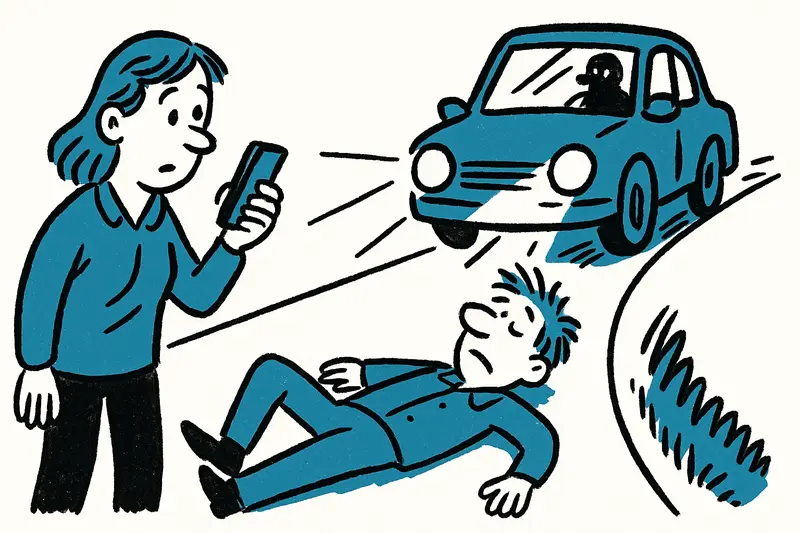
In the night to Sunday, a 17-year-old was struck by a vehicle on the Ma-2110 between Inca and Lloseta. Emergency health services received the call at around 02:17; the young man was treated for severe, multiple injuries and then taken to Son Espases hospital. According to the rescue service, his condition was very serious – an incident that does not completely surprise anyone here.
Key question: Why are young people in this area standing on a narrow country road at night without reflective clothing or lights, and why are protective measures so patchy?
The scene was typical for a February morning on the island: cold air, car headlights, occasionally a phone beeping. Residents report that after a carnival party that evening many young people were walking home. Some parents picked up their children, others walked the way home. Witnesses speak of about twenty boys and girls walking along the dark stretch using their phones as flashlights. In several places there are no proper sidewalks, the carriageway is narrow, and street lighting is sparse – an unfortunate combination.
Critical analysis: This accident cannot be dismissed as a single tragedy. On the Ma-2110 a series of systemic weaknesses come together. This is not unique: see the Fatal accident on the MA-5013 near Sant Jordi: Why does the stretch remain dangerous?
First: visibility. Young people wore dark clothing, had no high-visibility vests and moved without an escort vehicle on a busy road. Second: infrastructure. The length and condition of the stretch do not allow pedestrians and cars to safely share the road at night – there are no safe shoulders, continuous lighting or clear separations. Third: availability of safe return options. When parties end, people need reliable alternatives to walking along dark country roads; lack of night buses or affordable shared transport forces many to return on foot. Nighttime crashes of different kinds have plagued other MA roads, such as the Head-on Crash on the Ma-11: Three Injured — and the Uncomfortable Question of Greater Safety.
What is missing from the public debate: we often hear the buzzword "road safety", but rarely the simple question of who goes where at night and why. Localized figures are lacking: how many accidents happen here outside urban lighting? How often are partygoers affected? And what role do temporary factors like nighttime festivities play? Another gap: the division of responsibility between municipalities. The Ma-2110 connects Inca and Lloseta; both places are involved, but which measures need to be planned jointly?
An everyday scene from Mallorca that does not appear in the statistics: a car drives along the Ma-2110, the driver reduces speed, but halfway along two figures appear at the roadside, visible only as dark silhouettes. He honks, a young woman illuminates the way with her phone, they laugh nervously and walk on. This is not an exception, it is the nightly rhythm of this stretch during carnival season.
Concrete solutions that can take effect quickly: short term – mobile lighting at critical points during festival nights, temporary speed limits and visible police presence in the early morning hours; distribution of reflective bands or high-visibility vests at party exits; organized rides or an affordable party shuttle in cooperation with local clubs. Medium term – sidewalks, improved street lighting and expanded shoulders along the Ma-2110, clear markings, additional crossing aids; a joint road safety campaign by the town halls of Inca and Lloseta that addresses young people directly; monitoring by local authorities to prioritize accident sites based on data.
Less spectacular but important: event organizers should be required to provide information on safe ways home – meeting points for pickups, phone numbers for shared transport, warnings about the dangers of dark country roads. Schools and parents can remind young people in the days before major celebrations that bright clothing and reflectors can save lives. Other recent cases, like the Fatality on the MA-19 near Palma: How did a pedestrian get onto the highway?, underline the wider problem.
Concise conclusion: This accident is not an isolated fate but a warning sign. It requires not only compassion for the victim but a bundle of pragmatic measures: light, safe paths, transport alternatives and a dose of common sense in party planning. Otherwise the Ma-2110 will remain a dangerous artery between two places – and we will write the same admonition again after the next carnival night has passed.
Frequently asked questions
Is it safe to walk along the Ma-2110 at night in Mallorca?
Why are country roads in Mallorca more dangerous after dark?
What should I wear if I have to walk on a dark road in Mallorca?
Are there safer ways to get home after a party in Mallorca?
What makes the road between Inca and Lloseta dangerous at night?
What road safety improvements would help the Ma-2110 in Mallorca?
Why do teenagers in Mallorca often end up walking home after carnival events?
What can event organisers in Mallorca do to reduce night-time road accidents?
Similar News
End of an Era on the Ma-15: Why the Biker Hangout at Son Gual Is More Than Just a Restaurant
"Los Últimos Mohicanos" closes unexpectedly. A meeting place for motorcyclists on the Palma–Algaida border is disappeari...

Fewer Airlines, Fewer Destinations: What Palma's Winter Flight Schedule Means for Mallorca
Analysis shows: Winter at Son Sant Joan Airport will be quieter, with significantly fewer airlines and destinations. Who...
German tourist dies in Sa Calobra – a reality check for emergencies on Mallorca's beaches
A 40-year-old tourist died at the Torrent de Pareis. The emergency call, a doctor who happened to be present, a defibril...
Deadly Tractor Accident in Bunyola: What Needs to Be Done Now
In a work accident on an estate near Bunyola, a roughly 40-year-old man lost his life. His wife and a small child were o...
Head-first dive into the shallow part of Cala Fonoll: An accident and the unresolved question of responsibility
A young tourist dove into Cala Fonoll and was seriously injured. Key question: Why are clear warning signs missing at da...
More to explore
Discover more interesting content

Can Cap de Bou

Townhouse Lleo 72
