
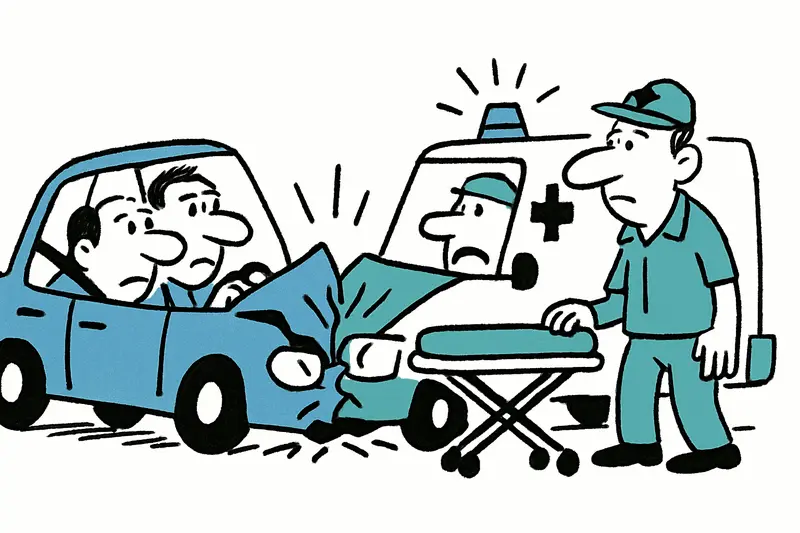
Head-on Crash on the Ma-11: Three Injured — and the Uncomfortable Question of Greater Safety
A head-on collision shortly before the Sóller tunnel blocked the Ma-11 for hours. Three people were injured. Residents and emergency crews are now demanding concrete measures to address the hazards along the route.
Head-on Collision on the Ma-11: Three Injured, Long Closure and Many Questions
Last night, around 8:15 p.m., the usually picturesque country road towards Sóller briefly turned into an accident site: a car veered into the oncoming lane a few hundred meters before the tunnel and collided head-on with another vehicle. The late-summer heat still hung over the olive groves, the crickets were chirping — then the wail of sirens and the glaring blue lights of the rescue vehicles.
Three people were injured, the Guardia Civil reported. Two of them had to be taken to hospital, one was treated on the spot. According to initial information, the injured were tourists in a family car. There are no official updates on their exact medical condition yet.
Witnesses described the scene as “chaotic but professional.” Firefighters and several ambulances arrived quickly. Debris lay on the roadway, shaken occupants climbed out of their cars, and traffic backed up on the Ma-11, reaching towns beyond Sóller. A taxi driver from Deià said he only regained slow-moving free passage after leaving Sóller.
How could it come to this?
The Guardia Civil has opened an investigation. Alcohol or drug use and speed have not yet been confirmed as causes. The central question remains: was it a driving error, a momentary lapse of attention, the treacherous geometry of the road—or a combination of several factors? The Ma-11 is notorious: narrow lanes, tight bends, few escape options and constant traffic from many countries, with drivers who hardly know the route. Similar incidents on the island have been covered in other reports, for example Serious Head-On Crash in Paguera: Why Does the MA-1 Remain So Dangerous?.
That makes the situation particularly precarious. Drivers unfamiliar with the area often misjudge curve radii or react too late to oncoming traffic. At dusk the problem worsens: headlights dazzle, shadows swallow road markings, and drivers search in vain for familiar landmarks.
What has been neglected so far
At conversations at the accident site, calls could be heard that are often overlooked: more visible enforcement, better markings and, in the long term, structural changes. Less often discussed, however, is how tourism and traffic planning fit together. The Ma-11 carries not only commuters but also rental cars driven by people who know Mallorca only for a week. The result is inconsistent driving styles and increased accident risks.
It is also a logistical problem: in major accidents the road quickly becomes blocked, access for emergency services is tight, and neighboring towns feel the effects immediately — from delayed taxi requests to doctors who must drive long detours; similar closures were described after other head-on crashes on the island, such as Head-on Crash on the Ma-13 near Alcúdia: Could the Accident Have Been Prevented?.
Specifically: What would help now
The situation calls for short- and medium-term solutions. In the short term, enforcement measures and visibility improvements could help: mobile speed displays, temporary checks by the Guardia Civil, more reflective delineator posts and additional multilingual warning signs before the most dangerous curves.
In the medium term, decision-makers should consider structural measures: lane widenings at narrow points, additional crash barriers in critical sections, rumble strips before curves and solar-powered LED road studs that provide orientation at night. Targeted information campaigns for rental car customers — through rental companies, hotels and ferry terminals — would also be sensible: brief notes about the Ma-11, recommended speeds and typical danger spots.
It is also important to have precise data analysis: when do accidents happen on the Ma-11? Which types of vehicles are overrepresented? Only with reliable figures can sensible priorities be set — and money be spent effectively.
Outlook and responsibility
The most important question remains how to prevent further accidents. The Guardia Civil is investigating, residents and road users are demanding swift measures. The Consell and the local town halls have a duty to propose and implement safe solutions. And every driver can act immediately: drive more slowly, especially in curves, stay attentive and avoid risky overtaking maneuvers.
For those affected, recovery is now what matters. For everyone else, it is crucial to learn from this incident — before, on another warm summer evening, lights flash and sirens echo through the mountains again.
If you saw anything: Please contact the Guardia Civil. Your observations can help clarify the events and prevent future accidents.
Frequently asked questions
Is the Ma-11 to Sóller a dangerous road to drive in Mallorca?
What should I know before driving in Mallorca at dusk or after dark?
What should I do if there is a car crash on Mallorca while I am driving?
Can a road accident near Sóller cause long traffic delays?
Why are head-on crashes still a problem on Mallorca’s mountain roads?
Is the road to Sóller safe for tourists driving a rental car in Mallorca?
What safety improvements are being suggested for Mallorca’s Ma-11?
Should visitors to Mallorca be more careful on unfamiliar rural roads?
Similar News
Masked Images, Real Panic: When Social Media Aesthetics Alarm Neighbors
Five German content creators filmed on a recently vacated detention site using deceptively realistic props. The result: ...
Why the Striped Breams in Cala Pí Should Be a Wake-up Call
Once again bathers in Cala Pí were surrounded while swimming by small, nippy fish — some wounds bled. Time for clear rul...
Daily from New York: How Palma's Air Traffic Is Growing — and What Must Change
United will increase the Newark–Palma service to daily flights in 2027 (Boeing, 231 seats). Strong tourist numbers clash...

When Love Ends in Shards: Destruction in Son Vida and the Questions That Remain
In Son Vida a relationship dispute escalated: a woman destroyed furniture in a luxury villa, later pressed a panic butto...
Who Bears the Burden? Mallorca Between Tenant Protection and Landlord Fears
Madrid's new housing decrees strengthen tenant rights — but on Mallorca concern is growing: will the law drive small lan...
More to explore
Discover more interesting content

Can Cap de Bou

Townhouse Lleo 72
