
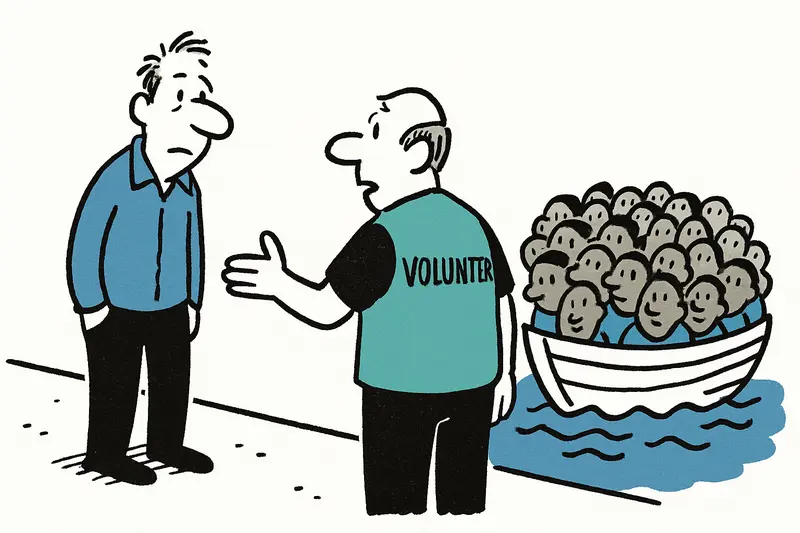
More Boats, More Questions: Mallorca Under Pressure from Rising Boat Arrivals
Between January and September 2025, 5,681 people arrived in 307 boats on the Balearic Islands — an increase of 74%. Mallorca faces logistical, humanitarian and political challenges. Who remains responsible, and what solutions are needed now?
Suddenly more boats, even more questions
On a cool morning at the Paseo Marítimo the smell of strong coffee mixes with the scent of motor oil. Terns circle overhead, a coast guard boat hums in the distance — and on deck volunteers stack blankets, water bottles and thermoses. The numbers sound clinical, but the scene is not: Between January and September 2025 the Balearic authorities registered 5,681 people in 307 boats — about 74 percent more than in the same period in 2024. For Mallorca, which alone recorded more than 3,200 arrivals, this means: more small-scale emergencies and more frequent immediate need for assistance. Local coverage of how ports and landing sites cope is available in Between Quays and Bureaucracy: How Mallorca's Ports Are Responding to Landings.
How serious is the situation — and which question rises above all?
The central question is simple: How should Mallorca cope with this sudden pressure when infrastructure, staff and legal responsibilities are at their limit? If the trend is projected forward, roughly 10,250 people could have arrived by the end of the year — a fourfold increase compared with 2023. Particularly notable is the changed route: more boats are coming from the direction of Algeria, and the countries of origin are now more diverse, from countries south of the Sahara to parts of Asia.
What the statistics conceal
Volunteers report not only numbers but exhaustion, respiratory illnesses after hours-long crossings, and children who cry and cannot sleep. Official sources so far report 44 bodies found on the beach; aid organisations speak of hundreds missing. This humanitarian dimension is often reduced in public discourse to “more boats” — less attention is paid to psychosocial care, long-term integration and the risk of a collapsing registration process.
Conflict over minors: court decides
A flashpoint is the accommodation of unaccompanied minors. The regional government cites only around 70 places for young people, while the central government wants to see a total of 406 minors distributed. The dispute has already reached the courts. Behind the numbers there are countless decisions: where to put children at night, how protection is guaranteed, who pays for interpreters, schooling and trauma therapy?
Gaps in organisation: what is missing on site?
Several problems occur simultaneously: limited emergency shelters, too few medical staff for infections and trauma consequences, long queues for registration and an exhausted network of volunteers. On the Paseo Marítimo one sees the consequences: people who arrive in the morning are still in line in the afternoon, and volunteer helpers talk of burnout and lack of rest schedules. Hotels are not yet fully available seasonally, sports halls have already been used repeatedly as temporary solutions — but these are makeshift fixes, not sustainable concepts.
Why the Balearic Islands are affected differently
Interestingly: while the Balearic Islands record more boat arrivals, numbers across Spain and in the Canary Islands are falling. Possible reasons range from changed sea conditions to route shifts and increased controls elsewhere. For the islands this means an unexpected redistribution of the burden — and the question of who remains responsible in the long run: the municipalities, the region or the state? The demographic context is discussed in Population boom in the Balearic Islands: What does it mean for Mallorca?.
Concrete proposals — from immediate to medium term
Waiting is not an option. Short-term measures that help include:
- Mobile health teams: rapid testing, vaccination and trauma care teams that stay on the islands for several days.
- Temporary capacities: coordinate seasonal hotel vacancies, equip sports halls with standards, and deploy quickly available field shelters with humane conditions.
- Volunteer management: shift plans, psychological relief and training for helpers to avoid burnout.
In the medium term structural answers are needed:
- A binding distribution mechanism between municipalities, the region and the state for minors and those in particular need of protection.
- EU funding and logistical support instead of local patchwork — from data platforms to ship capacities for humane reception.
- Legal and integration pathways that create legal, rapid channels for those in need of protection, rather than forcing people to take life‑threatening routes.
Capacity and sustainability concerns are explored in How many residents can Mallorca sustain? Growth, pressure and ways out of overcrowding.
Opportunities that are often overlooked
There are also opportunities in the crisis: structured reception and early integration offers can meet labour needs, enrich schools and communities and reduce long-term costs. Local initiatives show the potential: language cafés, craft courses and cooperation with fishing associations — which are often first on scene during rescues — already work at a small scale.
Outlook — sober but not hopeless
Conversations at the bars in Palma have become more serious. The challenge is political, bureaucratic and human at once. Mallorca can respond in the short term with organisational talent — but without clear responsibilities, sufficient resources and a European perspective the situation remains fragile. Those who now plan calmly and make bold, humane decisions will prevent the coming winter from becoming a severe test for our island community.
Readers: If you want to help, get information from local aid organisations about coordinated offers; donations and time are urgently needed, but are most effective when clearly coordinated.
Frequently asked questions
Why is Mallorca seeing so many more boat arrivals in 2025?
What happens when migrants arrive by boat in Mallorca?
Are there enough places in Mallorca for unaccompanied minors arriving by boat?
What support do volunteers provide at Mallorca’s boat arrivals?
Which parts of Mallorca are most affected by boat landings?
How are Mallorca’s ports coping with the rise in boat arrivals?
What can be done in Mallorca to respond to boat arrivals more effectively?
How can people in Mallorca help with the arrival situation?
Similar News
Near-miss on Lanzarote: Landing Ryanair Jet and Iberia Takeoff — what really went wrong
On Lanzarote there was a dangerous incident: A Ryanair flight (FR5910) from Dublin landed on runway 03 while an Iberia E...

Eurowings introduces new Premium Business seats on Mallorca routes
From December 1, selected Eurowings flights to Palma and other destinations will feature eight particularly generous sea...
Car on MA-13 near Inca in flames – a safety check for the island
A vehicle caught fire on the MA-13 towards Alcúdia on Tuesday afternoon. The driver was uninjured, the car was destroyed...

Real Estate in Mallorca: Fewer Buyers, Higher Prices — What's Behind It?
Sales on Mallorca are falling, yet prices continue to climb. Why fewer transactions do not equal relief — and what shoul...
Just Bought — Already Trouble: Water Damage in the Heiters' Villa and What Owners in Mallorca Should Know Now
A newly purchased sea-view property — and within days a water damage. What risks lurk in new properties in Mallorca, and...
More to explore
Discover more interesting content

Can Cap de Bou

Townhouse Lleo 72
