
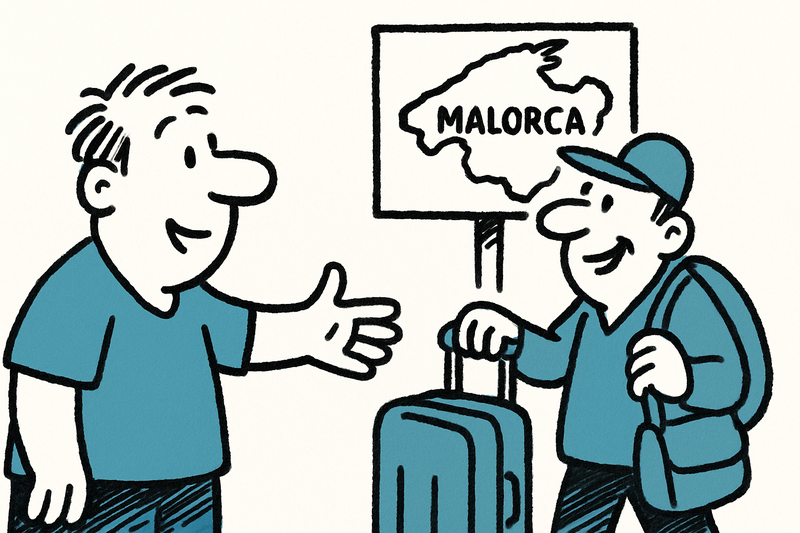
How many residents can Mallorca sustain? Growth, pressure and ways out of overcrowding
The Balearic Islands keep growing: more than 1.25 million people now live on the islands — the main driver is migration from abroad. Mallorca Magic asks what this means for housing, infrastructure and the environment, and what solutions are possible.
More people, more questions: Growth on Mallorca is not just a statistic
On a sunny morning at the Mercat de l'Olivar you can hear the clatter of market stalls, voices in different languages and the distant hum of construction on the Paseo Marítimo. Scenes like these illustrate what the numbers say: as of July 1 this year the Balearic Islands have more than 1.25 million inhabitants – an increase of around one percent compared with the previous year, driven mainly by immigration from abroad (according to Spain's statistics office INE and reported in Balearic Islands over 1.25 million — How prepared is Mallorca really?).
The central question
How many people can Mallorca cope with in the long run? This is the guiding question behind the dry figures. Mallorca remains the most populous island with around 971,000 inhabitants; Ibiza shows the strongest percentage increase, as discussed in Population boom in the Balearic Islands: What does it mean for Mallorca?. But beneath the smooth one percent lies a tangible change: more foreign-language conversations in cafés, crowded bakeries, but also longer queues at public offices and more listings for affordable housing.
Growth does not automatically mean prosperity
Immigration from abroad brings cultural energy, purchasing power and new businesses. On the other hand it exacerbates problems that shape everyday life on Mallorca: rising rents in Palma, commuter traffic on the Ma-13, scarce parking in popular coves and pressure on water resources in hot summers. Young families report that they must live outside the island's gates or commute long distances daily because rents in town centers become unaffordable.
Aspects that are often overlooked
Public discourse is dominated by two topics: tourism and property prices. Less attention is paid to:
- Seasonal strain on infrastructure: Roads, drainage and medical services are pushed to the limit in summer months, while for the rest of the year capacities lie fallow or are poorly utilized.
- The quality of the labour market: Many newcomers work in small businesses, hospitality or the service sector – often seasonally and with limited social benefits.
- Land use and agriculture: Consumption of building land on coasts and in crop rotations endangers local agriculture and the natural protection against erosion and flooding.
Concrete opportunities and approaches
Instead of falling into black-and-white debates, Mallorca needs pragmatic measures. Some possible approaches:
1. Manage housing supply deliberately: Municipal housing funds, quotas for affordable housing in new developments and stricter rules for second homes could ease the situation. Municipalities should work more closely together on development plans instead of each one going its own way.
2. Plan infrastructure smartly for the season: Temporary traffic arrangements, flexible bus lines in summer and intelligent parking management can absorb peak loads. Investments in e-buses and extended schedules outside the high season create lasting benefits.
3. Modernize water and waste management: A combination of seawater desalination, rainwater harvesting on fincas and stricter control of leaks saves resources. Better separation and recycling of waste in tourist centers reduces mountains of trash on hot days.
4. Destationalize jobs: Promoting year-round, qualified jobs in IT, health and education creates stability. Coworking spaces in places like Sóller or Alcúdia and incentives for companies to invest outside Palma distribute opportunities geographically.
5. Sustainability and capacity study: An independent investigation that calculates thresholds for ecosystems, water and infrastructure could serve as a basis for decisions – instead of political gut decisions.
A realistic outlook
The islands are not doomed to stagnation. With clear planning, regional cooperation and a focus on quality of life, growth can be shaped. It takes the courage to set rules: limiting holiday rentals in sensitive zones, clear land protection plans and investments in essential services.
When the chestnuts bloom at the Plaça Major and the sellers' calls define the picture, it must not be forgotten that Mallorca is a living space – for those who work here, for those born here, and for those who are new. The challenge is to distribute this space fairly. The sound of cicadas in the Tramuntana hinterland can be soothing: the answer to the key question requires planning, not just hope.
Frequently asked questions
How many people live in Mallorca now?
Is Mallorca becoming overcrowded?
Why are rents rising in Mallorca?
What problems does population growth cause in Mallorca in summer?
How does population growth affect water supply in Mallorca?
What can Mallorca do to ease overcrowding?
What is happening with traffic on the Ma-13 in Mallorca?
Which places in Mallorca are feeling the pressure of growth most clearly?
Similar News

When coercive fines aren't enough: Could holiday rental owners soon face prosecution?
The island administration is stepping up action against unauthorized holiday rentals: high daily coercive fines up to €5...

Palma Airport on an Expansion Course — Who Decides How Much Growth the Island Needs?
Aena and Madrid are planning multi-million euro investments for Son Sant Joan and project higher capacities. Concern is ...
Who Gets Left Out? Why Overbookings Will Hit Many Mallorca Travelers This Summer
On hot check-in days at Son Sant Joan, frustrated travelers pile up. New figures from Reclamador.es show that a large sh...
When the Handyman Came: How an Engagement Ring Disappeared in Mallorca and What It Says About Trust
During a repair in Andratx a highly personal engagement ring went missing — a case that calls not only for punishment bu...

How Burglars Test Fincas in Mallorca — and What You Can Do About It
The Spanish National Police warn of a simple but effective trick: small markings on doors reveal whether a finca is occu...
More to explore
Discover more interesting content

Can Cap de Bou

Townhouse Lleo 72
