
Oil Price Shock from the Gulf: Why Asphalt Could Soon Be Scarce in Mallorca
Oil Price Shock from the Gulf: Why Asphalt Could Soon Be Scarce in Mallorca
The rise in crude oil prices following the conflict in the Gulf hits Mallorca at a sensitive point: asphalt, made from bitumen, could become scarce and significantly more expensive — with consequences for road projects from Peguera to Palma.
Oil Price Shock from the Gulf: Why Asphalt Could Soon Be Scarce in Mallorca
Key Question
Who will pay the price if asphalt becomes scarce — taxpayers, companies or the roads? This is not an abstract debate but affects every construction site, every commuter and every island budget here locally (Balearic Islands in the Price Squeeze: Who Can Still Afford Mallorca?).
Critical Assessment
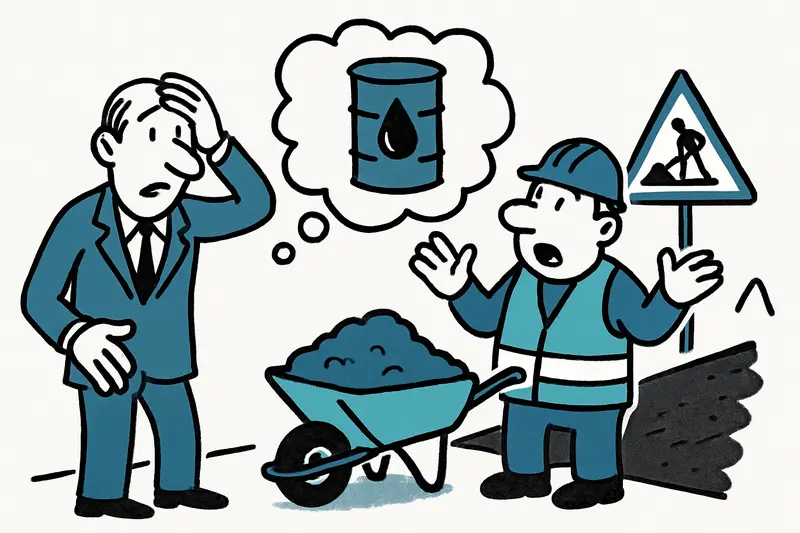
In short: the connection is simple and at the same time treacherous. Bitumen, the sticky component in asphalt, is derived from crude oil. If crude oil prices rise due to geopolitical tensions — as is currently the case following the war in the Gulf region — that immediately shows up in asphalt costs. Construction companies feel this first, because asphalt price changes without intermediate storage directly affect bids and ongoing contracts. This is not a remote diagnosis but a certain everyday reality: suddenly bids become more expensive, delivery promises less reliable.
What Is Specifically At Risk in Mallorca
The island has numerous ongoing and planned projects, all of which require material prices and logistics: renovations like the Bunyola–Orient–Alaró regional road (planned sum: €5 million), improvements between Peguera and Port d’Andratx (€5 million), pedestrian and cycle paths such as the Crestatx–Sa Pobla section (€3 million) or the Camp de Mar to Peguera section (€1.3 million). In Palma there are major items: around €164 million in infrastructure projects, including sections of the second ring road (€110 million) and repairs to the Vía de Cintura. Added to this are bridge works on the Sant Llorenç bypass (€9.2 million) and a planned bypass of S’Alqueria Blanca (€12 million). If asphalt suddenly becomes significantly more expensive or hard to obtain, budget calculations and schedules will be thrown off.
What Is Missing in the Public Debate
People like to talk about prices and delays, but rarely concretely about priorities and alternatives. No one is discussing loudly enough: Which projects are truly urgent? Which can be switched to recycling or alternative construction methods? And how transparent are the tenders when companies insist on fixed prices because of price risks? Mallorca currently lacks a clear prioritization principle for infrastructure in times of crisis.
Everyday Scene from the Island
Early in the morning in Bunyola you hear the pines rustling, next to them a truck with gravel rumbles toward a construction site. At the market in Sóller construction workers discuss over coffee whether the asphalt delivery will arrive. In Peguera cars honk because a diversion narrows after roadside work. These little annoyances are harbingers: when building material is missing, it is not only the construction site that stops, but everyday life slows down — bus lines delayed, farmers harder to reach their fields, supply chains tighter (When the Tap Runs Scarcer: Mallorca Between a Tourism Boom and a Dwindling Water Source).
Concrete Solutions
Waiting for oil prices to fall will not help. Suggestions that take effect in the short term and are legally sound are:
1) Prioritization and Transparency: The island administration should list projects by urgency and risk class. Necessary works (flood protection bridges, accident-prone stretches) first, pure beautification later.
2) Adjust Contract Clauses: Tenders with price index clauses or flexible mechanisms reduce risk for contractors and clients. Such models are common in construction and legally permissible if explained transparently before award.
3) Material Recycling and Mixing Techniques: Increased use of reclaimed asphalt (RAP), warm-mix technologies and cold recycling reduces the need for fresh bitumen. Technically possible, but requires clear standards in tenders.
4) Regional Cooperation and Stockpiling: Establishing shared reserves and bundling supply chains together with other Balearic institutions. Centrally procured contingents reduce price fluctuations and secure supplies.
5) Grants and Emergency Funds: The island has experience: in 2022 the administration responded to material price spikes with an emergency package of €44 million, €5 million of which was specifically for road materials. A similar but targeted fund could now enable fast payments without creating long-term budget holes (Cheaper Gas Bottles in Mallorca: Short-term Relief — But Is It Enough?).
Conclusion
This is not a scenario but a logistical and fiscal test for Mallorca. Not every road needs new asphalt immediately, but every decision postponed now can become more expensive later. The island government, municipalities and companies must now set priorities together, make tenders more flexible and seriously promote recycling. Otherwise we will not only experience construction stoppages, but a cascade of delays that noticeably worsen everyday life — from the Santanyí bypass to the ring road around Palma.
Frequently asked questions
Why could asphalt become more expensive in Mallorca?
What happens to roadworks in Mallorca if asphalt becomes scarce?
Which Mallorca infrastructure projects could be affected by higher asphalt prices?
Will asphalt shortages affect traffic in Mallorca?
What can Mallorca do if asphalt prices keep rising?
Is recycled asphalt used in Mallorca road projects?
Why do construction companies in Mallorca care so much about asphalt prices?
Which roads around Mallorca are most likely to feel delays from asphalt problems?
Similar News

"Expensive chaos" and many open questions: What clients can do when a lawyer suddenly stops responding
Several clients complain that a well-known German lawyer in Mallorca has been unreachable for months. Key question: What...

TV tip: 'The Last Problem' — Mallorca as the setting of a classic crime
A classic whodunit on Mallorca: A new miniseries set in spring 1959 brings storm, an isolated hotel and a dense web of s...

Nipping Sea Creatures: Why Bathers in Cala Major and Elsewhere Should Be Cautious
In Cala Major, bathers have reported being nipped by small fish. What is behind it, how can problems be avoided — and wh...
Forced eviction in Santa Catalina: When a 65-year-old slept in her car and showered on the beach — a question of responsibility
The story of Pilar López from Santa Catalina represents a problem affecting many Mallorcans: How can an island with a bo...
New traffic rules from October 1: What Mallorca visitors and locals need to know
From October 1, 2026, Spain will implement far-reaching changes to traffic regulations. Important for Mallorca: greater ...
More to explore
Discover more interesting content

Can Cap de Bou

Townhouse Lleo 72
