
Alaró: Climbing the Castle Rock — a Hike to Remember
Alaró: Climbing the Castle Rock — a Hike to Remember
A morning in Alaró: mule track, dry stone walls and the ascent to the Castell — a tour that combines landscape, history and genuine island atmosphere. Tips for the outing, timing and a recommendation to stay at the refuge on the summit.
Alaró: Climbing the Castle Rock — a Hike to Remember
Between dry stone walls, mule track and an 821-metre viewpoint
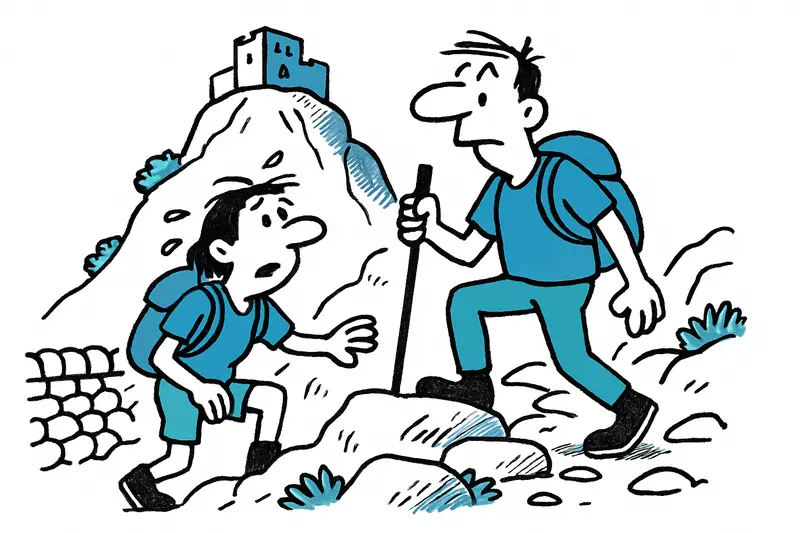
When the first coffee cups clink on Alaró smells like autumn: mushrooms, the Plaça and small discoveries and a light Tramuntana breeze rustles the eucalyptus leaves, it's the best time to set off. The path to Expropriation at Castell d'Alaró: End of a Dispute or New Flashpoint? begins practically in the middle of the village: narrow alleys, stone walls, now and then a barking dog — that's part of the scenery. You follow an old mule track that winds along dry stone walls and gradually becomes steeper.
The route combines simple village atmosphere with rugged mountain nature. Shortly before the country inn Es Verger, a historically paved path branches off that leads directly to the castle rock. If you look closely, you discover traces of past generations: tool marks in the stones, small niches where supplies were once stored, and paths that are still used today by farmers and hikers alike.
Once at the top, the Castell sits at 821 metres — the ruin with a keep, battlements and views that open up the panorama of the Serra de Tramuntana. On the summit there is also the simple refuge of the Ruta de la Pedra en Sec (GR 221) and the small chapel Virgen del Refugio, whose altar recalls Cabrit and Bassa, figures from the island's history. For many, the moment when the view outshines the effort is the most beautiful part of the tour.
Practical: Allow one and a half to two hours for the ascent, depending on pace. Add time for sightseeing, a snack or a short nap on the warm stones; round trip this easily becomes four to five hours. The path is not technically difficult but requires surefootedness: uneven cobbles and steeper sections are not uncommon.
Those out in the evening or early morning experience special moments. Sunrise over the Tramuntana, when the peaks make individual villages appear like small islands in a sea of light, or the soft golden hue at sunset — both experiences can be enjoyed well from the refuge on the castle rock. Overnight stays there are simple but offer quiet after a day at altitude.
A few practical tips: pack sturdy shoes, enough water, and a windproof jacket. In summer bring a sun hat and plan breaks in the shade; in spring be prepared for changeable weather. Respect the paths and the dry stone walls — they are part of the cultural landscape and sometimes require detours when grazing animals or agricultural work cross the trail.
What makes this tour special for the island: It tightly links culture and nature. You don't just hike through beautiful landscape, you walk through history — from old mule tracks through defensive walls to the chapel on the summit. Such routes keep villages alive, bring visitors to smaller communities and relieve overcrowded coastal paths.
Finally a short, personal note: set off early, if possible on a weekday. The Plaça in Alaró is then still quiet, the panader (baker) has freshly baked bread, and you can start the ascent at your own pace. Anyone who wants to experience the island more intensely should put this tour on the list — not as an obligation, but as an offer: a few hours in which landscape, history and the smell of rosemary and thyme come together.
When the bells over the village toll in the afternoon and the houses cast shadows, you are often back down, with a smile and a feeling of having gotten a little closer to Mallorca.
Frequently asked questions
Is the hike to Castell d'Alaró difficult?
How long does it take to hike up Castell d'Alaró from the village?
What should I pack for a hike to Castell d'Alaró in Mallorca?
When is the best time to hike Castell d'Alaró?
Can you see the Serra de Tramuntana from Castell d'Alaró?
Is there somewhere to rest or stay overnight at Castell d'Alaró?
Where does the hike to Castell d'Alaró start?
What can you see at the top of Castell d'Alaró?
Similar News

Parking dispute in Els Hostalets: When a gap leads to violence
A parking dispute on Calle Aragón escalated into a mass brawl at night. Why do trivial conflicts here turn bloody so qui...

Bodycams in Palma: More clarity needed so surveillance doesn't become the norm
Palma's local police equip UII officers with Axon Body 4 cameras. Useful for evidence collection — but specific rules on...

When the Bread Door Closes: Why Maria de la Salut Lost Its Last Bakery
The only bakery in Maria de la Salut, a sales outlet of Forn de ca'n Joan Terès from Palma, has permanently closed. What...

Ancient Piece Brought to Light: Guardia Civil Recovers Roman Anchor Fragment off North Coast of Mallorca
Divers from the Guardia Civil recovered a massive iron piece from Roman times off Mallorca's north coast. The roughly 35...

Who Benefits from the Half‑Hourly Flight on the Edge? Aena, Investments and the Island's Interests
Almost one billion euros is flowing into Son Sant Joan. The figures show the scale of investment and expected beneficiar...
More to explore
Discover more interesting content

Can Cap de Bou

Townhouse Lleo 72
