
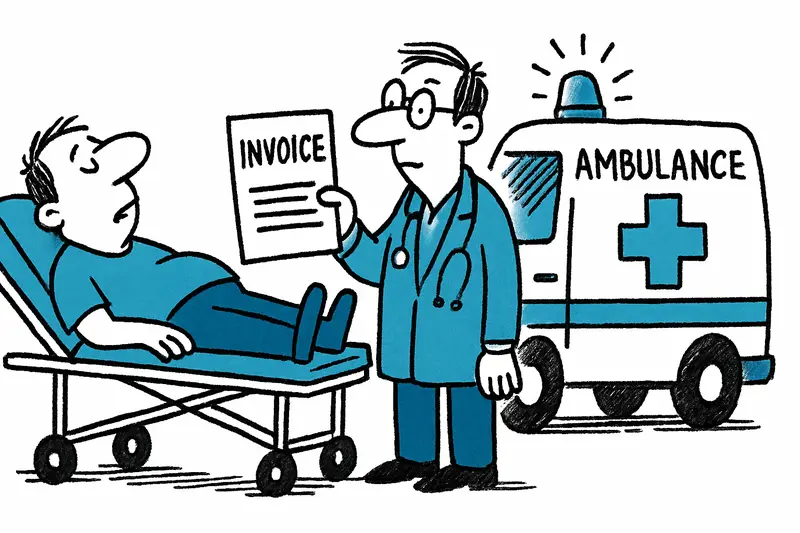
40 million euros, sirens and invoices: What healthcare costs for holidaymakers in the Balearic Islands really mean
IB-Salut invoiced more than 40 million euros in 2024 for the treatment of tourists. What lies behind the figure — and who bears the burden? A look at procedures, staffing problems and pragmatic solutions for the island.
A number, many questions: 40 million euros for tourist treatments
When in July an ambulance honking drives along Palma's narrow lanes, the scene doesn't pass unnoticed: conversations at the bar fall silent, taxi drivers exchange worried looks. The health authority IB-Salut invoiced treatments for almost 100,000 visitors in 2024 for more than €40 million in treatment costs for tourists in 2024. A figure that impresses at first — but underneath are organizational problems and daily burdens for the island.
Who pays in the end — and why does so much work fall on the clinics?
The vast majority of costs are for guests with the European Health Insurance Card (EHIC): treatment is provided on site and later reimbursed. Theoretically an orderly system, but in practice it creates extra work for doctors, nurses and billing offices. In Son Espases I heard a young nurse say in front of the park: “Between 10 and 2 it's a storm here.” Not only emergencies, but also interpreter assignments, prescription issues and complicated paperwork land with ward secretaries.
Particularly notable are the expenses for patients from non-EU countries: around 30,000 cases caused almost €3.8 million — a record according to IB-Salut. Here a uniform reimbursement procedure is often missing, many insurers pay late or not at all. The result: clinics have to follow up, file additional claims or ultimately write off debts.
The summer pressure: staff, beds, improvisation
Anyone on the island in high summer knows the images: crowded beaches, the quiet hum of cigars in the midday heat, laughing groups — and occasionally a sprained ankle or heatstroke — scenes echoed in coverage of Mallorca's international tourism. In the countryside, in practices in Alcúdia or Cala Millor, doctors complain about low staffing ratios and improvised shifts. Consultations are stretched, coverages organized, and sometimes there is hardly any time left for documentation.
This extra work is not only physically noticeable, it also has financial consequences: when billing is delayed or manual checks are needed, costs and bureaucracy rise. Hoteliers, taxi drivers and paramedics I spoke with view it pragmatically: “We bring the people here, but who takes care of the bills?” asked a driver from Portixol.
What often gets left out of public debate
The heated debate rarely reaches the small everyday friction points: lack of multilingual information in doctors' offices, inadequate digital interfaces between clinics and insurers, or the costs for interpreters hired at short notice. The question of whether prices for foreign patients are calculated correctly is raised — but not always thoroughly answered. If you factor in administration time, the real costs are likely higher than the pure treatment sums.
Another blind spot: follow-up on unpaid bills from non-EU travelers. Claims often drag on for months, sometimes years, and the burden remains with the billing offices, as local reporting on migrant boats stranded on the coast and related costs shows. Small rural practices rarely have the capacity to run months-long debt collection processes.
Concretely: opportunities and solutions
The concerns are real — but not unsolvable. A few pragmatic proposals that could be implemented in Mallorca faster than many large political projects:
1. Centralized digital billing: A shared platform for IB-Salut and clinics would speed up reimbursement processes and reduce duplicate work. Less paper means fewer mistakes.
2. Multilingual info and check points: Digital notices and short checklists (EHIC, travel insurance, emergency numbers) could be distributed at airports, ports and in hotels — ideally with QR codes for quick translations.
3. Seasonal staffing support: Freelancers or temporary administrative teams during the high season could relieve billing offices and give clinics time to focus on patient care.
4. Cooperation with the tourism industry: Hotels and tour operators should actively inform guests about sensible insurance before departure — a small note on the booking page can save a lot of hassle.
5. More transparent price lists: A publicly accessible cost overview for common emergency treatments would reduce uncertainty and defuse debates about “too high” bills.
And for travelers? Arrive better prepared.
The message to holidaymakers is simple: a vaccination card, the European card or good travel insurance with repatriation option are not luxury items but smart basics. For the island that means: fewer inquiries, less bureaucracy, fewer frayed nerves in clinics.
In the evening, when the sirens quiet down and the square's bar sometimes laughs again, the impression remains: our healthcare manages — often with remarkable calm. But without some structural changes IB-Salut and the clinics will be stretched by summer again every year, with crowded waiting rooms and more bills than answers.
Frequently asked questions
Do I need travel insurance for a holiday in Mallorca?
What does the European Health Insurance Card cover in Mallorca?
How hot does Mallorca get in summer, and is it safe to swim?
What should I pack for a Mallorca holiday to avoid health problems?
Why are hospitals in Mallorca under more pressure in summer?
How are tourist medical bills handled in Mallorca?
Are there enough doctors and nurses in places like Alcúdia and Cala Millor in summer?
What should I do if I need urgent medical help in Palma?
Similar News
Beach party or public order issue? Police clear Playa de Palma after illegal parties
During checks at Playa de Palma in mid-September several speakers were seized and dozens of fines issued. How can the co...

Caro Robens: 15 kilograms lighter — and again in the crossfire of online comments
Bodybuilder Caro Robens, who lives in Mallorca, has lost 15 kilograms. Her success on Instagram was met with applause — ...
Meager Industry in Mallorca: How the Island Can Be More Than Just Tourism
The industrial sector in Mallorca is shrinking, productivity is falling and firms remain tiny. The key question: can the...
Pre-Nit de l'Art: Galerie Mensing invites to a special evening with Tom Boston
Before the big art night, Galerie Mensing opens its doors: pop art, champagne, a DJ and a hand-signed print by Tom Bosto...
Sea view and more seats: Cappuccino Grand Café reopens in Port d'Andratx
After a long renovation, the Cappuccino Grand Café on the Port d'Andratx harbor promenade has quietly reopened. Larger t...
More to explore
Discover more interesting content

Can Cap de Bou

Townhouse Lleo 72
