
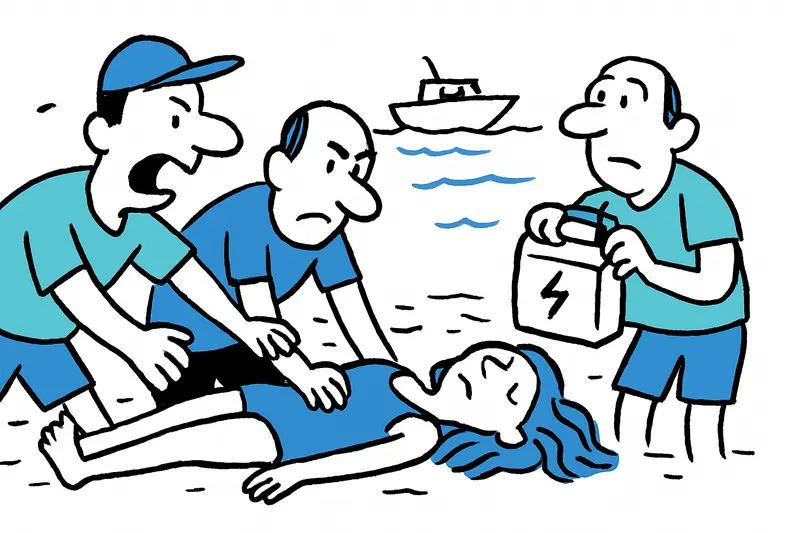
Beach emergency in Portals Nous: What went wrong during the rescue?
A roughly 60-year-old woman was recovered from the beach at Portals Nous on Friday evening with cardiac arrest. This text examines gaps in the rescue process and lists concrete improvements for Mallorca's beaches.
Beach emergency in Portals Nous: What went wrong during the rescue?
Key question: Could more equipment, better procedures or simple prevention have prevented the near-fatal incident or improved the outcome?
Friday, shortly before 6 pm. On the Paseo Marítimo of Portals Nous the usual beach life mixed with the sound of sirens: children playing in shallow water, a motorboat entering the harbor, guitar music from a chiringuito. And suddenly normality breaks: rescuers pull a woman out of the sea; she is unconscious and has apparently suffered cardiac arrest.
The main facts as available: the person affected is about 60 years old, was visiting from Spain's northern coast to Mallorca, and went into distress around 17:40. Calvià local police, an ambulance from SAMU 061 and the vehicles "Lima" (logistics) and "Delta" (command) were on site. Rescuers immediately began cardiopulmonary resuscitation (CPR); however, there are contradictory reports about the duration of the life-saving measures.
These contradictions are not a minor detail. One report states that resuscitation lasted at least an hour; other accounts mention that advanced measures lasted around 30 minutes. Such imprecision makes it difficult to properly evaluate the course of the operation — and that is necessary if we want to learn from the incident.
Critical analysis: on paper, procedures interlock; in practice they often stumble at interfaces. The rapid rescue from the water is only the first step. Crucial factors are the availability of defibrillators (AEDs), the time until effective electrical therapy begins, the continuity of CPR during transport and the coordination between beach patrol, police and SAMU. If an AED is not immediately at hand on the beach or the handover to the ambulance team is not seamless, survival chances are reduced.
What is missing in public discussion: we usually talk about the dramatic moment — the recovery from the water — and not about the inconspicuous context. How is night coverage of ambulances organized during the summer? Who checks the operational readiness of AEDs on beaches? Are there binding protocols for quick landing points for emergency units or free lanes through tourist hotspots? Such questions are rarely asked out loud, even though they decide between life and death.
An everyday scene to illustrate: in the late afternoon traffic builds up on the MA-1 towards Calvià, parents with beach bags trip over sunbeds, an emergency vehicle fights its way meter by meter through parked cars. I see such images often in the summer months. If communication via radio or phone falters, the time gap in which patients remain without optimal care grows.
Concrete solutions, pragmatic and locally implementable:
- Expand the AED network: every larger beach section should have at least one accessible, registered defibrillator; visible signage and maintenance logs are mandatory.
- Train beach staff: lifeguards, beach kiosks and nearby restaurants should be regularly trained in basic resuscitation and AED use; short refresher courses once per season are often sufficient.
- Keep access routes clear: during periods of high visitor numbers temporary parking bans and clear access routes for emergency vehicles must be enforced; local police can proactively regulate parking behavior.
- Improve coordination: a binding handover protocol between beach patrol and SAMU 061 reduces information loss; digital checklists or a short response app could help.
- Public outreach: municipalities like Calvià should offer CPR courses for residents and visitors during the tourist season — short sessions at market days or on the promenade reach many people.
- Preventive information: signs at access points with information on currents, emergency numbers and AED locations are simple but often neglected measures.
Pointed conclusion: a cardiac arrest on the beach is a race against time. Recovery alone is not enough. We need visible, verifiable equipment, clear procedures and more people who can act in an emergency. Portals Nous is not an isolated case — the island should use the summer season to bring routine into rescue logistics before the sea gives another chance to learn from experience.
And one final remark: anyone strolling along the harbor on a sunny afternoon should not only look at the boats. A quick glance at the sign showing the location of the nearest defibrillator might one day be as life-saving as a decisive plunge into the water.
Frequently asked questions
How quickly can emergency help reach beaches in Mallorca, and what factors influence the outcome?
Where can I find defibrillators on Mallorca beaches and how are they marked?
What should I do if someone collapses on a Mallorca beach?
How do Mallorca’s beach patrol, police and medical teams coordinate during a rescue?
Are there measures to improve ambulance coverage at night during Mallorca’s busy summer?
What can be done to keep access routes clear for emergency vehicles on Mallorca's busy promenades?
Should residents and visitors take CPR and AED training during Mallorca holidays?
How can you locate the nearest defibrillator on Mallorca’s beaches when needed?
Similar News
Plaza of Biniaraix: When a Party Overshadows the Village Fair
In Biniaraix a private party on the central village square during the patron saint's day substantially disrupted the off...
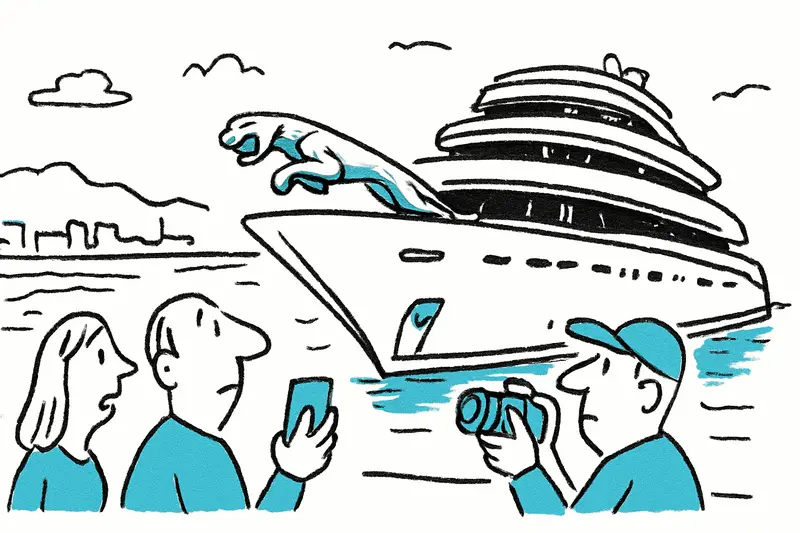
Chromed Jaguar on the Bow: the "Kismet" Appears off Palma
The 122-metre superyacht "Kismet" of industrialist Shahid Khan is anchored off Mallorca. A look at the technology, luxur...
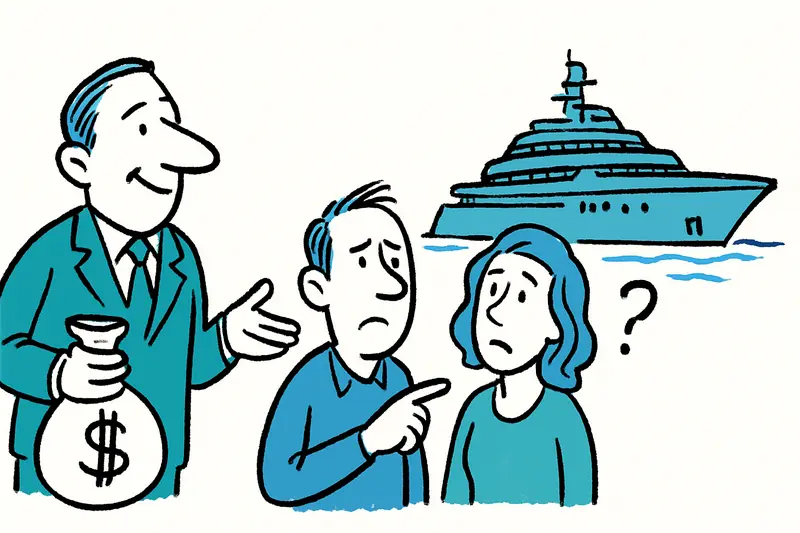
Palma as Home Port of the Super-Rich: Four Seasons' Gigayacht Brings Money — and Questions
The 207-meter "Four Seasons I" makes Palma the starting point for luxury journeys. A lot of money flows into the city — ...
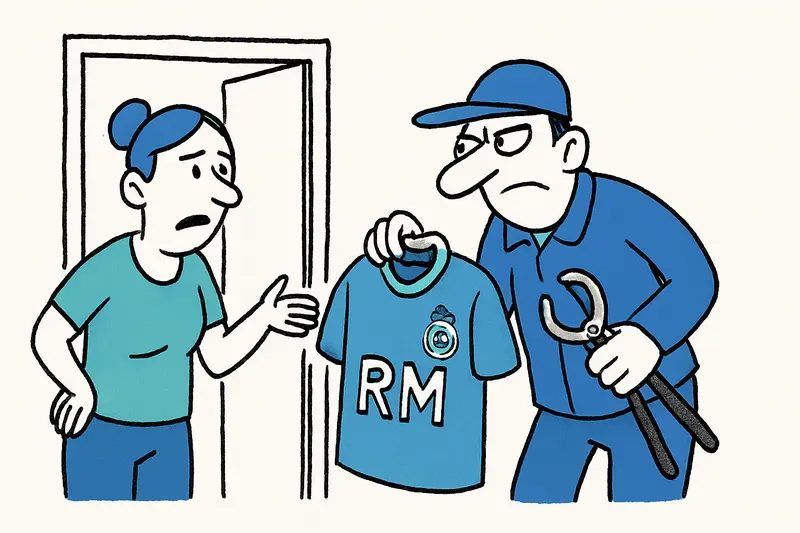
Brazen Jersey Theft in Palma: What the Case on Calle Jaume II Tells Us
A man was arrested in Palma after allegedly stealing three Real Madrid jerseys (Mbappé, Vinícius, Bellingham) worth €420...
Boat fire off Cala Pi: Three people rescued by neighboring boat and safely brought ashore in Portocolom
A recreational sailing boat caught fire off Cala Pi. Thanks to the decisive action of a nearby boat and the subsequent t...
More to explore
Discover more interesting content

Boat Tour with BBQ along Es Trenc Beach
Private transfer from Mallorca Airport (PMI) to Pollensa
