
Brazen Jersey Theft in Palma: What the Case on Calle Jaume II Tells Us
Brazen Jersey Theft in Palma: What the Case on Calle Jaume II Tells Us
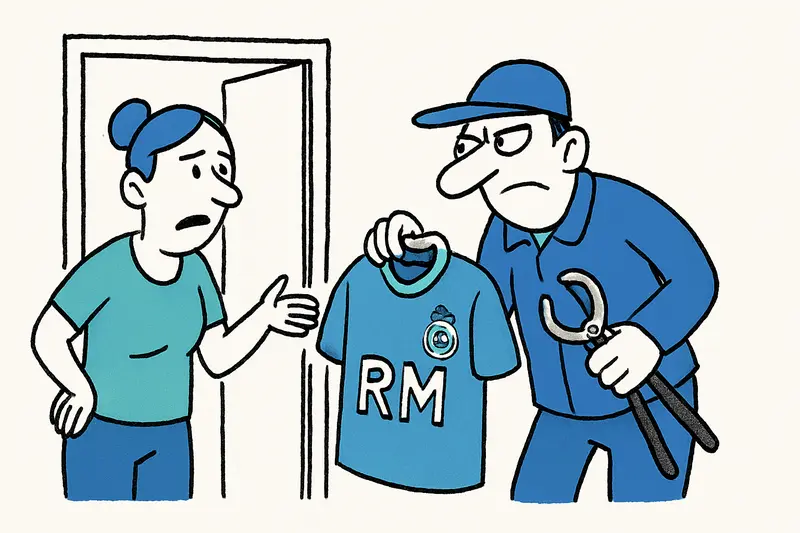
A man was arrested in Palma after allegedly stealing three Real Madrid jerseys (Mbappé, Vinícius, Bellingham) worth €420. Officers also found pliers and four stolen sunglasses on him. A reality check: how safe are shop employees and what is missing?
Brazen Jersey Theft in Palma: What the Case on Calle Jaume II Tells Us
Key question: How can it happen that an apparently known repeat offender in the heart of Palma threatens store staff and repeatedly walks off with goods before protection for employees and customers takes effect?
On Tuesday at midday, when the heat weighs down the plaza and the narrow alleys and the voices of street vendors mix with the bells from the Passeig, the police were called to an official fan shop on Calle Jaume II. Three Real Madrid jerseys — bearing the names Mbappé, Vinícius Junior and Jude Bellingham — each retailing at €140, are said to have been stolen there. The total damage is reported as €420. Employees recognized the man because he apparently visited the shop frequently and, according to staff, had already tried to steal goods and threatened employees.
The National Police tracked his whereabouts, reviewed surveillance footage and finally found the suspect near the Puerta de San Antonio. During a search, officers discovered a pair of pliers and four sunglasses with a total value of €116 — apparently from a neighboring optician. The man was arrested and handed over to the judiciary. Similar recent cases are documented in Disguised as a Tourist: How an Alleged Thief Stole Suitcases and Watches in Palma.
Critical analysis: On one hand the chain works — shop staff recognize the suspect, notify the police, surveillance cameras provide leads, and the patrol locates the man. On the other hand, an uneasy feeling remains: repeat offenders apparently manage to affect several shops, intimidate staff and unsettle customers before lasting prevention takes effect, and other incidents such as Clothing Thefts at Mallorca Fashion Outlet: Arrest in Manacor – Time to Rethink underline the wider pattern.
What is often missing in public debate: causes are too quickly reduced to “isolated criminals.” There is a lack of engagement with the everyday reality in Palma’s shopping areas: cramped shop spaces, staff who have to juggle sales advice and security tasks, and a flood of tourists that increases the risk of shoplifting. Also rarely discussed are aftercare measures for victims (embarrassed employees), the role of social services, and reintegration offers for offenders.
Everyday scene: I see this often in Palma — a saleswoman in her mid‑30s catching her breath in a shop doorway while people take selfies outside and mopeds honk. A scene that appears harmless but leaves staff vulnerable if someone becomes aggressive, a vulnerability echoed in Robbery in Palma's Old Town: Luxury Watch Stolen — How Safe Are Evening Walks?. On a sunny afternoon fear grows faster than the shadow of the afternoon trees.
Concrete proposals: First, better networking among shops: a shared incident‑report pool for recurring offenders among businesses could collect sensitive, non‑public information and enable earlier responses. Second, simple, immediately implementable in‑store protections: visible theft deterrents on high‑value items, fixed procedures for suspicion (e.g., an alarm button, clear reporting chains), and regular staff training in de‑escalation. Third, an increased presence of security patrols in key zones during peak times — not as punishment, but as deterrence and quick assistance, a measure discussed after other local incidents such as Arrest in Barcelona after Watch Robbery — What Does It Mean for Palma's Old Town?. Fourth, prevention at the social level: measures that prevent relapse, from counseling and short‑term accommodation to low‑threshold job prospects.
Important: technology alone does not solve the problem. Cameras provide evidence, but they do not replace a coordinated response and support for those affected. And while the state brings offenders before the courts, shops need short‑term instruments to protect staff without alienating customers.
Pointed conclusion: It is not enough to catch the thief — it would be better to prevent him from entering the shop in the first place. That can only be achieved with a mix of neighborhood networks, clear in‑store protection measures, and municipal strategies that consider crime, social issues and workplace safety together. Until then, shop staff in Palma must stay vigilant, act with tact — and hope that the next patrols are not too late.
Frequently asked questions
What happened during the Real Madrid jersey theft on Calle Jaume II in Palma?
How do Palma shops protect staff from repeat offenders?
What role does surveillance and police response play in Palma's shoplifting cases?
What practical steps can Palma retailers take to deter theft during peak tourist times?
How do security cameras factor into Palma's shoplifting prevention?
What support exists for Palma shop staff who fall victim to theft?
Is technology alone enough to prevent shoplifting in Mallorca's shops?
What lessons can Palma draw to stop offenders from entering shops in the first place?
Similar News

Palma as Home Port of the Super-Rich: Four Seasons' Gigayacht Brings Money — and Questions
The 207-meter "Four Seasons I" makes Palma the starting point for luxury journeys. A lot of money flows into the city — ...

Boat fire off Cala Pi: Three people rescued by neighboring boat and safely brought ashore in Portocolom
A recreational sailing boat caught fire off Cala Pi. Thanks to the decisive action of a nearby boat and the subsequent t...

How could this happen? Two young women plunge several meters with a quad near Andratx
While trying to reverse-park a quad at the roadside between Camp de Mar and Andratx, the vehicle drove over a boundary a...
Precision Landing into Darkness: How a Barcelona Resident Experienced the Solar Eclipse at Palma Airport
Hours of waiting in Barcelona, then a rush and an arrival exactly at the start of the eclipse: a moment of kindness at t...
Boat in Flames off Cala Pi – Three People Rescued by Neighboring Boat
While observing the solar eclipse, a leisure boat caught fire off Cala Pi. A nearby boat intervened bravely, and the sea...
More to explore
Discover more interesting content

Boat Tour with BBQ along Es Trenc Beach

Private transfer from Mallorca Airport (PMI) to Pollensa
