
Robbery at Can Pere Antoni: Why this incident reverberates — and what needs to happen now
Two tourists were robbed in the early hours at the city beach Can Pere Antoni. The police arrested two youths. Why such incidents recur and what measures Palma now needs.
Attack on the beach — what actually happened
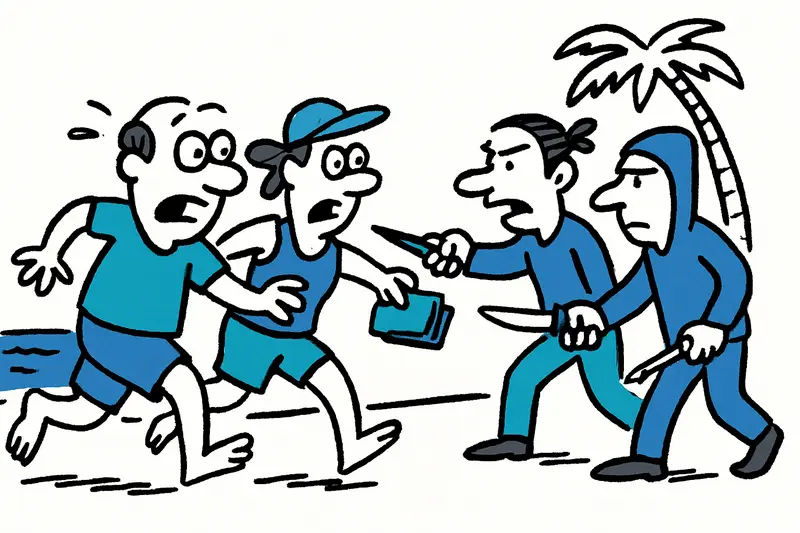
It was still dim, the harbor lights were sparkling, the seagulls were screeching and on the Paseo Marítimo the air was cool and salty: Around 4 a.m. two holidaymakers reported that they had been robbed at the city beach Can Pere Antoni. Two young men had threatened them and demanded valuables; victims and witnesses also described a knife and a screwdriver-like tool.
Police find traces — shortly after
The Policía Nacional had apparently been collecting reports of similar incidents since June. After the report, officers set up checkpoints and patrols along the promenade. Shortly afterwards police encountered the fleeing victims, who reported the robbery and gave descriptions of the perpetrators. Minutes later officers discovered four youths; two of them matched the description particularly closely. Some ran off and threw objects toward the rocks — investigators later found a knife and a screwdriver-like tool there. The arrested were brought before the examining magistrate and investigations continue, as earlier arrests in similar Palma cases demonstrate in Arrest in Palma: A Step, but Not the Final Word.
Luck and aftermath
The two people involved escaped without life-threatening injuries, yet an experience like that leaves a deep mark: 'Days later the mix of seawater and fear still tastes in your mouth,' says one who was there. The arrested were brought before the examining magistrate and investigations continue.
The key question: Is this just a series of isolated incidents?
According to the police, they have received several reports since June. This raises a central question: Are these a wave of random attacks at dark transition points to the rocks — or a pattern that points to deeper causes? This distinction matters because prevention and response depend on it. Reports of repeated incidents, such as in Eight Break-ins in One Week: Arrest in Palma — and What's Still Missing, underline this concern.
What is often overlooked
In the public debate some aspects remain underexposed: the role of transition areas between the promenade and the rocks, the nighttime emptiness outside the high season, the visibility of police during off-peak hours and the social situation of youngsters involved in such acts. It is easier to press charges and arrest perpetrators than to change the interplay of spatial design, social prevention and tourist use, a point reinforced by coverage of repeat offenders like Serial thief in Marratxí: Arrest brings relief — but questions remain.
Concrete approaches — not everything is just police work
The rapid response by the Policía Nacional was necessary and correct. In the long term, however, other measures also help:
More visible, targeted presence: Instead of only occasional patrols, an analysis of risk points along the promenade could justify a permanent, visible presence in the early morning hours — police, but also municipal enforcement services.
Lighting and visibility: Improved lighting at access points to the rocks reduces hiding places. Sightlines, informational signs and designated walking paths for pedestrians provide orientation.
Communication with tourists: Hotels, vacation rentals and restaurants should inform guests about safe routes. A short note at check-in or a QR link to a safe walking path can make a big difference.
Prevention for youngsters: Youth centers, sports programs and local initiatives that reach young people in the evenings are more effective in the long run than purely criminal prosecution.
Technology as support: Camera monitoring at high-risk points can deter and aid investigations — with clear data protection rules.
Voice from the neighborhood
A café owner on the Paseo Marítimo, who had seen the first patrol cars early in the morning, summed up the mood: Many locals go to the beach at night to get some fresh air — this freedom should not be lost forever. At the same time lifeguards and business owners demand more presence, especially where the promenade meets rocky areas and groups can easily hide.
What travelers and locals can practically do now
A few simple rules protect: do not leave valuables in plain sight, walk in groups in the evening, choose well-lit routes. In an emergency call 112 immediately or contact the Policía Nacional directly. Anyone who notices something suspicious should report it — timely observation often prevents worse incidents.
Conclusion: Vigilance and planning instead of panic
Incidents like the one at Can Pere Antoni are alarming, but so far remain the exception on an otherwise lively coastal stretch. The quick arrests show that the police respond — but true safety only arises from a smart mix of presence, spatial design, prevention and local engagement. Palma must not give up its nightly walks, but we must work together to make them safer.
Frequently asked questions
Is Can Pere Antoni in Mallorca safe at night?
What should I do if I feel unsafe walking in Palma at night?
How can tourists stay safe on Mallorca beaches early in the morning?
Why are dark promenade areas in Palma a safety concern?
What kind of police response happens after a robbery in Palma?
What should I carry when going for a night walk in Palma?
Are incidents like this common in Mallorca or just isolated?
What helps improve safety around Can Pere Antoni in Palma?
Similar News
When Housing Becomes a Matter of Survival: Mallorca Between Rental Frenzy and Everyday Life
The case of 87-year-old Maricarmen showed that on Mallorca many people's lives are poised between affordable and uninhab...
Autumn in Mallorca: When Melancholy Gets a Window
Why autumn quietly tightens here — and how to make use of the mood: walks, culture, candles and the light from Palma to ...

Near-miss on Lanzarote: Landing Ryanair Jet and Iberia Takeoff — what really went wrong
On Lanzarote there was a dangerous incident: A Ryanair flight (FR5910) from Dublin landed on runway 03 while an Iberia E...

Eurowings introduces new Premium Business seats on Mallorca routes
From December 1, selected Eurowings flights to Palma and other destinations will feature eight particularly generous sea...

Car on MA-13 near Inca in flames – a safety check for the island
A vehicle caught fire on the MA-13 towards Alcúdia on Tuesday afternoon. The driver was uninjured, the car was destroyed...
More to explore
Discover more interesting content

Can Cap de Bou

Townhouse Lleo 72
