
Beware of Silent Hands in the Royal Garden: Vendors Demand More Protection in s'Hort del Rei
Amid palms, flower stalls and the cathedral's chimes, vendors in s'Hort del Rei warn of recurring pickpocketing — especially in the mornings when cruise groups arrive. What is missing are visible patrols, simple notices at the landing points and concrete measures that can be implemented quickly.
Beware of Pickpockets in the Royal Garden: Vendors Sound the Alarm
Mornings in the Royal Garden usually bring the sound of bells, distant tour groups and the rustle of palm leaves. This spring, a new, nervous note has crept into the familiar sounds: vendors report a series of pickpocketing incidents along the paths toward the Cathedral, as detailed in Who Protects the Vendors at La Seu? Rising Pickpocketing Puts Craftspeople Under Pressure. The affected stalls — hand-painted ceramics, small prints and freshly tied lavender bundles — are not only business spaces, they are for many sellers also their workplace and livelihood. Their question is clear: how do you protect this space without turning it into a restricted zone?
The Method: punctual, routine, inconspicuous
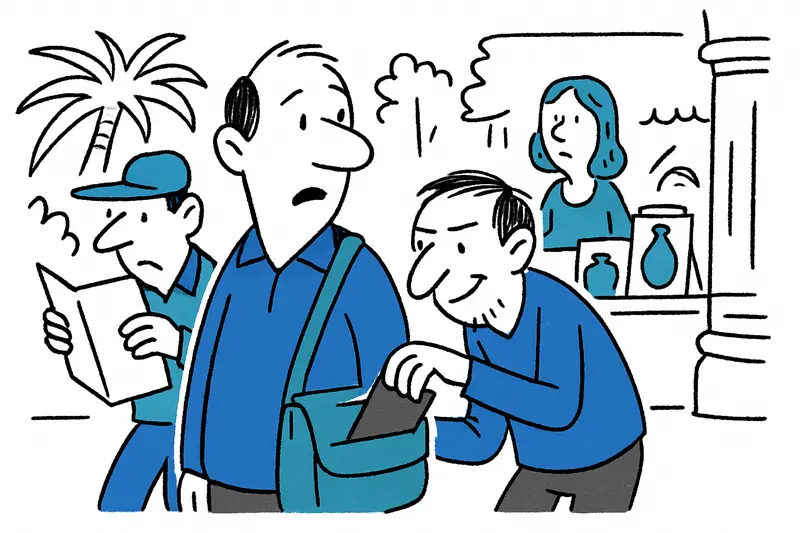
The pattern sounds almost banal and that is exactly what makes it dangerous. Between about 09:30 and 11:30, when hordes of cruise guests flood the old town in short time windows, small groups repeatedly appear, according to vendors, who seem to know exactly where to go. A distraction, a person standing close by, an over-the-shoulder garment — and a wallet or smartphone is gone. 'They are more punctual than some espressos,' says a stall owner with a half-ironical tone. Victims often notice only later, when their trip continues or the phone no longer rings, although in rare cases Attentive passerby stops suspected pickpocket at Mercat de l'Olivar – Why is vigilance alone not enough?.
Why cruise tourists in particular?
The answer lies in speed and disorientation. Cruise travelers have little time, many impressions and often visible cameras, maps and open bags. For official safety recommendations for visitors, see the UK travel advice for Spain on safety and security. The thieves seem to know this and schedule their time windows accordingly. Especially vulnerable are older visitors, young travelers with backpacks and people moving with group tours — they rarely stay in one place for long. Vendors also describe the perpetrators as organized: not single pickpockets, but teams with clear roles.
Aspects barely on the radar
Less discussed is how much the working conditions of market people exacerbate the situation: stalls open early, sellers stand with their hands arranging goods, their attention is on the display — a natural disadvantage against quick thieves. Also overlooked is the gap between port management, city marketing and police resources: information about peak times and expected passenger numbers is not always shared in a timely manner. And a third point: preventive communication in several languages is often missing exactly where it would help most. A similar distraction tactic has been reported elsewhere, as noted in Carnations, Rosemary and Bags: Why Cala Millor Is on Alert Now.
Concrete, practicable solutions
The vendors have clear ideas — and many of them could be implemented quickly. In the short term, visible foot and bike patrols by the police between the port and the Cathedral would help, especially during the mentioned morning hours. Info sheets in several languages or short loudspeaker announcements at the landing points could raise travelers' awareness before they enter the old town. A notice at the garden entrances with simple rules (keep bags closed, wear backpacks on the front, keep valuables on your person) is inexpensive and effective.
In the medium term, better data and information flows are needed: an exchange between port operators and the city police about expected passenger flows would allow targeted presence. Vendors also suggest forming a small coordination group — a digital reporting channel through which incidents can be quickly recorded and shared. Technical measures like smart cameras are being discussed but must be accompanied by clear data protection safeguards, such as those set out by the EU data protection guidance (GDPR), so that the garden does not become a surveillance park.
What everyone can do right now
Some simple behavioral rules help immediately: crossbody bags with zippers, the phone in a front pocket, keeping money separate or using a dummy wallet — tips that many vendors readily share. Visitors should also move a little more slowly in the mornings when groups arrive and pause briefly to close their bags. 'We don't want to cause alarm,' says an older seller as he straightens lavender bunches, 'but to stay attentive and send people safely through our garden.'
Outlook: protection without isolation
The Royal Garden is a place where the babble of many languages, the scent of flower stalls and the clatter of market stands come together. It should not become a controlled space, but it needs more protection. A combination of short-term visible presence, better information at the landing points and stronger networking between vendors, the port and the police could restore the balance. If the city and those responsible act now, the garden will remain exactly what it is: an open, lively place — only with a little less room for silent hands.
Frequently asked questions
Is pickpocketing a problem in Palma’s Royal Garden near La Seu?
When is the busiest time for visitors in Palma’s old town, and why does it matter for safety?
How can I avoid pickpockets while walking in Mallorca’s tourist areas?
Are cruise passengers especially targeted by pickpockets in Palma?
What is s'Hort del Rei in Palma like for visitors?
What should I know before visiting the Royal Garden in Palma?
Why are vendors in Palma asking for more police presence in s'Hort del Rei?
What can the city do to reduce pickpocketing near Palma’s Cathedral?
Similar News
When Housing Becomes a Matter of Survival: Mallorca Between Rental Frenzy and Everyday Life
The case of 87-year-old Maricarmen showed that on Mallorca many people's lives are poised between affordable and uninhab...
Autumn in Mallorca: When Melancholy Gets a Window
Why autumn quietly tightens here — and how to make use of the mood: walks, culture, candles and the light from Palma to ...

Near-miss on Lanzarote: Landing Ryanair Jet and Iberia Takeoff — what really went wrong
On Lanzarote there was a dangerous incident: A Ryanair flight (FR5910) from Dublin landed on runway 03 while an Iberia E...

Eurowings introduces new Premium Business seats on Mallorca routes
From December 1, selected Eurowings flights to Palma and other destinations will feature eight particularly generous sea...

Car on MA-13 near Inca in flames – a safety check for the island
A vehicle caught fire on the MA-13 towards Alcúdia on Tuesday afternoon. The driver was uninjured, the car was destroyed...
More to explore
Discover more interesting content

Can Cap de Bou

Townhouse Lleo 72
