
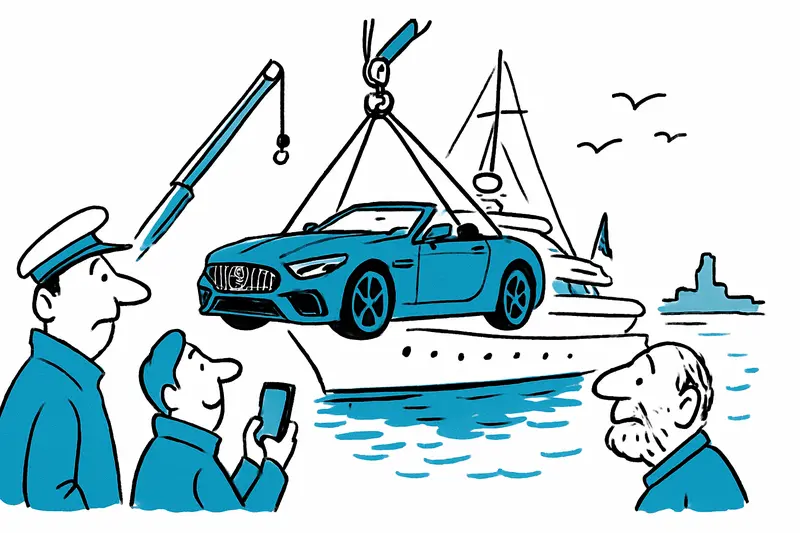
Brabus Bodo Convertible in Palma: 1,000 HP, Yacht Stage and a Touch of Luxury on the Pier
Brabus Bodo Convertible in Palma: 1,000 HP, Yacht Stage and a Touch of Luxury on the Pier
The new Brabus Bodo Convertible was unveiled in the port of Palma: 1,000 hp, open-top driving pleasure and a spectacular appearance on a superyacht. An event that brings together the port, hospitality and local craftsmanship on Mallorca.
Brabus Bodo Convertible in Palma: 1,000 HP, Yacht Stage and a Touch of Luxury on the Pier
When sports cars and superyachts meet in the harbor
Late on Monday evening, as the last rays of sun slid over the Passeig Marítim and a mild, cloudy 27-degree evening light reflected off the masts, cranes at the quay hoisted a new convertible onto the deck of a superyacht. This was no ordinary photo op: it was the open Bodo Convertible from tuning house Brabus, a technically bold car with around 1,000 hp, a weight of just under 1,774 kilograms and a quoted top speed of about 360 km/h. For the open version, the surcharge over the coupe runs into several tens of thousands of euros, pushing the purchase price well into the high six-figure range.
Anyone walking along the harbor that evening – from Moll Vell to the Esplanada – stopped, took out their phone or set aside their evening coffee. Men in sailing jackets, tourists with light scarves, an older fisherman with grease-stained hands: everyone watched as the convertible was carefully placed on the yacht deck. The cries of seagulls mixed with the clatter of tarpaulins and the distant hum of a generator set. A slice of everyday Mallorca, only louder and shinier.
Such stagings suit the island: in recent years Palma has become a stage for nautical and automotive premium premieres and projects like Motorworld Mallorca: A new mobility experience center on the island. A car presented on a yacht says something about the linking of industries: marinas, shipyards, luxury hotels and service providers all benefit from international attention, as seen in coverage showing that Motorworld on the Ma-19 attracted around 140,000 visitors. Nearby hotels, restaurants and service companies at the harbor receive booking inquiries, concierge services see a boost and local craft firms – from coatings to carbon work – come into view as possible collaborators.
Technically the convertible is far from just a showpiece: aerodynamic elements such as a front spoiler and a deployable rear wing are designed to generate downforce at high speeds; in extreme braking maneuvers the latter also acts as an air brake. These details are not mere bravado, they create talking points in workshops, at the TÜV and in the island’s garages – and they are material for young mechanics learning to work with high-tech components.
What does this mean for Mallorca? Short term: attention. A spectacular presentation attracts international guests, fills berths in the marina and brings revenue to local service providers. Mid term it offers opportunities: the island can position itself as a meeting point for manufacturers and shipowners, as a place where prototypes are shown and networks are built. And for young professionals it means training positions and contracts in high-performance technology, boatbuilding and specialist paintwork; examples include A man from Bremen, his boat and the new heartbeat: how a sailboat in Mallorca quietly went electric.
Away from the economics there remains a simple, positive observation: evenings like this are a small celebration of craftsmanship. When the convertible is slowly lifted aboard and the waves lap lightly against the hull, you can see how engine building, materials engineering and maritime luxury come together. For Palma it is a pleasant mix of everyday life and glitter – you can view it critically, or you can enjoy it. That evening there was more applause than raised eyebrows.
Looking ahead: events like this can be catalysts. Those who seek out conversations on site – from boat mechanics to hoteliers to harbor operators – can turn a single presentation evening into lasting contacts. And for the walker on the pier the memory remains of a short, unusual spectacle: a car floating above the water while the city quietly carries on.
Conclusion: A Brabus convertible on a superyacht looks like a postcard image of Palma, but it is more than that: it is an interplay of industry, craftsmanship and local life – loud, shiny and for an evening very Mallorcan.
Frequently asked questions
When is Mallorca best for a beach holiday?
What’s the weather like in Mallorca year-round?
What should I pack for a trip to Mallorca?
Are Mallorca’s beaches good for swimming and families?
How can I get around Mallorca without renting a car?
What outdoor activities are popular in Mallorca?
What language should I expect in Mallorca and how polite should I be?
Are there any local tips or customs I should remember in Mallorca?
Similar News
Defendant Allegedly Deceived Court with Fake Payment Receipts – Reality Check from Palma
A German real estate entrepreneur must answer in Palma: he is accused of presenting forged payment receipts to erase an ...

'We can't sell a beer for two euros' – Why rents are crushing gastronomy in Mallorca
High concession fees, speculative landlords and tourist hotspots: restaurateurs in Mallorca complain about a development...

Storm on the Radar: Why Palma's Airport and We Are Not Fully Prepared
Orange warnings, strong gusts and initial flight cancellations: anyone flying to or from Palma today should expect delay...
First flight cancelled, then told to pay for the hotel yourself? The case of a British family at Palma airport
A British family was stranded at Palma airport at the end of August: cancelled return flight, instructed to find their o...
Cala d'Or: Helping becomes life-threatening – Why a street altercation escalated
A man intervenes to assist a harassed woman — and suffers a skull fracture after an associate struck him with a glass bo...
More to explore
Discover more interesting content

Boat Tour with BBQ along Es Trenc Beach

Private transfer from Mallorca Airport (PMI) to Pollensa
