
Bullfighting Comeback in Palma: Applause, Protests and the Big Question About the Future
The Plaça de Toros filled up again while activists demonstrated outside: the bullfighting comeback in Palma exposes the city's fault lines — legal, cultural and moral. What solutions exist for a divided Palma?
An Evening, Two Scenes: Palma Between Applause and Booing
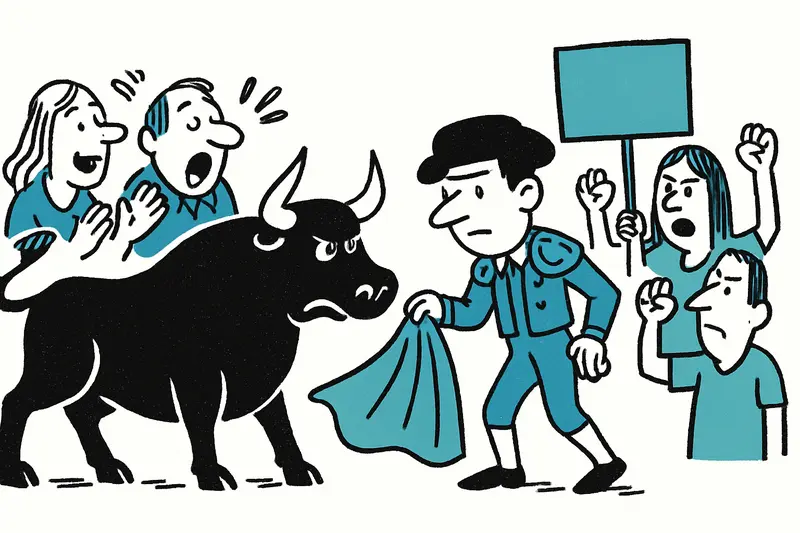
It was warm, almost muggy — during the day the thermometer had nudged 32 °C, and in the evening the heat still hung over the Plaça de Toros, as reported in La corrida de toros vuelve a Palma: aplausos, protestas y preguntas abiertas. Inside, families, pensioners and the curious applauded at skillfully executed capers; outside, groups held banners and chanted slogans. The sound of applause from the ring mixed with the whistles of the demonstrators and the occasional roar of a scooter on Avinguda Antoni Maura. It was an evening that was not only loud but also symbolic: how does an old tradition fit into a modern city?
The Key Question: Cultural Preservation or Step Backward?
The simplified version of the debate sounds like this: some see bullfighting as cultural heritage, others as archaic violence. But the real question is more complex: should state rules be relaxed so that such events can take place again — or must we evolve social norms because the values of the majority have shifted? The recent legal change that loosened certain restrictions encouraged organizers. The result: full stands and heated discussions on the street, mirrored by reports such as Between Tradition and Protest: How Muro Brought Back the Bullfight — and What It Means for the Island.
In the ring there were technically demanding scenes, but also dangerous moments — a fall, an agitated horse, a bull seeking distance. Such images fill some spectators with pride while leaving others deeply unsettled. Here aesthetic staging, risk to people and animal welfare clash directly.
What Is Often Missing in the Public Debate
Between the headlines and morning coffee several aspects remain underexposed: the economic incentives behind the comeback, the role of organizers and sponsors, the psychological strain on animal caretakers and matadors, and the long-term consequences for Palma's tourist profile. Another point: how do such spectacles affect children who grow up with shouts of “olé”? And finally: what responsibility do city authorities bear at a time when different population groups — locals, mainland Spaniards, newcomers — hold differing values?
At the entrance to the arena there were minor scuffles, police checks and short-term arrests, incidents reminiscent of Outcry in Inca: Protest Against Bullfighting Sparks Debate. For the authorities these were order-maintenance measures; animal rights activists called it intimidation. Such scenes show that the problem must be solved not just legally, but also by police and civil society measures.
Societal Rift — and How It Could Be Mended
The character of the audience revealed a lot: many attendees seemed to come from inland Spain, while the protesters were more internationally mixed. That makes the debate harder — it becomes a question of identity, not only ethics. Palma is a city where in the morning the cafés on Avinguda Antoni Maura are selling churros again and in the afternoon heated discussions about tradition and morality take place. So that these debates do not end in a loop of loudspeakers and police sirens, clear, transparent steps are needed.
Concrete proposals: citizen forums and local hearings before traditional spectacles are promoted again; independent assessments of animal welfare and safety standards; alternative formats that avoid the theatrical killing but preserve cultural techniques (for example historical demonstrations without lethal consequences); a citywide information program for schools so children can contextualize the debate age-appropriately; and finally a financial audit: who really benefits from such events — and what are the costs for public order and the city's image?
Outlook: No Easy Solution, but a Way Forward
Palma will not answer this question in a single summer season. The arena remains a place of memory — beautiful for some, painful for others. When the city administration makes decisions, they should be not only legally sound but also socially acceptable. A symbolic fine here or a new ban there is not enough. Dialogue, transparency and the courage to pursue creative alternatives are needed — options that respect traditions without creating new tensions.
The next morning, the first guests were already back at the café, the debate still running through people's minds. Between street sweepers, delivery vans and the clatter of cups, Palma remains a place where culture is not only experienced but also negotiated. The comeback of bullfighting made something obvious: we need to talk — loudly, but with respect, and with concern for everyone who lives in this city, people as well as animals.
Frequently asked questions
Why is bullfighting in Palma such a divisive issue?
What should I expect from Palma weather in the evening during summer events?
Is it common to see protests at controversial events in Palma?
What is the Plaça de Toros in Palma used for now?
How does bullfighting affect Palma’s image as a tourist destination?
What safety and police measures are usually in place around bullfighting events in Palma?
Could Palma replace bullfighting with a less violent traditional format?
How should children in Mallorca learn about bullfighting debates?
Similar News

Maribel: Five Decades of Service – Housekeeper from Peguera Celebrated with a Special Honor
Over 50 years in the hotel business: María Isabel “Maribel” Molinos was honored in Palma at the Nit del Turisme by Unive...

Orange Alert over Parts of Mallorca: Are We Prepared?
Dark clouds and an announced wet spell have triggered an Orange alert in parts of Mallorca. A reality check: what's miss...

Sundair & Co.: Sale speculation and what it could mean for Mallorca
Rumors about a possible sale of the airlines Sundair and Fly Air 41, which belong to Schauinsland-Reisen — and whether b...
Anne Wünsche in Mallorca: A job offer with a catch — who fits the role of personal assistant?
Influencer Anne Wünsche has left Berlin and is urgently looking for a full-time personal assistant in Mallorca. Why the ...

Daily from New York: Palma Between Boom and Strain
United will increase the Newark–Palma route to daily flights in 2027 using Boeing aircraft (231 seats). What does the in...
More to explore
Discover more interesting content

Can Cap de Bou

Townhouse Lleo 72
