
Cala Millor is shrinking: Promenade to be moved back 20 meters — a balanced response is missing
Cala Millor is shrinking: Promenade to be moved back 20 meters — a balanced response is missing
The beach at Cala Millor is losing sand. Project plans call for moving the promenade back and installing a sand barrier. Why that's not enough and what steps are still missing.
Cala Millor is shrinking: Promenade to be moved back 20 meters — a balanced response is missing
Key question: Is moving the promenade back sufficient or do we need radically different answers?
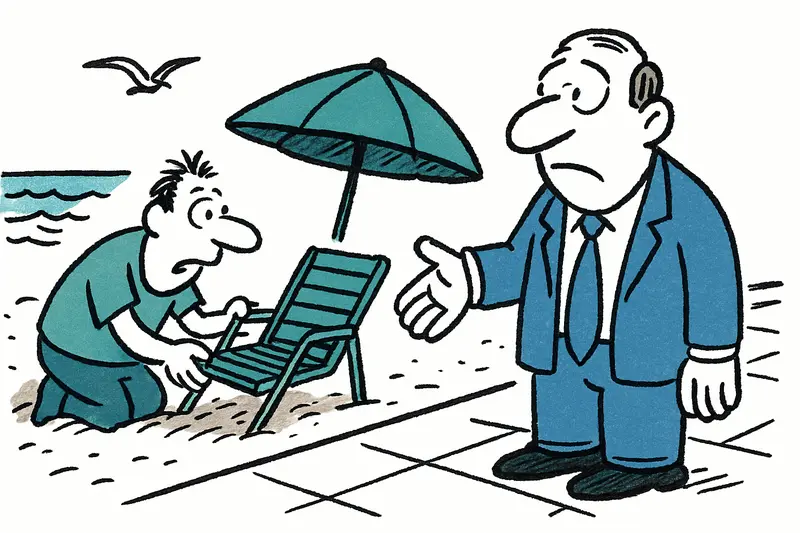
In the early morning in Cala Millor, cleaning vehicles roll along the paseo, seagulls cry and the first delivery drivers park their vans in side streets. The spot where deckchairs sit shoulder to shoulder in high summer already looks narrower in March than it did a few years ago. This is exactly where a project is focused that concerns many: along a stretch of just over one kilometer between Punta de n’Amer and the area near Parc de la Mar, the beachfront promenade is to be set back in places by around 20 meters. Additionally, in the northern section, where the existing jetty is located, a barrier is planned to retain sand.
Behind this are measurable losses: researchers and authorities warn that without interventions between 42 and 82 percent of the sand volume could be lost. The project runs under the LIFEAdaptCalaMillor initiative, which started in 2023 and is working until 2027 with a budget of €2.2 million. Around 60 percent of the funds come from EU funding, and 23 institutions are involved. The project work includes several years of field research, numerous awareness-raising actions, walks with residents and meetings with stakeholders.
The decision to set back a promenade and build a barrier in the north is tangible and concrete. Still, that is not enough as a complete response. This is the central criticism that resonates in many conversations with hoteliers, beach vendors and residents: measures that are localised do not always address a process that is dynamic, spatially interconnected and long-term.
Critical analysis
First: coasts are systems. Sand moves along the shore and is not captured only at the site but at many points. A barrier can stabilise sand in the short term but changes currents and can provoke greater loss elsewhere. Second: setting promenades back makes sense because it can allow room for beach dunes, but it's a matter of design — simply pulling back a straight line is not enough. Third: funding and timeframes are limited. €2.2 million and four years of research are significant, but climate adaptation requires permanent investments and institutions that plan beyond project cycles.
What is missing in the public discourse
There is little talk about long-term governance: who will pay if massive sand loss occurs again in ten years? What rules apply to development behind the promenade? What responsibility do tourism businesses bear? Equally invisible are concrete monitoring criteria: at what point is which measure triggered, and how is success measured? Moreover, there is a lack of clear communication for seasonal workers, entrepreneurs and holidaymakers — many still do not know what a set-back paseo will mean for their everyday lives.
Everyday scene
I see it often: a winter walk, the fishing boat on the horizon, the smell of salt water. The small ice cream shop on the corner of the passeig already notices how beach width varies seasonally. Late Summer in Cala Millor: warm, relaxed and perfect for the promenade reflects these seasonal variations.
Concrete solution approaches
- Integrated coastal management: measures must not be thought of only locally. Sand movements, inflows and neighboring beaches must be included in joint monitoring.
- Graduated measures with triggers: initially gentle, nature-based solutions (dune restoration, vegetation, temporary sand fences), with technical interventions (targeted sand nourishment, flexible barriers) once defined thresholds are exceeded.
- Transparent financial planning: a fund into which municipalities, hoteliers and grant programs pay secures follow-up costs. EU money must not remain the only resource.
- Legally binding retreat zones: building regulations along the coast must be adapted so that new promenades are not soon again at the edge.
- Public participation and clear information: seasonal workers, owners of beach businesses and bathers need understandable maps and schedules so that alterations do not lead to economic uncertainty.
- Local pilot projects with monitoring: every measure needs metrics (sand volume, beach width, visitor behaviour) and a publicly accessible status report at least annually.
Why this is important now
The proposed steps — setting back and a barrier — are right as a first move. But they must not be used as an argument to sit back afterwards. Climate works over decades, tourism and infrastructure are economically intertwined. Those who truly want to prepare think in systems and build rule sets, not just concrete or walls.
Conclusion: Cala Millor needs more than a technical plan; it needs sustained management that considers financing, planning rules and social consequences. The first construction site may be visible in a few months. What matters is what comes after: active monitoring, clear rules and participation of the people whose daily lives take place on the paseo.
The key question remains: do we only want to plug holes — or reshape the coast so that people and sea can coexist together?
Frequently asked questions
Why is the promenade in Cala Millor being moved back?
Will moving the Cala Millor promenade back solve the beach erosion problem?
What is the LIFEAdaptCalaMillor project in Mallorca?
Can you still swim in Cala Millor if the promenade changes?
What does a setback promenade mean for Cala Millor visitors and businesses?
What is being planned near Punta de n’Amer in Cala Millor?
Why is a sand-retaining barrier planned in the north of Cala Millor?
When will people notice changes to the Cala Millor promenade?
Similar News

When the Wallet Becomes a Danger: Attack in Peguera and Lessons for Mallorca
In Peguera, two women are said to have stolen the wallet from a 75-year-old German couple. When the victim intervened, t...
Plata stays Plata: Young people take over, Llonguets remain
A small bar on Carrer de l'Argenteria will continue: Tolo Serra hands the place over to young Mallorcans at the end of t...

Unnoticed in the Luggage Compartment: How a Boy Traveled More Than 100 Kilometers in a Team Bus
A minor traveled in the undercarriage of a team bus for more than 100 kilometers until his cries for help were heard. A ...

Cap Vermell Grand: Second Michelin Key – a Gift for the East
The Cap Vermell Grand in Capdepera has been awarded its second Michelin key. For the region this elevates the luxury off...

Eurowings lets four aircraft carry names – a friendly idea that also reaches Mallorca
Eurowings is launching a campaign: four Airbus A320s are to carry the first names of people who help others in everyday ...
More to explore
Discover more interesting content

Can Cap de Bou

Townhouse Lleo 72
