
Pink License Plates in Mallorca: Guide and Reality Check for Drivers
Pink License Plates in Mallorca: Guide and Reality Check for Drivers
Spain is adjusting its identification systems: pink plates mark vehicles with provisional registration. A reality check for Mallorca — what becomes visible, what's missing, and what to do now.
Pink License Plates in Mallorca: Guide and Reality Check for Drivers
Key question: What does the new pink plate mean in practice for people in Mallorca — for buyers, dealers, the police, and those who drive along the promenade every morning?
What's it about
Spain is introducing a new color signal into its system: pink plates that mark vehicles whose final registration has not yet been completed. The familiar white plates with black lettering will remain; the pink plates complement the system and are part of a Europe-wide coordination, where neighboring countries have already introduced such markings. On the island this means: new plates in a dealer's yard in Son Bugadelles, on the car carrier on the MA-13, or on the freshly delivered imported car in Palma.
Critical analysis: what the color can do — and what it cannot
The idea behind it is simple and tempting: a strong color contrast makes a vehicle's status recognizable at a glance. Police units and inspectors should thus be able to perform distance checks without asking for papers every time. In practice, however, questions arise. First: How reliable are visual checks at dusk or in rain? Second: Which automatic number plate recognition (ANPR) systems will be adapted, and how are the interfaces between national and regional databases arranged?
There is a second problem area: signage and everyday life. Many Mallorcans do not know the new plates. More than 350 drivers without a driver's license in the Balearic Islands: Why the problem on Mallorca shouldn't exist These are small gaps in public awareness that can undermine the scheme. Someone grabbing coffee on the Passeig Mallorca in the morning who sees a pink car does not automatically know whether the vehicle is legally on the road or whether its papers are missing. Without information, the color can cause confusion rather than clarity.
What's missing from the public debate
The discussion so far has focused on optical recognizability and fraud prevention. Fake TÜV Stickers in Mallorca: Harmless Bargain or Costly Risk? Less attention has been paid to how the measure affects the work of small dealers, transporters and workshops. A local car dealer needs reliable transition rules: How long may a vehicle drive permanently with demonstration plates? Who is liable if an imported car with a pink plate is involved in an accident and the final papers are missing? Fake Driver's Licenses in Palma: Fifth Case – An Isolated Incident or a System? These everyday scenarios should be answered before the plates become widely visible.
Everyday scene from Palma
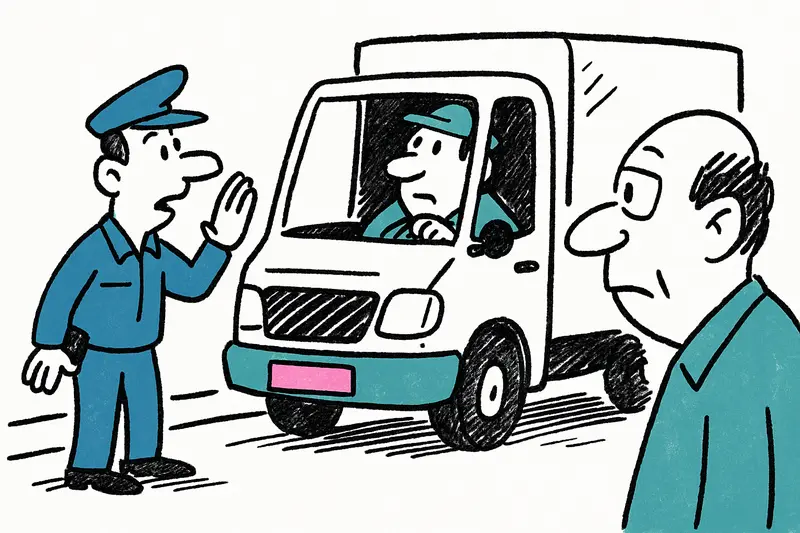
Early in the morning near Plaça d'Espanya: engine noises, the clatter of coffee cups, a delivery van with pink plates backs into a driveway. A Policia Local officer stops, raises a hand, glances at the number plate, taps something into his tablet — and drives on. These are small routines that will become more frequent in the coming weeks. The neighbor from the ground floor shakes her head: 'What's the point of it?', she asks. The answer is not only technical, it is communal.
Concrete solutions
1) Transparent information campaign: short videos for social media, clearly visible notices at registration offices and at dealers in Mallorca. Someone sitting at the bar in the morning should be able to understand in one sentence what pink means.
2) Clear deadlines and responsibilities: authorities should set binding rules on how long provisional plates are valid and what obligations dealers have. A written checklist for buyers would reduce uncertainty.
3) Test the technical implementation: ANPR systems on parking enforcement, tunnel and motorway cameras should be tested in trial phases — especially at dusk and in rain, typical conditions in the winter half-year here.
4) Build interfaces: local police services and national registers need straightforward query channels. On Mallorca, where traffic fluctuates seasonally, there must be no delays when a vehicle status is queried.
What to do now
For drivers: insist on paperwork when buying a car, document dealer contacts, note transition periods. For dealers: proactively inform customers, keep handover protocols. For local administration: hold info events, maintain contact with the Ministerio so technical adjustments arrive on time. Palma tightens ZBE control: Drivers with foreign license plates now need an extra permit
Conclusion: The pink plates are a practical tool against document fraud and for quick visibility. Without accompanying rules, clearly visible information and tested technology, however, confusion on the road threatens. In Mallorca, where changes are felt immediately on street corners, in port districts and at dealers, this innovation needs more than a color — it needs clear procedures and some public information so that morning coffee is no longer served with a question mark.
Frequently asked questions
What do pink license plates mean in Mallorca?
Can you legally drive in Mallorca with pink plates?
Why is Spain introducing pink plates for cars?
Will pink plates confuse drivers and pedestrians in Mallorca?
How will pink plates affect car dealers in Mallorca?
What should I check before buying a car in Mallorca with pink plates?
How will police in Mallorca check pink plate vehicles?
Are pink license plates likely to work well in Mallorca in everyday traffic?
Similar News

When the Wallet Becomes a Danger: Attack in Peguera and Lessons for Mallorca
In Peguera, two women are said to have stolen the wallet from a 75-year-old German couple. When the victim intervened, t...
Plata stays Plata: Young people take over, Llonguets remain
A small bar on Carrer de l'Argenteria will continue: Tolo Serra hands the place over to young Mallorcans at the end of t...
Unnoticed in the Luggage Compartment: How a Boy Traveled More Than 100 Kilometers in a Team Bus
A minor traveled in the undercarriage of a team bus for more than 100 kilometers until his cries for help were heard. A ...

Cap Vermell Grand: Second Michelin Key – a Gift for the East
The Cap Vermell Grand in Capdepera has been awarded its second Michelin key. For the region this elevates the luxury off...
Eurowings lets four aircraft carry names – a friendly idea that also reaches Mallorca
Eurowings is launching a campaign: four Airbus A320s are to carry the first names of people who help others in everyday ...
More to explore
Discover more interesting content

Can Cap de Bou

Townhouse Lleo 72
